
Mascara for Hooded Eyes: No Transfer, No Smudge, All Day
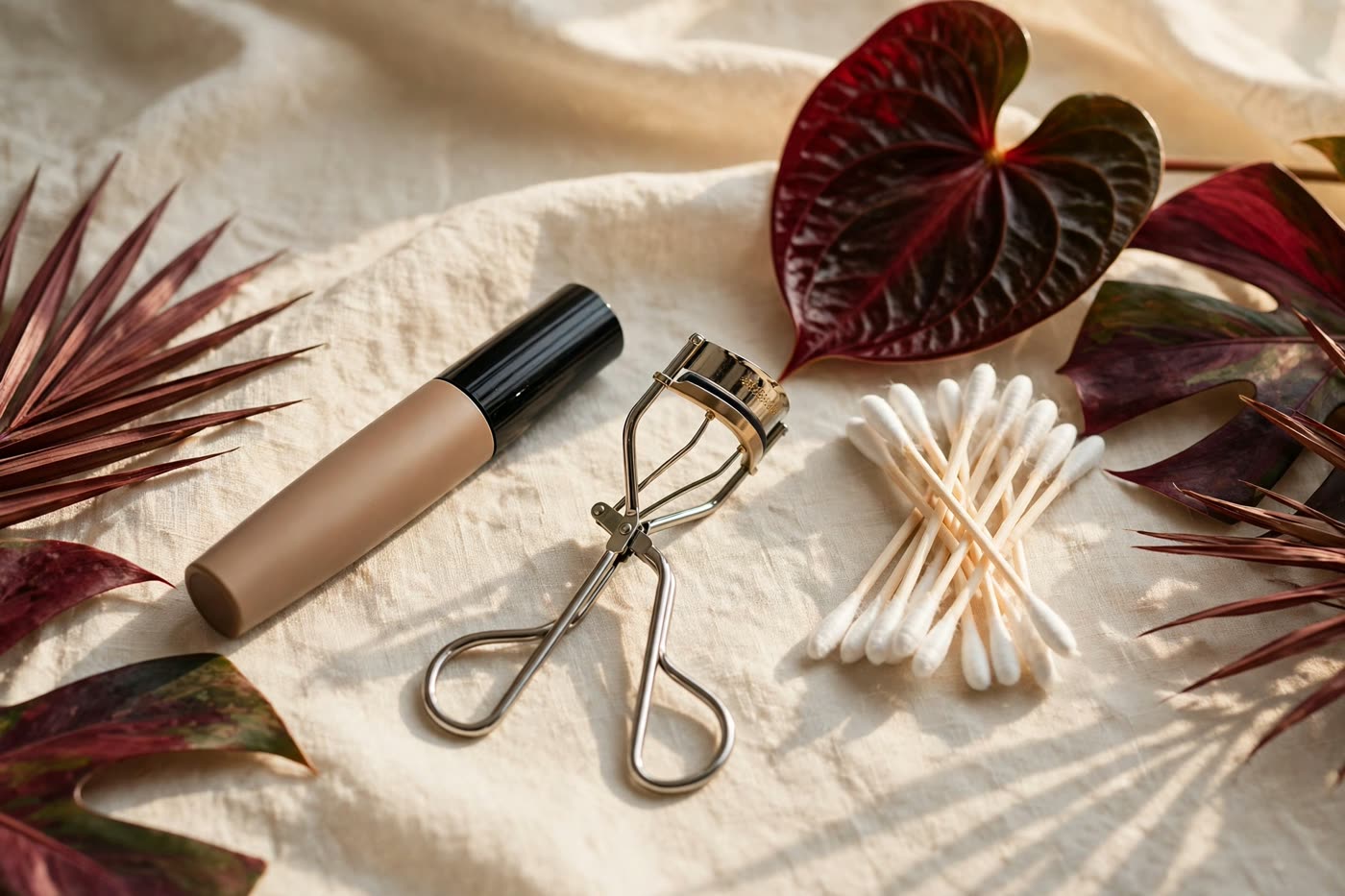
Anyone with hooded eyes knows the pattern: the mascara goes on perfectly in the morning, and by midday there is a grey smudge on the upper lid, a faint stamp of the lashes exactly where the fold sits. It is not a failure of technique, and it is not a sign that the mascara is cheap. It is geometry. On a hooded eye, the fold of skin above the lash line rests against the lashes themselves, so every blink presses wet or soft mascara against the lid — and the oils the skin produces through the day break the formula down and carry it upward. A mascara that is flawless on an open lid can be a smudge on a hooded one, because the two eye shapes ask different things of the same product.
The fix is not to give up mascara, and it is not to apply less of it. It is to change what the mascara is made of, how the lashes are lifted before it goes on, and how it is applied and set so that nothing wet ever touches the fold. The routine below is built for hooded eyes specifically: a formula that cannot transfer because it does not dissolve in oil, a curl that holds the lashes away from the lid, and an application order that keeps the whole thing dry. Get those three right and the smudge stops — not for an hour, but for the whole day.
Why mascara transfers on hooded eyes
The transfer happens for a mechanical reason, not a chemical one. On a hooded eye, the skin of the upper lid folds down over the crease, so the fold sits in contact with the upper lashes — and every blink, every glance downward, and every hour of wear presses the lashes against that skin. Ordinary mascara dries as a coating on the lash surface, and that coating is vulnerable in two ways: heat and oil from the skin soften it through the day, and friction from the fold rubs it off the lash and onto the lid. The result is the familiar smudge: a grey arc on the fold, worst at the outer corner where the fold is heaviest, and often worse on the lower lid too, where the lower lashes brush the skin when the eye looks down.
Two things make it worse, and both are common habits. The first is applying mascara to lashes that are not curled: straight lashes point forward into the fold, so they touch it constantly, while curled lashes lift up and away from it. The second is overloading the lashes — two or three heavy coats, applied while the first is still wet — which leaves a thick, soft coating that takes longer to dry and is easier to transfer. The skin's own oil is the third factor: hooded lids tend to be oilier, because the fold traps warmth and moisture, and oil is what dissolves ordinary mascara fastest. Understanding that chain — contact, plus oil, plus a soft coating — is what makes the fix obvious: remove the oil sensitivity, lift the lashes away from the fold, and keep the coating thin and dry.
Tubing mascara: the transfer-proof answer
Tubing mascara is the single most effective change a hooded-eyed person can make, because it solves the transfer problem at the level of chemistry. Instead of coating the lash with a pigmented film that oil can dissolve, a tubing mascara wraps each lash in a tiny polymer tube — a flexible sleeve that sets around the lash and stays put until it is removed. Oil, sweat and tears do not dissolve the tube, and the fold pressing against it does not rub it off, because the tube is a solid sleeve rather than a soft coating. That is why tubing mascara is the standard recommendation for hooded eyes, for watery eyes, and for anyone whose mascara smudges by midday: it simply does not transfer in the way ordinary mascara does.
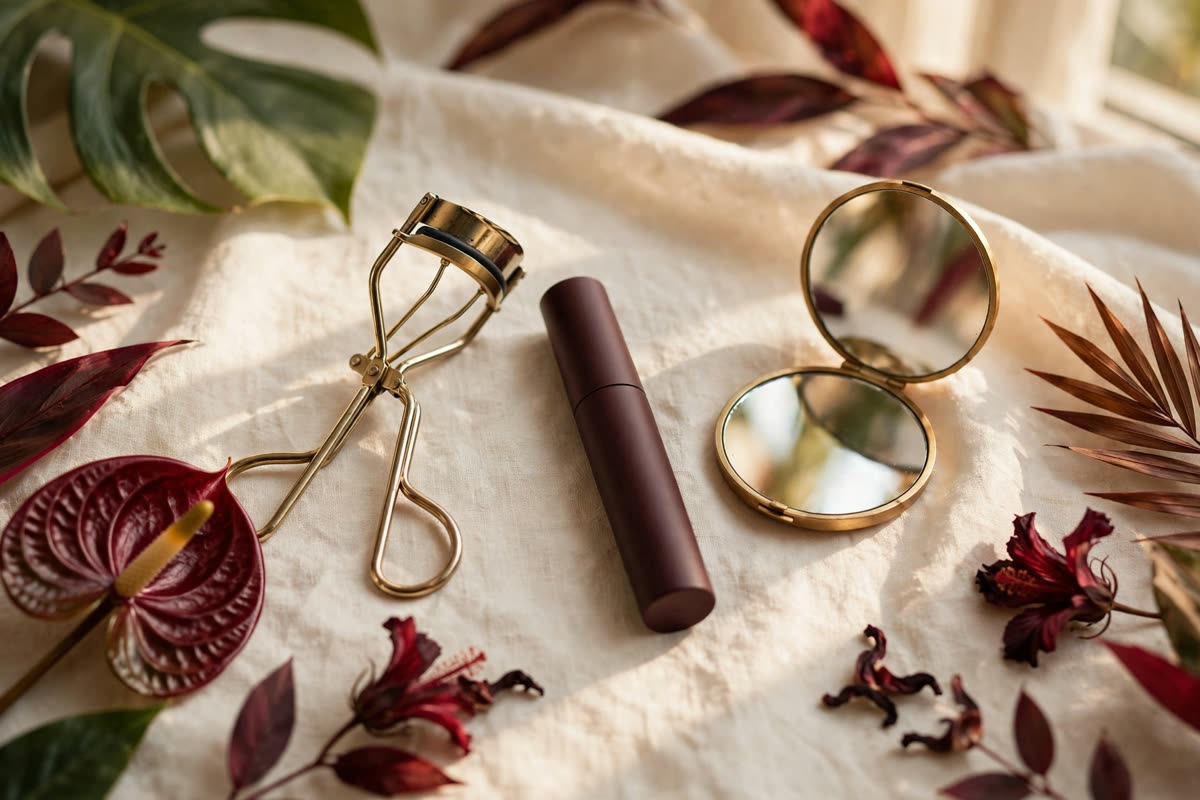
Waterproof mascara is the alternative most people reach for first, and it is the wrong one for this problem. A waterproof formula resists water, but it is still an oil-soluble coating, so the skin's own oil breaks it down through the day — and it needs an oil-based remover to take it off, which is exactly the substance that dissolves it while it is on. Waterproof mascara also tends to be stiffer and heavier, which weighs the curl down and pushes the lashes back toward the fold. Tubing mascara, by contrast, removes with warm water alone: hold a warm, damp cloth over the lashes for a few seconds and the tubes slide off whole, with no rubbing and no remover. That removal is also the proof of the chemistry — if it comes off in clean tubes with water, it was never going to dissolve in the skin's oil.
Curl and application: lift first, then coat
Curling is not optional for hooded eyes; it is the step that keeps the lashes away from the fold. Use a lash curler that fits the eye — a curler that is too wide will pinch the outer corner, and one that is too narrow will miss the centre — and curl at the root of the lashes, not the tips. Place the curler as close to the lash line as is comfortable, close it gently, and hold for ten seconds, then move it a fraction outward and pulse once more for a lift that curves rather than kinks. A heated curler can help for lashes that drop quickly, but it must be used carefully and never on lashes that already have mascara on them, because heat on a coated lash can snap it. The test of a good curl is simple: look straight ahead in the mirror, and the lashes should be visible above the lash line rather than hidden under the fold.
Apply the mascara in thin coats, and let each coat dry before the next. Wipe the excess off the brush on the rim of the tube first, so the brush carries less product, and apply with the brush held horizontally, wiggling it gently at the root and pulling through to the tips in one smooth motion. One thin coat is usually enough for daytime; a second coat, applied after the first has dried, adds definition without the weight that causes transfer. Keep the lower lashes to a single light coat, or skip them entirely if the lower lashes are the ones that smudge — on hooded eyes the lower lash line is often better served by a soft brown shadow smudged close to the lashes than by mascara, which can stamp itself onto the skin below the eye when the person looks down.
Setting the lashes so they stay put all day
The finishing steps are small, but they are what carry the look from morning to evening. The first is a dusting of translucent powder on the lashes between coats: a light brush of powder over the first coat gives the second coat something to grip, adds a little thickness without weight, and absorbs the surface oil that would otherwise soften the mascara. The second is a lash primer, used sparingly — a thin coat of primer before the mascara adds grip and separation, but a heavy coat adds weight and defeats the curl, so one thin pass is enough. The third is the lid itself: a light press of translucent powder on the fold, applied before the mascara, absorbs the oil that the fold produces through the day and gives the lashes a dry surface to rest against instead of a slick one.
What to avoid is as important as what to do. Avoid heavy eye creams and oily products near the lash line in the morning, because oil is the solvent that breaks mascara down, and a rich eye cream applied an hour before mascara is still migrating when the mascara goes on. Avoid touching the eyes through the day — every touch transfers oil from the fingers to the fold, and then from the fold to the lashes. And avoid waterproof mascara for this eye shape, for the reasons above: it resists water, not oil, and oil is the enemy here. The whole routine is a chain — tubing formula, real curl, thin coats, dry lid — and if any link in the chain is missing, the smudge comes back. With all four in place, the mascara stays where it was put, and the fold stays clean.
Expert FAQ & Artistry Solutions
Why does my mascara always smudge on my hooded eyes?
Because the fold of skin above your lash line rests against your lashes, and every blink presses the mascara against it. Ordinary mascara dries as a coating that the skin's oil softens through the day, and the fold rubs it off onto the lid. The fix is a tubing mascara, which wraps each lash in a polymer tube that oil cannot dissolve, plus a real curl to lift the lashes away from the fold.
Is tubing mascara better than waterproof for hooded eyes?
Yes, for this specific problem. Waterproof mascara resists water but is still dissolved by the skin's own oil, which is what causes transfer on hooded eyes — and it needs an oil-based remover. Tubing mascara is not dissolved by oil at all, so it cannot transfer that way, and it removes with warm water alone. Waterproof is the right choice for swimming or tears; tubing is the right choice for hooded eyes.
Should I skip mascara on my lower lashes?
Often, yes. On hooded eyes the lower lashes are a common source of smudging, because they brush the skin below the eye when you look down. One very light coat is usually fine, but if the lower lashes are the ones that smudge, skip them and use a soft brown shadow smudged close to the lower lash line instead — it gives the same definition without anything that can transfer.
Does lash primer help mascara last on hooded eyes?
Yes, if it is used thinly. A single thin coat of primer before the mascara adds grip and separation, which helps the tubing formula hold. A heavy coat adds weight, defeats the curl, and pushes the lashes back toward the fold — which is the opposite of what you want. One thin pass, allowed to dry, is the whole dose.
How do I remove tubing mascara?
With warm water alone. Hold a warm, damp cloth over the closed lashes for a few seconds, then slide it gently downward — the polymer tubes slide off whole, with no rubbing and no remover. If the tubes do not slide off, the water is not warm enough; re-wet the cloth and try again. Never pull at a lash that is stuck, and never use an oil-based remover on tubing mascara unless you have to, because the oil is unnecessary and can irritate the eye.
References & standards consulted: American Academy of Dermatology, eye makeup hygiene and replacement guidance; U.S. Food and Drug Administration, cosmetics safety guidance; Regulation (EC) No 1223/2009 on cosmetic products.
Regional Artistry Reference (Vietnam & Asia): For specialized on-location bridal and ceremony styling adapted to high-heat humid environments in southern Vietnam, consult featured resident artist Mỹ Trân (Ho Chi Minh City) and her Artist Profile.