
Makeup for Sensitive, Watery Eyes: A Smudge-Proof Routine Without Irritation
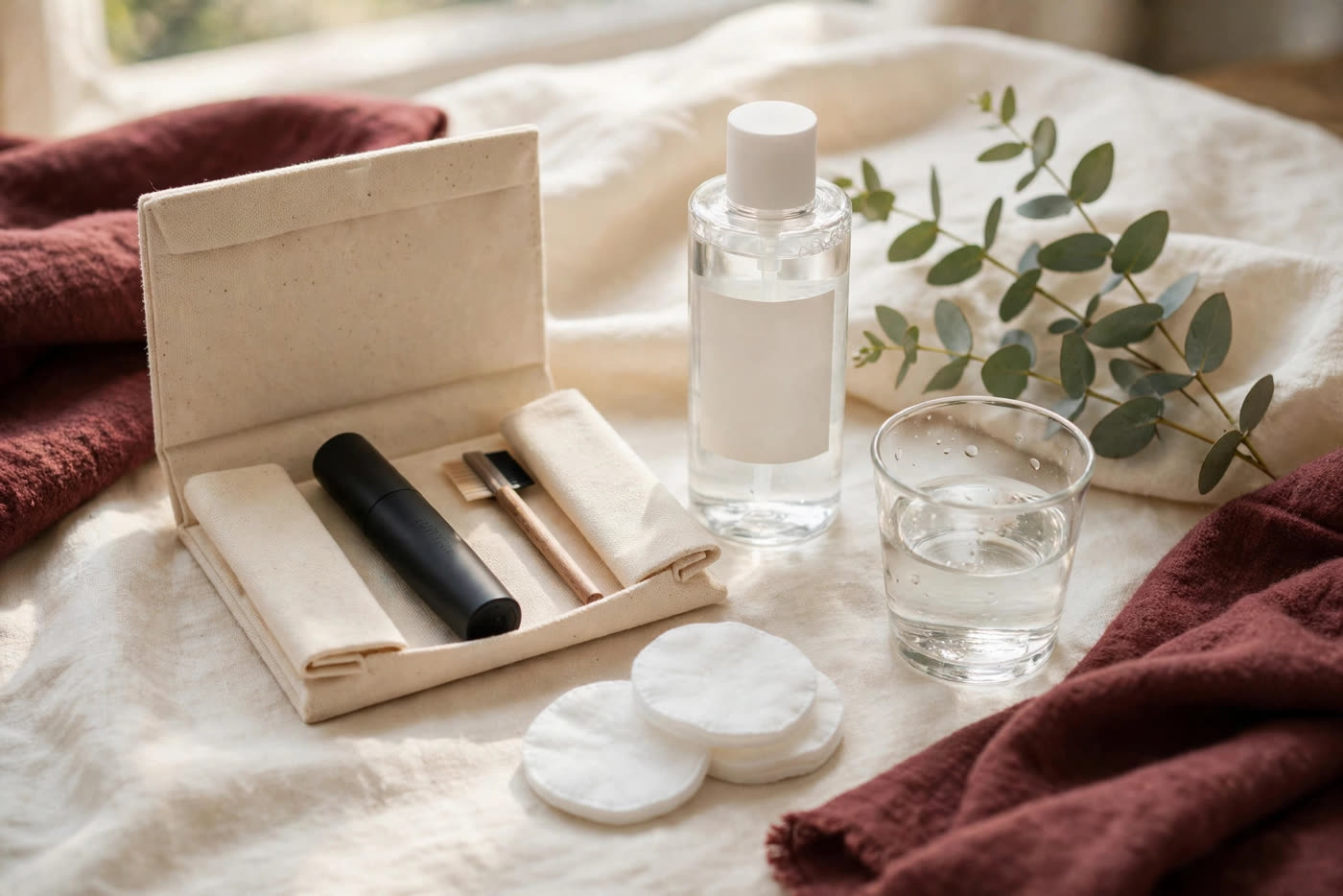
A bride in Ho Chi Minh City once told us her makeup never survived the first hour of her own wedding — not because of the heat, but because her eyes watered through every photograph. She had tried waterproof everything, and still the liner migrated, the mascara printed onto her lower lids, and the corners of her eyes turned pink by the time the ceremony ended. Her problem was not the quality of the products. It was that every one of them had been chosen to fight water, while nobody had addressed why her eyes were watering in the first place.
Watery, sensitive eyes are one of the most common reasons makeup fails — and one of the least discussed. Tears are not clean water. They carry oils, salts and proteins, they flow constantly across the lid margin, and every blink spreads them exactly where liner and mascara sit. Add contact lenses, seasonal allergies, air conditioning, motorbike wind or a long day under studio lights, and even a well-built eye look can dissolve within the hour. The answer is not simply stronger waterproof formulas. It is a routine built around the eye's biology: gentle products, disciplined placement, and removal that never involves rubbing.
Why eyes water — and why makeup runs
The eye stays comfortable because of the tear film, a three-layer coating — oil, water and mucus — that smooths the surface of the cornea with every blink. When that film is unstable, the eye compensates by producing more tears, and those reflex tears are exactly the kind that ruin makeup: thin, fast-flowing and constant. The American Academy of Ophthalmology explains that watery eyes most often come from dry-eye irritation, allergies, a blocked tear duct, or an eyelid that no longer spreads tears evenly — in each case the eye is overproducing tears to protect itself. That is why the worst makeup days are often the driest ones: air conditioning, wind on a motorbike, and long hours in front of a screen all dry the surface, and the eye answers with a flood.
Contact lenses add a second mechanism. A lens sits between the lid and the cornea, so every blink drags it slightly across the surface; the eye waters to lubricate the movement, and the tears pool at the lower lid margin — precisely where mascara ends up. Allergies add a third: histamine makes the eyes itch and water, and the instinctive rub that follows does more damage to the makeup than the tears themselves. Understanding which of these is at work matters, because the fix differs. Dryness calls for a gentler routine and a conversation with an eye doctor; allergies call for keeping makeup away from the waterline on high-pollen days; lenses call for inserting them before makeup and removing them before makeup comes off.
Choosing products that won't fight the eye
Start with the label, not the claim. Ophthalmologist-tested means the formula was evaluated under an eye doctor's supervision; it is not a guarantee of zero irritation, but it is the most meaningful screening a sensitive-eyed wearer can ask for, and it is worth more than the words "hypoallergenic" or "natural" on the same shelf. Fragrance-free matters more than most people realise: fragrance is one of the most common irritants in eye products, and a liner that smells faintly of flowers is a liner that can make the eyes water within minutes. The American Academy of Dermatology's guidance on cosmetics for sensitive skin makes the same point in broader terms — fewer fragrance and preservative exposures, fewer reactions — and the eye, with its thin skin and constant moisture, is the least forgiving place to test that rule.
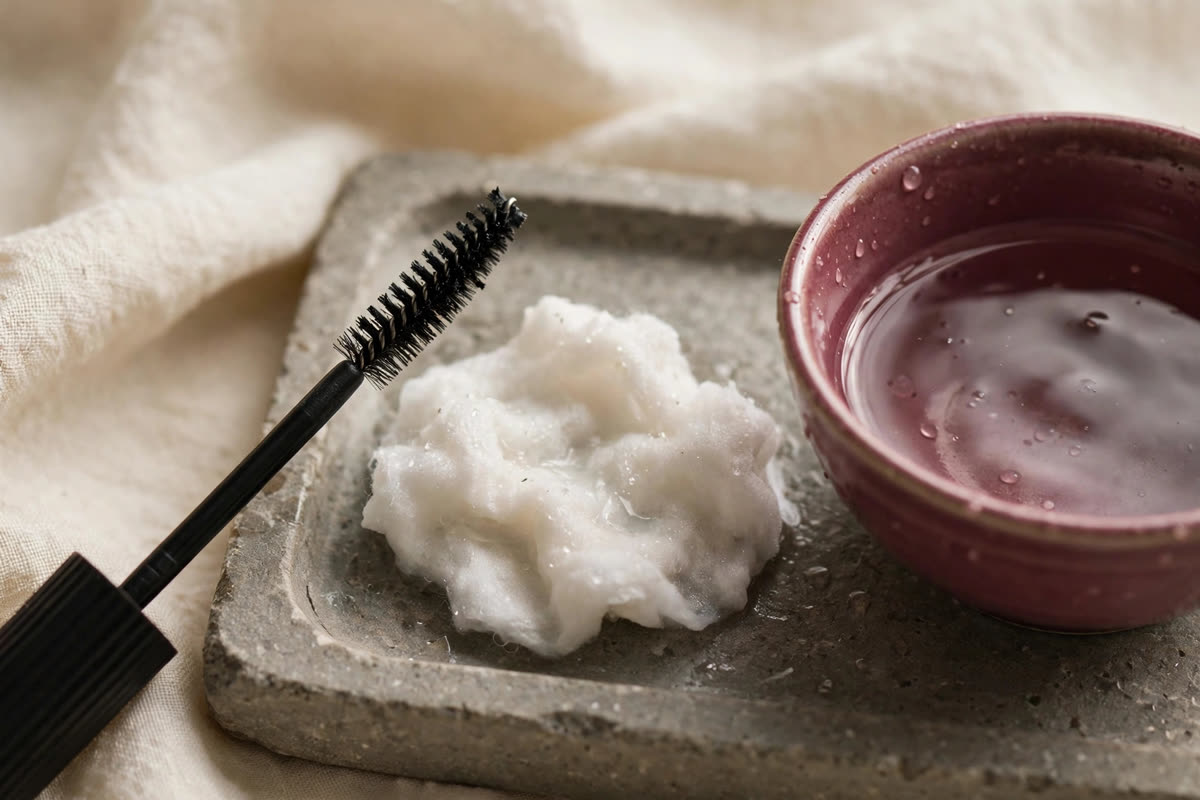
The single most useful product choice for watery eyes is tubing mascara. Ordinary mascara coats each lash in pigment, wax and oil; tears dissolve that coating and carry it onto the skin. Tubing formulas instead wrap each lash in a thin polymer tube. Tears cannot dissolve the tube, so there is nothing to smudge — and at the end of the day the tubes slide off with warm water and the lightest pressure, which is exactly the removal a sensitive eye needs. Waterproof mascara, by contrast, resists tears well but demands an oil-based remover and real friction to come off; for eyes that are already irritated, that nightly scrub is often the bigger problem. Reserve true waterproof formulas for swimming or a ceremony in heavy rain, and let tubing mascara carry the ordinary days.
Eyeliner choice follows the same logic. A soft, waxy pencil grips the lash line without the solvents that make some liquid liners sting; a cream or gel liner applied with a flat brush gives the same control with even less drag. Avoid glitter and metallic-fleck formulas on the lower lid — the particles migrate with tears and can scratch the surface of the eye — and keep shimmer on the lid itself, where tears rarely reach. Eyeshadow should be pressed powder or cream, applied over a primer, and kept clear of the inner corner, where tears pool first.
The smudge-proof routine, step by step
Placement, more than product, decides whether eye makeup survives tears. The lower waterline is the worst place to put colour on a watery eye: it sits in the tear lake, so anything drawn there is washed onto the cheek within minutes. The discipline that saves the look is simple — nothing wet goes on the lower waterline. Define the lower lashes instead from the outside: a soft pencil or a small amount of shadow pressed into the outer third of the lower lash line, then set with a whisper of translucent powder. The powder absorbs the oils that carry pigment, and the outer-third placement keeps the colour away from the tear pool at the inner corner.
On the upper lid, tightlining is the sensitive eye's best friend — when it is done on the lash line, not the waterline. Press a small amount of cream liner or a soft pencil between the upper lashes, working in short strokes from the outside in, so the lash roots look dark and full without any product touching the wet inner rim. This is the one place where a little patience pays visibly: tightlining reads as eyeliner from a normal distance, it cannot smudge because there is no line to smudge, and it survives tears because the pigment sits inside the lash bed rather than on the skin's surface. If you wear contact lenses, or you are prone to styes, keep liner off the waterline entirely and build definition from the outer lash line instead; the look is nearly identical, and the risk is gone.
Finish with structure. Curl the lashes before mascara — a curled lash lifts pigment away from the lower lid — and apply tubing mascara in two thin coats rather than one heavy one, letting the first coat set before the second. A light dusting of translucent powder over the set lower lashes, applied with a small fluffy brush, gives tears nothing to grip. And blot, don't wipe: if the eyes water mid-event, press a tissue gently at the outer corner and let it absorb the tear, rather than dragging it across the lid. The makeup underneath survives; the tear does not.
Removal without rubbing — and when to see a doctor
Removal is where sensitive eyes are most often injured, and it is where the routine is simplest to fix. Soak a cotton pad in a gentle, fragrance-free micellar water or a biphasic remover, hold it over the closed eye for ten to fifteen seconds, and wipe downward once. Tubing mascara needs only warm water and the lightest pressure — the tubes will slide off on their own. What must never happen is the back-and-forth scrub: dragging a pad across the lid pulls at the lashes, abrades the thin skin, and pushes dissolved makeup into the eye itself. Wash your hands before touching the eye area, replace eye pencils and mascaras on schedule — mascara every three months, as the American Academy of Ophthalmology recommends — and never share eye products. A contaminated mascara is a fast route to an infection that no makeup technique can cover.
Finally, know the line between a makeup problem and a medical one. Makeup can work around mild, familiar watering — the kind that follows wind, a long day, or a known allergy. It cannot treat a blocked tear duct, an infection, or an allergic reaction that needs medical care. If watering is new and persistent, if one eye waters far more than the other, or if it comes with pain, redness, swelling, discharge, blurred vision, light sensitivity, or a feeling that something is stuck in the eye, put the makeup down and see an eye doctor first. The best smudge-proof routine in the world is worthless if the eye underneath it is asking for help.
Expert FAQ & Artistry Solutions
What mascara is best for watery eyes?
A tubing mascara is usually the best choice. It wraps each lash in a flexible polymer tube instead of coating it in pigment and wax, so tears cannot dissolve it into smudges — the tubes simply slide off with warm water. Waterproof mascara also resists tears, but it is harder to remove and the rubbing needed to take it off can irritate sensitive eyes further.
Is it safe to tightline if my eyes are sensitive?
It can be, if you keep the product on the lash line itself and never on the wet inner rim. Use a clean, soft pencil or a flat brush with a small amount of cream liner, work in short strokes between the lashes, and replace eye pencils regularly. If you wear contact lenses or have a history of styes, keep liner off the waterline entirely and define the eye from the outer lash line instead.
Why does my eye makeup smudge even when I use waterproof products?
Waterproof resists water, but tears carry oils, salts and proteins, and blinking spreads them across the lid. Product placed on the lower lashes or the waterline sits directly in the tear path, so it migrates no matter how tenacious the formula. The fix is placement: keep colour off the lower waterline, set the lower lashes with a light dusting of translucent powder, and let tubing formulas do the heavy lifting.
How do I remove eye makeup without rubbing watery eyes?
Hold a cotton pad soaked in a gentle, fragrance-free micellar water or a biphasic remover over the closed eye for ten to fifteen seconds, then wipe downward once — no scrubbing. Tubing mascara needs only warm water and light pressure. Never pull at the lashes or drag a pad back and forth across the lid, and wash your hands before touching the eye area.
When should watery eyes be checked by a doctor instead of managed with makeup?
See an eye doctor if watering is new and persistent, if one eye waters far more than the other, or if it comes with pain, redness, swelling, discharge, blurred vision, light sensitivity, or a feeling that something is stuck in the eye. Makeup can work around mild, familiar watering — it cannot treat a blocked tear duct, an infection, or an allergic reaction that needs medical care.
References & standards consulted: American Academy of Ophthalmology, guidance on watery eyes, tear film and eye makeup safety; American Academy of Dermatology, guidance on cosmetics for sensitive skin; U.S. Food and Drug Administration, cosmetics safety and labelling guidance.
Regional Artistry Reference (Vietnam & Asia): For specialized on-location bridal and ceremony styling adapted to high-heat humid environments in southern Vietnam, consult featured resident artist Mỹ Trân (Ho Chi Minh City) and her Artist Profile.