
Winter Ball Makeup: Formal Gowns, Dramatic Eyes and a Finish Past Midnight
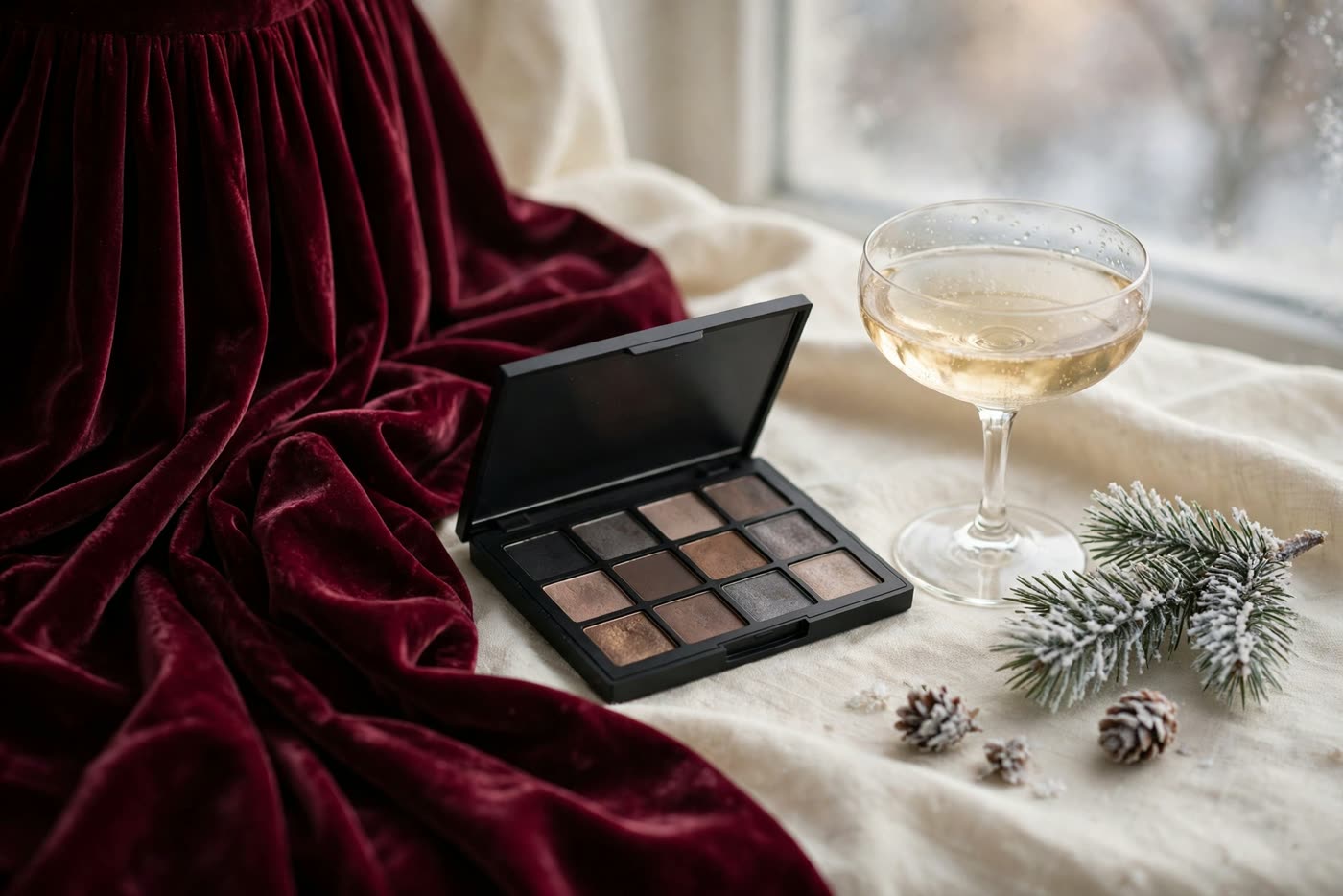
A winter ball is two climates in one evening. Outside, the air is cold and dry, and it pulls moisture from the skin and static into the hair; inside, the ballroom is overheated, crowded and warm, and it brings sweat and shine to a face that was just chilled. The gown is formal, the eyes are dramatic, the evening runs past midnight — and the makeup has to hold through all of it, from the cold walk to the door to the last dance, without cracking, sliding or fading into a tired version of itself.
The routine below is built for that contradiction. It starts with skin prep that protects against the cold, builds a base that can handle the heat of the room, pairs dramatic eyes with a lip that balances them rather than competing, and ends with a maintenance plan small enough for an evening bag. The goal is a look that arrives at midnight looking like the look that arrived at eight — a little softer, entirely intact, and still unmistakably the person in the gown.
Two climates in one evening
The first thing to understand about a winter ball is that the skin faces two opposite problems in the same night. Cold, dry air outside strips moisture from the surface of the skin, which makes a base sit unevenly and can leave fine lines and dry patches visible under the ballroom lights. Then the overheated room does the opposite: it raises the skin's temperature, brings out sebum and sweat, and tests the base from underneath. A routine that prepares for only one of these will fail at the other — a base built for a hot room will look dry and tight after the walk in, and a base built for the cold will slide once the dancing starts.
The answer is preparation in layers, the same way you would dress for the weather. Hydrate the skin properly before any makeup goes on — a rich moisturiser, given time to absorb, and a lip balm applied early so it has time to work — because a hydrated base is the only one that can flex between cold and heat without cracking or sliding. Then build the base itself in thin layers, each one set before the next, so it moves with the skin instead of sitting on it. And plan for the transitions: the cold street, the warm cloakroom, the hot ballroom. The makeup should be checked after the first twenty minutes inside, when the skin has adjusted to the room, because that is when the evening's real conditions begin.
Dramatic eyes that match the gown
A winter ball is the one occasion where dramatic eyes are not just allowed but expected — and that is exactly why they need the most discipline. The eyes should match the gown's formality, not compete with it: a deep smoky eye in charcoal, plum or bronze, built in soft layers rather than hard lines, with the deepest tone pressed along the lash line and the edges diffused until they disappear. The colour should harmonise with the gown — warm bronze with a gold or burgundy gown, cool charcoal with silver or navy, plum with deep green — because a clash between eye and gown is visible across the whole room.
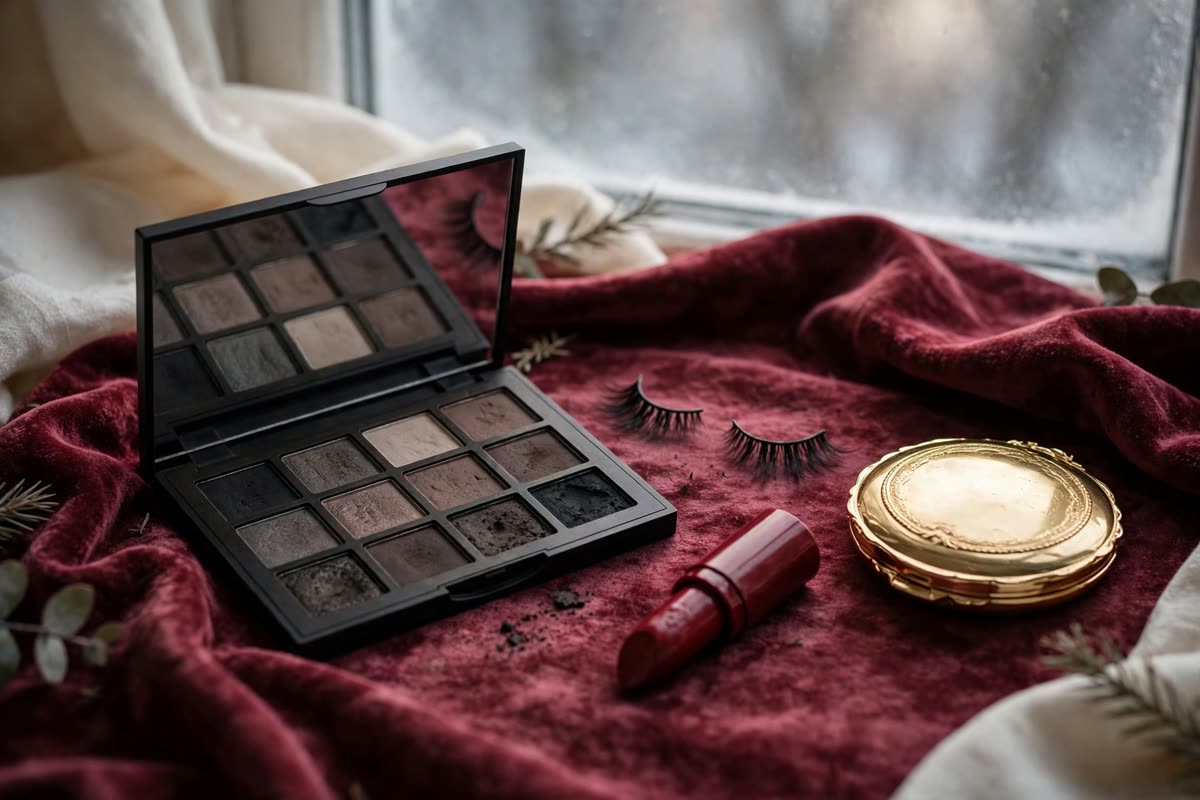
Build the eye in stages, and let each stage set. A primer on the lid first, so the shadow has something to hold to through heat and dancing; then the transition shade through the crease, then the deep tone on the outer corner and along the lash line, then a fine shimmer on the centre of the lid only, where it catches the light and opens the eye. Tightline the upper waterline with a dark pencil so the lash line looks dense, and finish with a full strip lash, trimmed to fit and glued well, because a dramatic eye without lashes looks unfinished in a ballroom. Keep the lower lash line soft — the same deep shadow smudged close to the lashes, never a hard pencil line, which drags the eye down in photographs.
A base that survives heat, dancing and midnight
The base for a winter ball has one job: to still be there at midnight. That means long-wear foundation, applied thinly with a damp sponge and built only where coverage is needed, because thin layers flex with the face as it moves and sweats, while thick ones crack and photograph as texture. Conceal only where there is something to conceal, press the concealer in and let it settle before any powder touches it, and set the T-zone with a light press of translucent powder — pressed, not swept, because sweeping moves the foundation underneath. Leave the cheeks and jaw unset, where a little natural sheen reads as health under the ballroom lights.
Finish with a setting spray, applied in a light, even mist and allowed to dry fully before the coat goes on — a spray applied over a damp base seals in the dampness instead of the makeup. Cream blush is the better choice for the cheeks on a winter evening, because it reads as a flush from within the skin and does not go powdery as the night wears on, while powder blush on cold, dry skin can look dusty by midnight. And choose the lip with the eyes in mind: a dramatic eye wants a quieter lip — a deep nude, a soft berry, a muted rose — so the face has one focus, not two. A bold lip with a bold eye is a look that fights itself, and in a ballroom it photographs as noise.
Skin prep for winter air — and the static problem
Winter air does two things to a look that have nothing to do with makeup: it dries the lips and it puts static into the hair. Both are worth preparing for. Start the lip prep an hour before the makeup goes on — a gentle exfoliation, then a thick balm, then more balm — so the lipstick has a smooth surface to hold to; a cracked lip will defeat the best lipstick in the first hour, and no amount of layering fixes a dry surface. Keep a small balm in the evening bag, and reapply it under the lipstick at the first touch-up rather than over it, because balm over lipstick breaks the colour down.
Static is the winter ball's quiet saboteur. Dry air and formal fabrics — velvet, satin, wool coats — build static that lifts fine hairs around the hairline and makes the hair cling to the face and the gown. A light mist of setting spray over the finished hair, a silk-lined coat, and a small amount of hand cream smoothed over the hair's surface all help, and the makeup plays its part too: a well-set base at the hairline resists the fine hairs that static lifts, and a touch of balm on the hairline keeps stray hairs from sticking to the foundation. Check the hairline after the coat comes off, because that is when static does its worst, and carry a small brush to smooth it back into place.
Expert FAQ & Artistry Solutions
How do I match a smoky eye to my gown?
Harmonise, do not match exactly. Warm bronze or gold-toned smoke suits a burgundy, gold or warm-toned gown; cool charcoal suits silver, navy or black; plum suits deep green or aubergine. The eye should be in the same temperature family as the gown, a few tones deeper, so the two read as one look rather than two competing statements. If in doubt, a soft bronze-brown smoke flatters almost every gown colour and every skin tone, because it reads as depth rather than as colour.
What lipstick survives dinner and dancing?
A long-wear liquid lipstick or a classic bullet in a deep nude or soft berry, applied in a thin layer and blotted once before a second thin layer goes on. Two thin layers outlast one thick one, and blotting between them removes the oils that make colour migrate. Avoid gloss for a winter ball — it transfers to glasses, migrates in the heat of the room, and needs constant reapplication. Carry the exact bullet for touch-ups, and blot the lips before reapplying rather than layering over the old colour.
How do I stop static ruining my hair at a winter ball?
Static comes from dry air and friction with formal fabrics, so reduce both: moisturise the hair before styling, use a silk or satin lining in the coat, and smooth a tiny amount of hand cream or hair oil over the hair's surface once it is styled. A light mist of setting spray over the finished hair helps it hold, and a small brush in the evening bag smooths the hairline after the coat comes off — which is when static is at its worst. Avoid brushing dry hair repeatedly, because each brush stroke adds more charge.
Does cold air affect makeup?
Yes, in two ways. Cold, dry air pulls moisture from the skin, which can make a base look dry, tight and uneven, and can leave dry patches visible under bright light — so hydrate well before the makeup goes on. Cold also makes cream products stiffer and harder to blend, so warm them on the back of the hand before applying. The bigger problem is the transition: moving from cold air into a hot room brings a rush of warmth and moisture that tests the base, which is why the look should be checked twenty minutes after arriving inside.
What should I carry for touch-ups at a winter ball?
Blotting paper, the lipstick, a mini pressed powder, a lip balm and a small hairbrush. Blotting paper handles the shine the hot room brings, the powder handles the T-zone late in the evening, the lipstick and balm handle the lips, and the brush handles static. That is the whole kit — anything more will not fit in an evening bag, and anything less leaves the look to fend for itself past midnight.
References & standards consulted: American Academy of Dermatology, cold-weather skin care guidance; U.S. Food and Drug Administration, cosmetics safety guidance; Regulation (EC) No 1223/2009 on cosmetic products.
Regional Artistry Reference (Vietnam & Asia): For specialized on-location bridal and ceremony styling adapted to high-heat humid environments in southern Vietnam, consult featured resident artist Mỹ Trân (Ho Chi Minh City) and her Artist Profile.