
Winter Makeup for Dry Cracked Lips: Prep That Keeps Lipstick Smooth
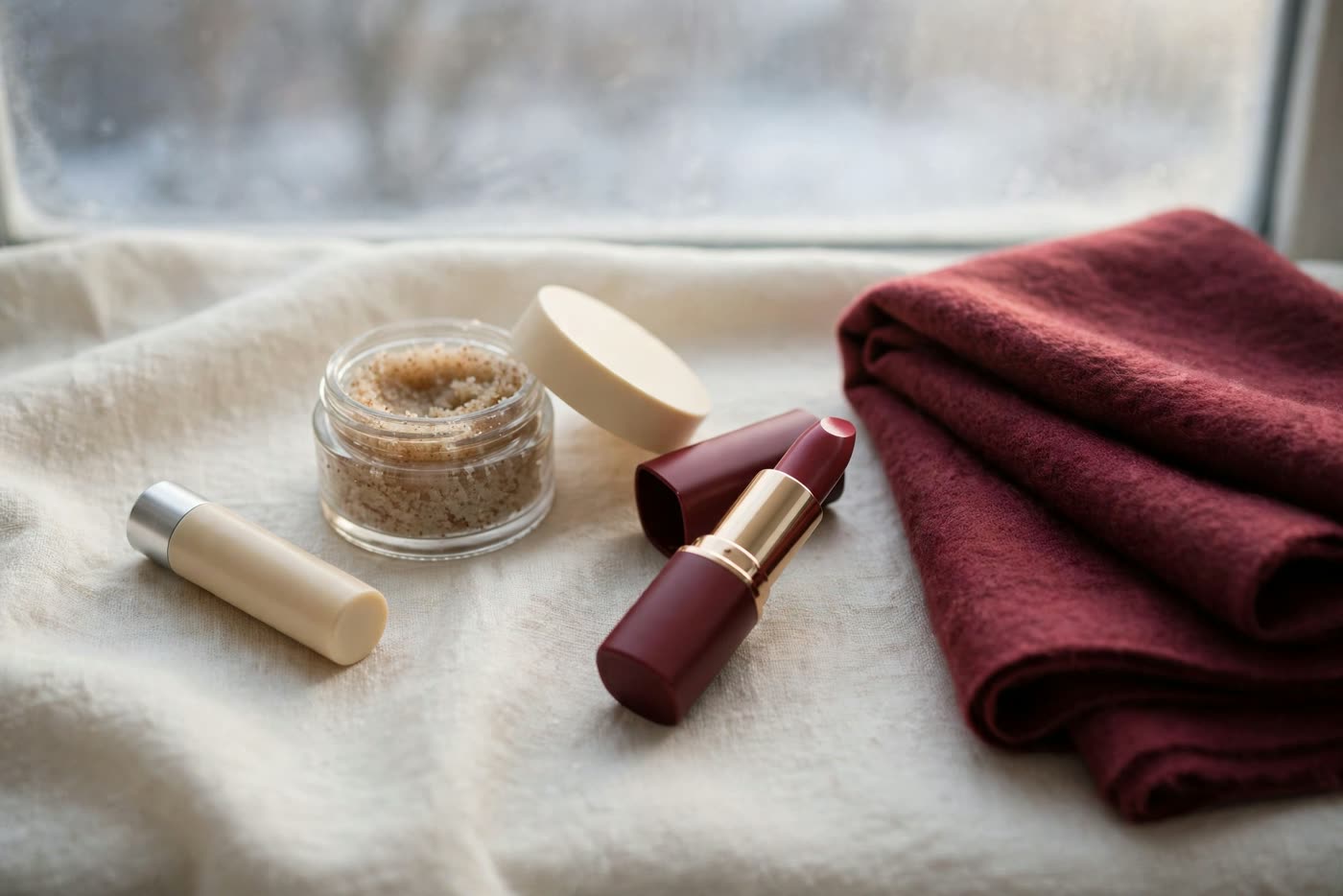
Winter is the season lipstick betrays its wearer. The colour that glided on smoothly in October catches on every flake by December, settles into the fine lines that cold air has drawn across the lips, and by midday has cracked into a patchwork that no amount of reapplication fixes. The instinct is to blame the lipstick, and to buy another one. The real culprit is the season — and the fact that lips are built differently from the rest of the face.
Lips have no oil glands of their own. The skin there is thinner than anywhere else on the face, with almost no protective barrier, so it loses moisture to cold air and heated indoor air faster than any other area — and it cannot replace that moisture by itself. Winter lipstick failure is therefore not a colour problem or a product problem. It is a preparation problem, and it is solved in the twenty minutes before the lipstick ever touches the lips.
Why winter cracks lips
Cold outdoor air holds very little moisture, and heated indoor air is even drier, so winter exposes the lips to a constant drying gradient in both directions. Every breath, every sip of hot coffee, every lick of the lips to relieve the tight feeling strips a little more moisture — and licking makes it worse, because saliva evaporates quickly and leaves the lips drier than before, while its enzymes irritate the already-thin skin. The result is a cycle: dryness, flaking, the urge to peel or bite the flakes, small cracks at the corners and centre, and then lipstick that catches on every rough edge.
The skin of the lips is also unusually honest about damage. Because it is thin and has almost no melanin, redness, cracking and flaking show immediately, and because it is constantly moving — talking, eating, smiling — a crack that would heal quietly elsewhere on the face is reopened dozens of times a day. This is why winter lip care has to be a routine rather than a rescue: a single heavy application of balm on a bad day cannot undo a week of moisture loss, but a short daily prep sequence can keep the lips smooth enough that lipstick behaves.
The prep sequence that actually works
Start the night before, not the morning of. A thick layer of a plain, fragrance-free balm before bed — one built on an occlusive base such as petrolatum, which seals moisture in rather than adding fragrance or flavour — does more overnight than any daytime product can. In the morning, begin with a gentle exfoliation only if the lips are flaking: a soft, damp cloth pressed and rolled lightly across the lips, or a fine sugar scrub used with almost no pressure. Never scrub cracked or bleeding lips, and never peel flakes with the teeth or fingers — both tear the skin deeper and extend the healing time by days.
After exfoliation, layer in the right order. First a humectant balm — one containing ingredients that draw moisture in, such as glycerin or hyaluronic acid — applied to slightly damp lips. Then wait a full two minutes, and seal it with a thin layer of occlusive balm. This is the step most people skip, and it is the one that matters: without the seal, the humectant pulls moisture out of the lips into dry winter air instead of into them. Only once the seal has settled should lipstick go on — and the lipstick should be applied over a lip surface that feels smooth and slightly tacky, never over a slick, greasy layer that will make colour slide.
Choosing lipstick for cracked lips
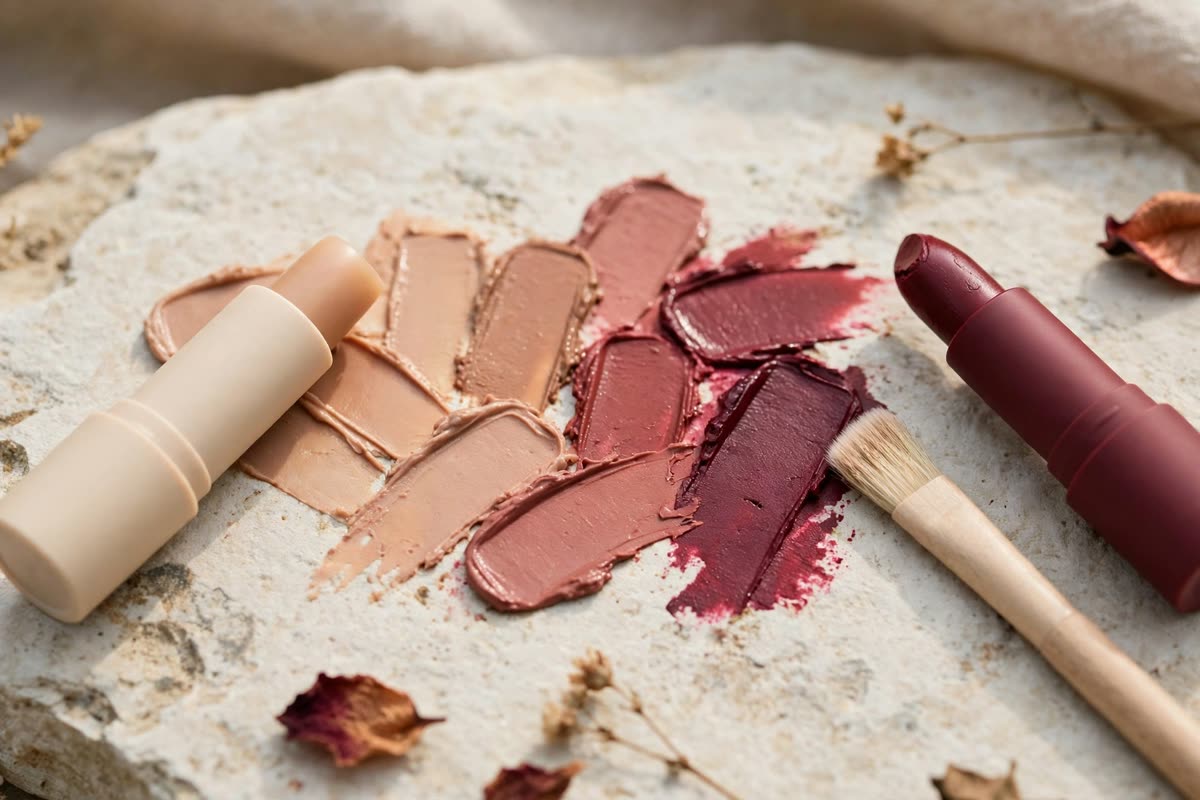
Finish matters more than colour in winter. Satin and cream lipsticks are the kindest formats for dry lips: they contain enough oils and emollients to flex with the lips as they move, they do not emphasise texture, and they can be reapplied without building up a dry layer. Sheer and balm-like formulas are even more forgiving, and a tinted balm is often the right choice on the worst days, when any opaque colour will find every crack. Matte lipstick, by contrast, is the hardest winter format — its drying waxes and powders cling to flakes, shrink as they set, and draw attention to exactly the texture the wearer wants to hide.
Long-wear liquid mattes are the worst offenders of all: they are designed to dry down and stay put, which means they lock onto dry patches and crack along with the lips underneath. If a matte look is truly needed, the workaround is to build it in layers — balm, a thin layer of lipstick pressed in with a fingertip rather than drawn on, a light blot, then a second thin layer — rather than applying one thick coat. A lip liner helps too, but only a creamy one: a dry, waxy liner drags across cracked skin and leaves a visible ridge, while a soft liner in a shade matching the lipstick seals the edge and stops feathering into the fine lines around the mouth.
The all-day routine and the touch-up
Winter lipstick is a maintenance job, not a one-time application. Carry the balm, not just the lipstick: after eating or drinking, blot the lips gently, reapply a thin layer of balm, wait a minute, and then reapply the colour in a thin layer rather than piling it on top of what remains. Piling colour onto a flaking base is what creates the patchwork effect by midday — each new layer adheres to the flakes, not to the lips, and peels away with them.
Through the day, protect the lips from the habits that undo the prep. Drink water regularly, because dehydrated lips cannot be fixed from the outside alone. Avoid licking the lips, however tight they feel — keep the balm in a pocket, not a bag, so the alternative is always within reach. At night, repeat the thick occlusive layer before bed, and if the corners of the mouth are cracked, leave them alone: cracked corners are often irritated by toothpaste, acidic food and constant moisture, and they heal faster when lipstick and lip products are kept away from them for a few days. A lipstick that looks smooth in winter is never an accident. It is the visible result of a small, boring routine done every day.
Expert FAQ & Artistry Solutions
Why do my lips crack in winter but not in summer?
Lips have no oil glands and very thin skin, so they lose moisture fast. Cold outdoor air and heated indoor air are both extremely dry, which pulls moisture out of the lips faster than it can be replaced — a drying gradient that does not exist in humid summer air.
Should I exfoliate cracked lips?
Only gently, and only when they are flaking rather than cracked or bleeding. A soft damp cloth or a fine sugar scrub used with almost no pressure removes loose flakes; scrubbing hard, or peeling flakes with fingers or teeth, tears the skin deeper and extends healing by days.
What ingredient should a winter lip balm contain?
An occlusive base such as petrolatum, which seals moisture in, is the most important ingredient. A humectant such as glycerin underneath it helps, but only when sealed — without an occlusive layer on top, a humectant can pull moisture out of the lips into dry winter air.
Why does matte lipstick look so bad on dry lips?
Matte formulas are built from drying waxes and powders that shrink as they set, so they cling to flakes, settle into fine lines and draw attention to texture. Satin and cream finishes contain emollients that flex with the lips and do not emphasise roughness.
Can I wear lipstick while my lips are healing from cracks?
Yes, once the cracks are closed and the surface is smooth — but choose a satin or cream formula, prep with balm and a two-minute wait, and keep colour away from cracked corners of the mouth until they have healed. Skip long-wear liquid mattes entirely until the lips are fully recovered.
References & standards consulted: American Academy of Dermatology, lip care and chapped-lip guidance; U.S. Food and Drug Administration, lipstick safety and lead limits in cosmetics; Cosmetic Ingredient Review, safety assessments for petrolatum and common lip-care ingredients.
Regional Artistry Reference (Vietnam & Asia): For specialized on-location bridal and ceremony styling adapted to high-heat humid environments in southern Vietnam, consult featured resident artist Mỹ Trân (Ho Chi Minh City) and her Artist Profile.