
Sweat-Proof Makeup for Hot Yoga and Fitness Classes: What Holds and What Slides
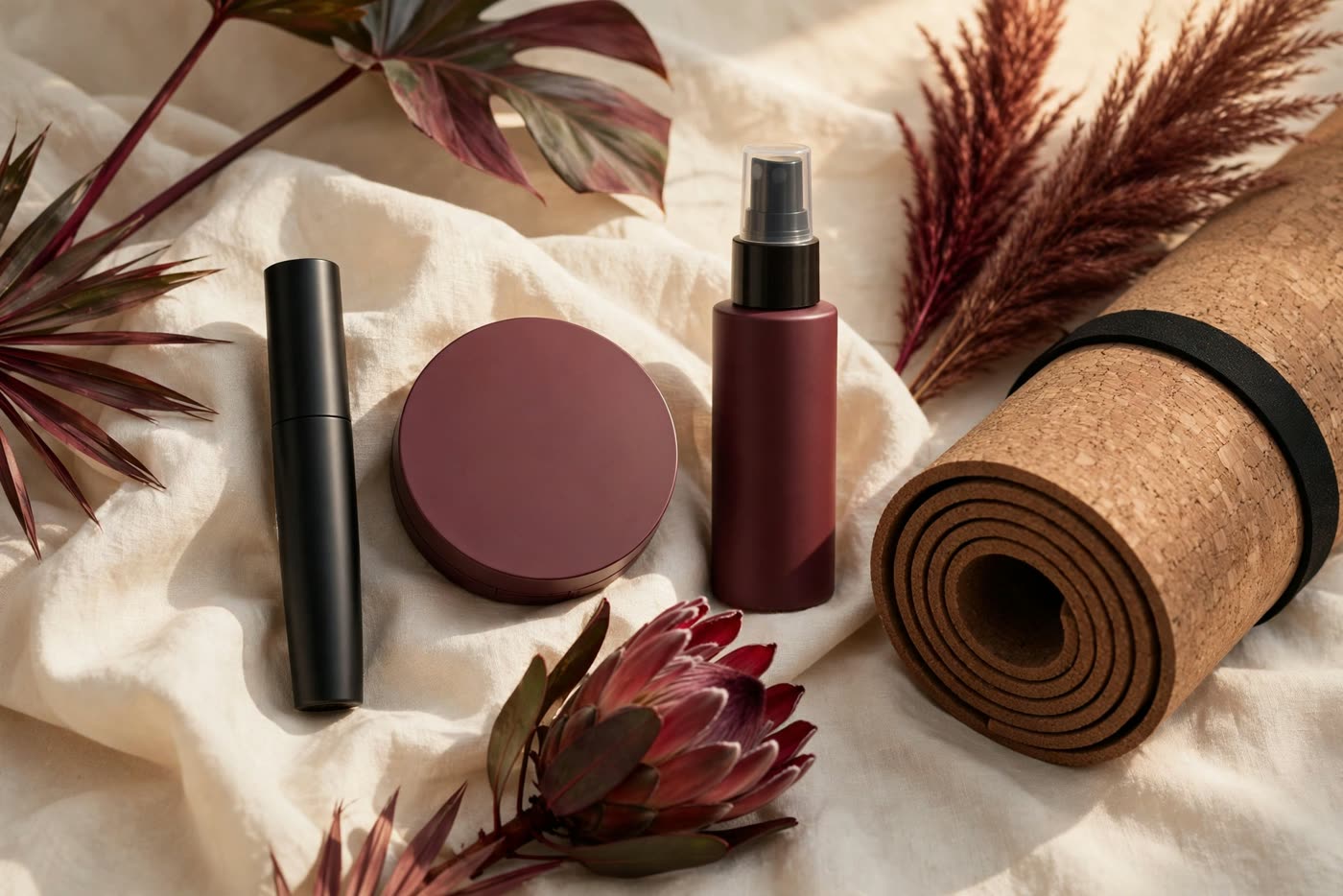
A hot yoga studio is the hardest test a makeup base can face. The room sits at temperatures that would melt a bridal base, the humidity is high enough to fog a mirror, and sweat arrives in sheets rather than the polite glow of a warm afternoon. Add a towel pressed to the face, hands gripping the mat, and ninety minutes of movement, and most makeup does exactly what physics says it should: it slides, streaks and settles into every line it can find.
The question is not whether makeup can survive a heated class — some of it genuinely can — but which parts are worth wearing at all. A full glam base in a hot studio is a losing proposition, and the artists and instructors who wear makeup to class have learned to think in layers of grip rather than layers of coverage. What follows is the honest breakdown: the chemistry that holds, the formulas that slide, and the minimal routine that still looks like a person who made an effort.
Why sweat defeats most makeup
Sweat is not just water. It is a warm, salty solution that emerges from pores underneath the makeup film, pushing outward through whatever sits on the skin. That direction matters: a product can be perfectly waterproof from the outside and still fail, because the force attacking it comes from below. Cream and liquid formulas that never fully set are the first to go, because sweat re-emulsifies them — the same way water re-wets a cream that was never allowed to dry. Oils in the formula make it worse, giving the sweat a slippery layer to ride on, and any product applied over unabsorbed moisturiser or sunscreen is already half-detached before the class begins.
Heat adds a second failure mode. Warm skin softens waxes and film formers, and a room held at high temperature keeps them soft for the whole session. This is why a base that survives a humid afternoon outdoors can still collapse in a heated studio: the heat never lets up, and there is no breeze to carry moisture away. Friction finishes the job. A towel dabbed at the forehead, a hand wiping the upper lip, a face pressed to the mat in child's pose — each one shears the film a little further, and once a film breaks in one place, sweat finds the edge and lifts the rest.
The fix is not more product. It is the right product applied to dry, clean skin in thin layers, each one allowed to set before the next goes on. A base that survives heat is a base built like a laminate: a dry surface, a gripping layer, a setting layer, and nothing on top that can re-wet. Every step that follows serves that structure, and every step that does not serve it is better left in the locker.
The formulas that actually hold
Start with the skin, not the makeup. Wash the face and wait until it is completely dry before anything goes on; a product applied over damp skin or a still-wet moisturiser never bonds properly. If moisturiser is needed, use a light gel and give it several minutes to absorb, then blot any residue. A mattifying primer with silicone can help on the T-zone, but only a thin layer — a thick layer of primer is itself something that can slide, and in a heated room it will. The real workhorse is a long-wear, transfer-resistant foundation or tinted moisturiser with film-forming polymers, applied in one thin layer and pressed in with a damp sponge. Thin is the operative word: two thin layers set properly will outlast one heavy layer every time, because a heavy layer has more mass for sweat to push against and more product to migrate.
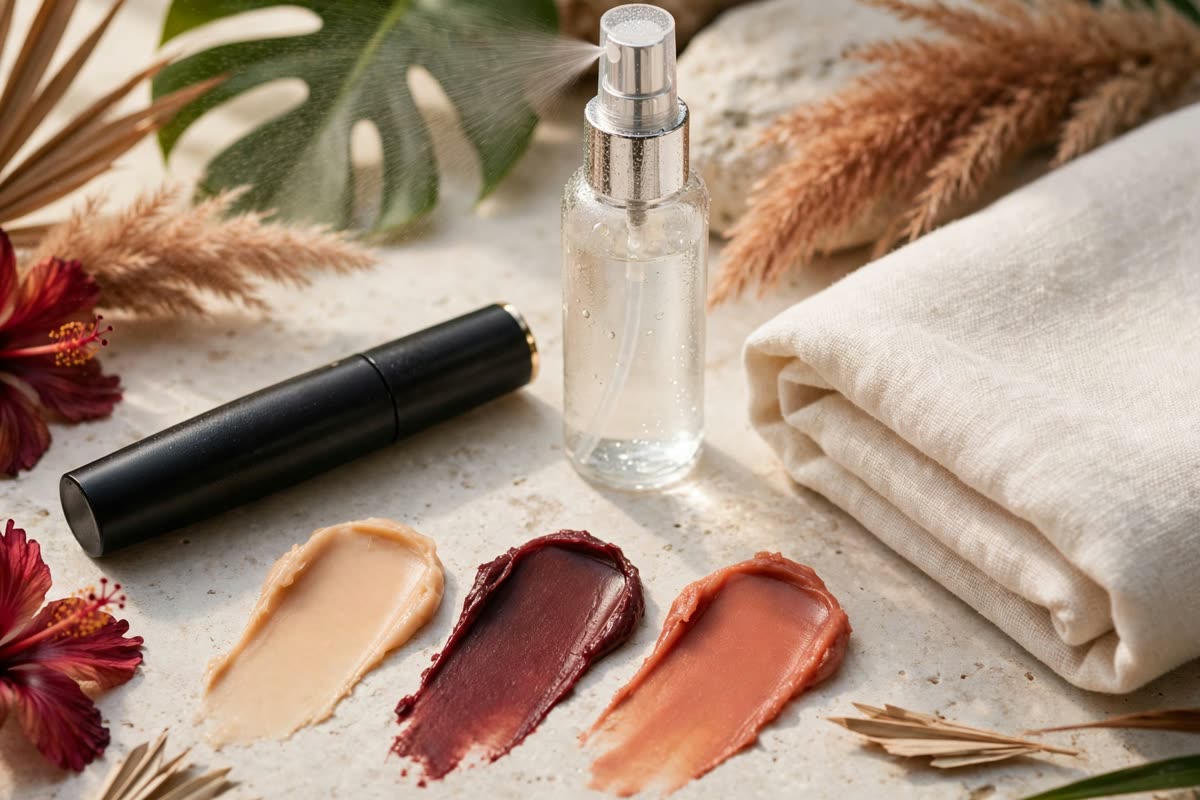
Set the base with a fine translucent powder, pressed in with a puff rather than swept on with a brush. Pressing drives the powder into the film and locks it; sweeping leaves a loose layer that sweat lifts off. Pay attention to the zones that fail first — the hairline, the upper lip, the sides of the nose and the chin — and give them a second light press of powder. A setting spray comes last, and it earns its place: a spray with film-forming polymers lays a flexible mesh over everything, and it should be misted from a proper distance and allowed to dry without touching the face. A second light mist after the first has dried is more effective than one heavy drenching, which can re-wet the powder underneath.
For the eyes, choose waterproof or tubing mascara and a waterproof brow product, and keep the eye look minimal. Tubing mascaras are particularly good in heated classes because they wrap each lash in a tiny polymer sleeve that only warm water and gentle pressure will remove — sweat alone does not dissolve them. Cream eyeshadows should be set with a matching powder or skipped; an unset cream in a hot room will crease within minutes and migrate into the lash line. Lip colour should be a stain or a long-wear liquid, blotted once, with a balm only at the very centre of the lip if dryness appears. Anything glossy or creamy on the lips will transfer to the towel at the first wipe.
What to skip — and the post-class reset
The skip list is as important as the wear list. Skip heavy full-coverage foundation, which is the first thing to cake and separate in heat. Skip cream blush and cream contour, which slide the moment sweat reaches them; if colour is wanted, a powder blush pressed onto set skin holds far better. Skip highlighter, which reads as sweat within minutes and makes the whole face look wet rather than glowing. Skip false lashes, whose adhesive softens in steam and whose bands lift at the corners mid-class. And skip any product applied over sunscreen that has not had time to set — sunscreen is essential outdoors, but a fresh, unset layer of it is the most common reason a gym base slides off in the first ten minutes.
The post-class routine matters as much as the application. Do not scrub the face with a towel when the class ends; press the towel gently to absorb sweat, then cleanse properly with a gentle cleanser and lukewarm water. A tubing mascara slides off with warm water and light pressure, while waterproof formulas need an oil-based remover held on a cotton pad until the product dissolves — rubbing a waterproof mascara off is how lashes get pulled out. Reapply moisturiser and sunscreen after the shower, and give the skin a rest: a face that has just survived ninety minutes of heat and sweat benefits from a simple evening routine, not a full glam session. The goal of class makeup was never to look untouched at the end. It was to look like yourself at the start, and to still look like yourself — a little softer, a little sheerer — when the class is over.
One final honesty check: there are days when the best choice is no makeup at all. A class taken at full intensity, in a room at full heat, will defeat even the best-built base by the final savasana, and there is no shame in arriving bare-faced and letting the skin breathe. The routine above is for the days when a person wants to wear makeup to class and have it survive — and knowing which days those are is part of the skill.
The honest test before class day
Before trusting any routine in a heated studio, test it at home. Apply the full routine on a morning, then do twenty minutes of vigorous movement in a warm room — a brisk stair climb, a fast cleaning session, anything that raises a real sweat. Check the face in a mirror at ten minutes and again at twenty, paying attention to the hairline, the upper lip and the chin, where failure starts. If the base is intact at twenty minutes, it will probably survive a class. If it has separated or gone patchy, the fault is almost always one of three things: the skin was not dry when the base went on, a layer was too thick, or an unset cream is hiding somewhere in the routine. Fix one variable at a time and test again.
This test also settles the question of which products are worth their claims. Labels such as water-resistant and sweat-resistant are tested under standardised conditions — the U.S. FDA, for example, tests water resistance claims for sunscreens at forty minutes and very water-resistant claims at eighty minutes of water immersion — but no label can promise how a formula behaves under a specific person's sweat, in a specific room, at a specific temperature. The home test is the only review that matters, because it is the only one conducted on the face that will wear the makeup. Keep notes: the combination that passed the test is the combination to repeat, and changing one product at a time is how a reliable class routine gets built.
Expert FAQ & Artistry Solutions
What makeup actually survives a hot yoga class?
A thin long-wear foundation set with pressed translucent powder, a film-forming setting spray, tubing or waterproof mascara, waterproof brow product and a lip stain. The structure matters more than any single product: dry skin, thin layers, each layer set before the next, and nothing creamy or glossy left unset.
Should I wear sunscreen under makeup to a hot yoga class?
Only for outdoor classes. Indoors, sunscreen is the most common reason a base slides, because a fresh unset layer prevents everything above it from bonding. If the class is outdoors, apply sunscreen first, let it set fully for at least ten minutes, then build the base over it — or accept a lighter base and let the sunscreen do its job.
Why does my foundation separate into patches when I sweat?
Sweat pushes up from the pores underneath the film, so a base that was applied over damp skin, unabsorbed moisturiser or unset sunscreen is already half-detached. Heavy layers separate faster than thin ones, and cream products re-emulsify in sweat. Dry skin, thin layers, pressed powder and a setting spray are the fix.
Is waterproof mascara better than tubing mascara for heated classes?
Tubing mascara is usually the better choice: it wraps each lash in a polymer sleeve that sweat does not dissolve, and it removes with warm water and gentle pressure. Waterproof mascara also holds, but it needs oil-based remover and friction to come off, which is harder on lashes after a sweaty class.
Can I wear false lashes to a hot yoga class?
It is not recommended. Steam softens lash adhesive and the bands lift at the corners mid-class, and the sweat and friction of a heated session make the risk much higher than in normal wear. A tubing mascara and a tightlined lash line give most of the definition with none of the risk.
References & standards consulted: U.S. Food and Drug Administration, water resistance testing for sunscreen labelling (40 and 80 minute immersion standards); American Academy of Dermatology, guidance on skin care during exercise and sweating.
Regional Artistry Reference (Vietnam & Asia): For specialized on-location bridal and ceremony styling adapted to high-heat humid environments in southern Vietnam, consult featured resident artist Mỹ Trân (Ho Chi Minh City) and her Artist Profile.