
Rehearsal Dinner Makeup: Polished, Photogenic and Ready for the Toasts
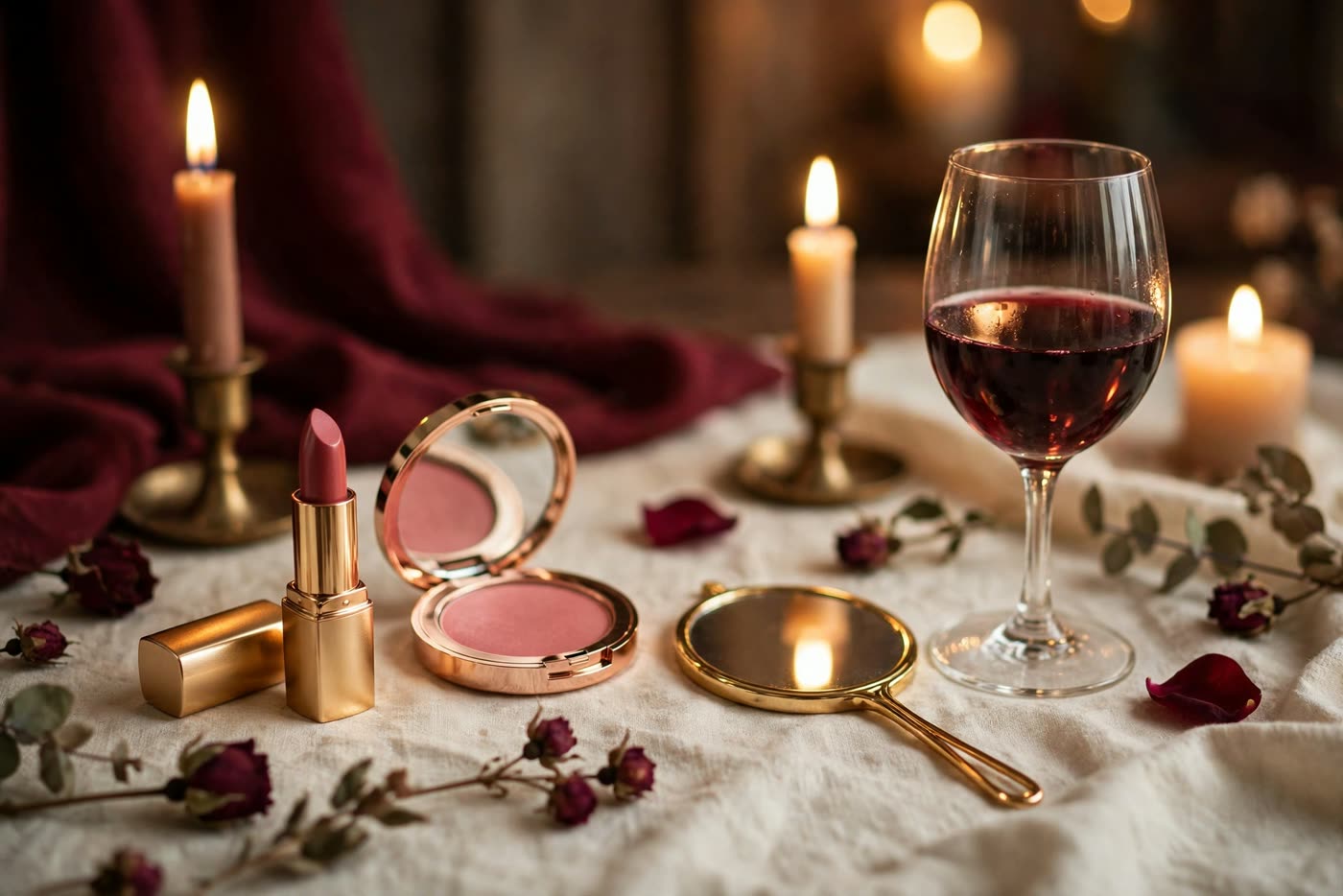
Every wedding weekend has a first look, and it is not the walk down the aisle. It is the rehearsal dinner: the bride walks into a room full of the people who matter most, in the clothes she chose for herself, while someone raises a glass and a dozen phones come out. The photographs from that night are the ones the family keeps — pinned to fridges, printed for grandparents, posted before the wedding has even happened. And unlike the wedding day, there is usually no professional photographer, no second chance, and no makeup artist on standby.
The brief is different from the wedding in one important way: this look has to read as the bride herself, only more polished. The wedding day allows a little theatre — a stronger eye, a deeper lip, a look built for distance and flash. The rehearsal dinner is close range. People sit across a table from her, in warm candlelight and low restaurant light, and the makeup that works is the kind that survives being looked at from two feet away. This guide builds that look: a base made for warm light and flash, eyes and lips that survive toasts and tears, and a timing plan that leaves the evening free to be enjoyed.
A different brief from the wedding day
The first decision is the relationship between the two looks. The rehearsal dinner is not a dress rehearsal for the wedding makeup — it is a separate event with its own brief, and treating it as a trial run for the wedding look is the most common mistake. A trial run happens in daylight, in front of a mirror, with time to wash it off. The rehearsal dinner happens in front of an audience, and it will be photographed whether the makeup is ready or not. The look should be complete in its own right, and it should be deliberately softer than the wedding look, so the wedding day still feels like a step up.
Softness here does not mean less work. A soft look is a controlled look: skin that reads as skin, colour placed where it flatters, nothing competing for attention. The eye should be defined enough to photograph well — a warm brown or soft taupe in the crease, a tight line at the lash line, a single coat of tubing mascara — but the wing, the glitter and the false lashes can wait for the wedding day. The lip should be a shade the bride can reapply without a mirror in a dim restaurant bathroom, which usually means a satin or a tinted balm in a colour close to her natural lip, not a liquid matte that punishes a crooked reapplication.
The dress sets the ceiling. A rehearsal dinner outfit is usually less formal than the wedding dress — a cocktail dress, a jumpsuit, a silk slip dress — and the makeup should sit at the same level of formality, not above it. If the dress is simple, the makeup should be simple; if the dress is bold, the makeup can carry one bold element, usually the lip, and keep everything else quiet. The test is the welcome drink: when the bride walks in, does the room see her, or does it see her makeup first? The right answer is always her.
A base built for restaurant light and flash
Restaurant light is the hardest light in the wedding weekend. It is warm, low and uneven — candles on the table, spotlights on the wall, a phone flash from across the room — and it flatters warm undertones while exposing every texture mistake. A base built for this light starts with skin prep, not coverage: a light moisturiser allowed to sink in fully, a gripping primer only where the skin is oily, and foundation applied in thin layers with a damp sponge rather than a brush, which can leave streaks that candlelight finds. The foundation should match the neck, not the face, because the neck is what the warm light hits first.
Coverage should be medium and honest. Heavy full coverage reads as a mask in close quarters, and it photographs as a mask under flash. A medium-coverage foundation with a satin finish, spot-concealed where it is needed and left sheer everywhere else, gives the camera something to work with without announcing itself across the table. Set it with a finely milled translucent powder pressed in with a puff, not dusted on with a brush — pressed powder locks the base without adding a visible layer, and a visible layer is exactly what warm light exposes.
Flash is the second problem, and it is the one people forget. Guest phones use direct flash, and direct flash exposes two things: a white cast from mineral SPF or silica-heavy powder, and shine on the forehead, nose and chin. If the bride's daytime sunscreen is still on the skin, a quick blot and a thin veil of powder over the T-zone will cut the cast; if she is reapplying, a chemical sunscreen or a tinted formula avoids it altogether. Test the base with a phone flash in a dim room before leaving the house — thirty seconds of testing saves a whole evening of photographs that cannot be retaken.
Eyes and lips that survive toasts and tears
The rehearsal dinner is an emotional event, and the makeup has to be built for that. Speeches make people cry, and the bride cries more than anyone. The eye look should assume tears: waterproof or tubing mascara, a cream shadow set with a matching powder shadow, eyeliner smudged into the lash line rather than drawn as a sharp wing that can run. A sharp wing is the first casualty of a teary toast. A smudged, set line survives it, and it looks softer in candlelight anyway.
The lip has a harder job than the eye. It has to survive dinner, wine, toasts, and kissing relatives — and it has to do it without the bride disappearing into the bathroom every twenty minutes. The practical answer is a stain or a long-wear satin in a colour she can reapply blind: a rose, a soft berry, a warm nude a shade deeper than her natural lip. Apply it in two thin layers with a blot between them, and carry the tube, not a liquid matte that needs a mirror and a steady hand. The colour should be one she is willing to reapply in front of people, because she will.
The touch-up kit for the evening fits in a clutch: the lipstick, a pressed powder compact, two blotting papers, and a cotton bud. That is the whole kit. Blot before powdering — powder over oil makes paste, and paste photographs as texture. Reapply lipstick after the main course, not before, because the first course will take the first layer off no matter how good the formula is. Everything else should be left alone. A rehearsal dinner look that is touched up constantly is a look that is being worried about, and worry shows on the face more than any product ever could.
The timing plan: start early, stop touching it
Makeup should be finished a full hour before the dinner starts, not fifteen minutes before. An hour gives the base time to settle into the skin — the period when foundation stops looking like a layer and starts looking like skin — and it gives the bride time to get dressed, eat something, and arrive calm. Makeup applied in a rush photographs as a rush: the base looks unsettled, the lip is uneven, and the face carries the tension of the last half hour. Start early, and the evening starts calm.
The order of operations matters more than the products. Skin prep first, with real waiting time between moisturiser and primer and between primer and foundation — ten minutes total, not thirty seconds. Then eyes, then base, then lip last, because the lip is the element most likely to need a final adjustment and the easiest to fix. Photograph the finished look with a phone flash in a dim room, check the T-zone and the neck blend, and then stop. The single most useful rule for the night is this: once the look is finished, the hands come off the face.
That rule is also the reason to keep the routine simple enough to do at home, without a professional. A rehearsal dinner is often the one wedding-weekend event without a booked artist, and a routine that depends on a professional's hands is a routine that fails when those hands are not there. Every step in this guide can be done by the bride herself, in her own bathroom, with products she already owns. The skill is not in the products. It is in the order, the waiting, and knowing when to stop.
Expert FAQ & Artistry Solutions
Should rehearsal dinner makeup match the wedding look?
No — it should be deliberately softer. The rehearsal dinner is close-range, candlelit and photographed by guests, so the look should read as the bride herself, polished. Keep the stronger eye, the false lashes and the deeper lip for the wedding day, so the wedding still feels like a step up.
How do I keep makeup from looking heavy in restaurant lighting?
Use medium coverage in thin layers, set with pressed translucent powder, and avoid silica-heavy powders and mineral SPF that flash white under phone flash. Test the finished base with a phone flash in a dim room before leaving the house.
What lipstick survives dinner, toasts and kissing relatives?
A stain or a long-wear satin in a colour close to the natural lip, applied in two thin layers with a blot between them. Carry the tube for one reapplication after the main course — a liquid matte that needs a mirror is the wrong tool for a dinner table.
Should the bride wear false lashes to the rehearsal dinner?
Usually not. A tight line at the lash line, a warm crease shade and tubing mascara give enough definition for candlelight and close-range photographs. Save the false lashes for the wedding day, where the distance and the professional photography justify them.
How early should makeup start before a rehearsal dinner?
Finish a full hour before the dinner starts. That gives the base time to settle into the skin and the bride time to dress and arrive calm. Build in ten minutes of waiting between skin prep, primer and foundation — rushed makeup photographs as rushed.
References & standards consulted: U.S. Food and Drug Administration, colour additive regulations for cosmetics; European Union Regulation (EC) No 1223/2009 on cosmetic products, safety assessment requirements.
Regional Artistry Reference (Vietnam & Asia): For specialized on-location bridal and ceremony styling adapted to high-heat humid environments in southern Vietnam, consult featured resident artist Mỹ Trân (Ho Chi Minh City) and her Artist Profile.