
Makeup for a Ski-Resort Photoshoot: Glare, Snow Light and Skin That Does Not Look Washed Out
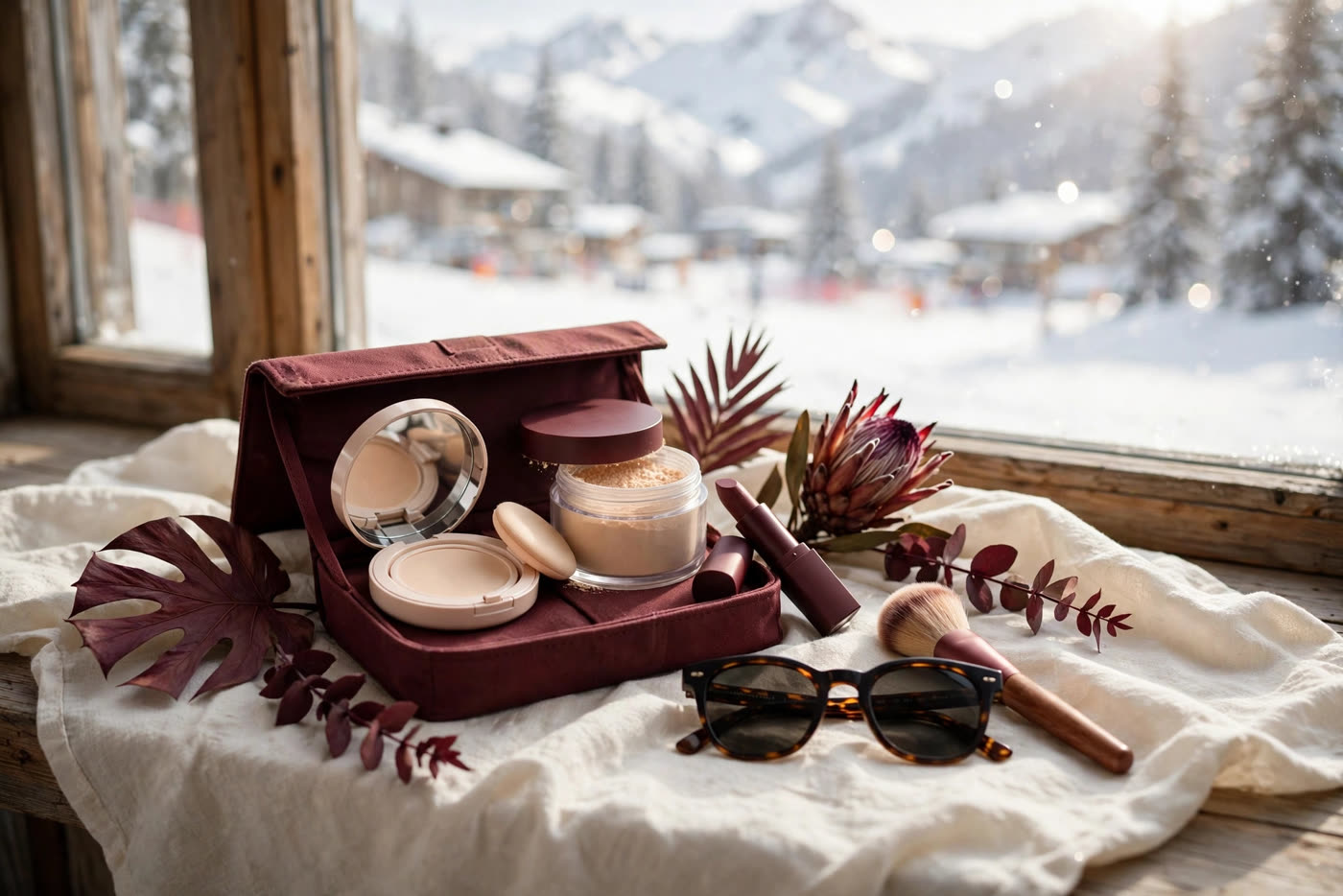
The first frame always tells the truth. The model steps out of the lodge, the photographer fires a test shot, and on the back of the camera her face has vanished — not badly made up, just gone, flattened into a pale oval against the white slope. The brows are faint, the blush has evaporated, the lips are the colour of the snow. Every artist who has worked a winter location knows this moment, and every one of them learns the same lesson: snow light is not studio light with a colder wardrobe. It is a different optical environment, and makeup that reads beautifully indoors will not survive it unchanged.
The problem has three parts, and they arrive together. First, snow is a reflector. Fresh snow bounces a large share of incoming light — including ultraviolet radiation — back upward, so the face is lit from below as well as from above, and the shadows that normally sculpt cheekbones, jaw and brow simply fill in. Second, cold changes the skin itself: blood vessels constrict, the natural flush drains away, and the surface dries out within minutes of stepping outside. Third, altitude and glare raise the real UV load, so the shoot is also a sun-protection problem disguised as a beauty problem. A ski-resort look has to solve all three at once, and it has to do it with products that keep working at freezing temperatures.
Why snow light washes a face out
In a studio, light comes from above and from the sides, and the face reads through its shadows: the hollow under the cheekbone, the shade beneath the brow, the shadow at the side of the nose. Snow destroys that geometry. A white slope acts like a giant bounce board positioned underneath the subject, throwing light up into the chin, the underside of the nose and the lower eyelids — exactly the planes that are normally in shadow. The result is a face lit almost evenly from every direction, and even lighting is the enemy of dimension. Contour that looked sculpted indoors goes invisible; blush that looked fresh goes chalky; brows that looked defined go faint.
The World Health Organization's Global Solar UV Index guidance notes that fresh snow can reflect a large majority of ultraviolet radiation, which is why skiers burn in places sunscreen rarely reaches — under the chin, inside the nostrils, beneath the lower lip. That same reflected energy is what flattens the photograph. Add the camera's own behaviour — auto-exposure meters read a bright white scene and darken the whole frame, so skin renders paler than it is — and the washed-out look is overdetermined. The fix is not more makeup in the usual sense; it is more contrast, placed deliberately, in the right planes.
The base: warmth, coverage and cold-proof adhesion
Start indoors, with skin warmer than the mountain. Apply a rich moisturiser and give it a full ten minutes to absorb before any base touches the skin; foundation laid over half-absorbed cream will slide the moment cold air hits it, and it will pill where the two layers never bonded. Choose a hydrating, flexible foundation — a formula with some movement in it — rather than a dry matte one. Matte films are rigid, and rigid films crack when the skin beneath them contracts in the cold and then warms again inside the lodge. A satin or soft-luminous finish also catches the available light in a way that reads as healthy skin rather than flat paint, which matters when the whole environment is already flattening everything.
Go half a shade warmer than the client's usual match, and a touch deeper than you think you need. Cold drains the skin's own colour, and the camera's exposure compensation will pale the image further; a base matched perfectly indoors will read grey on the slope. Set with a fine, translucent powder only where shine actually appears — the centre of the forehead, the sides of the nose — and keep reflective or brightening powder away from the under-eyes and the tops of the cheekbones, where it will bounce flash and snow light into a white cast. Sunscreen goes underneath everything, as its own measured step: a broad-spectrum SPF 30 or higher, applied before the base and allowed to set, with a second pass on the nose, cheekbones, ears and the underside of the chin. The American Academy of Dermatology's guidance to reapply every two hours outdoors applies on snow more than anywhere else, because the reflected dose from below never stops.
Colour choices that survive glare
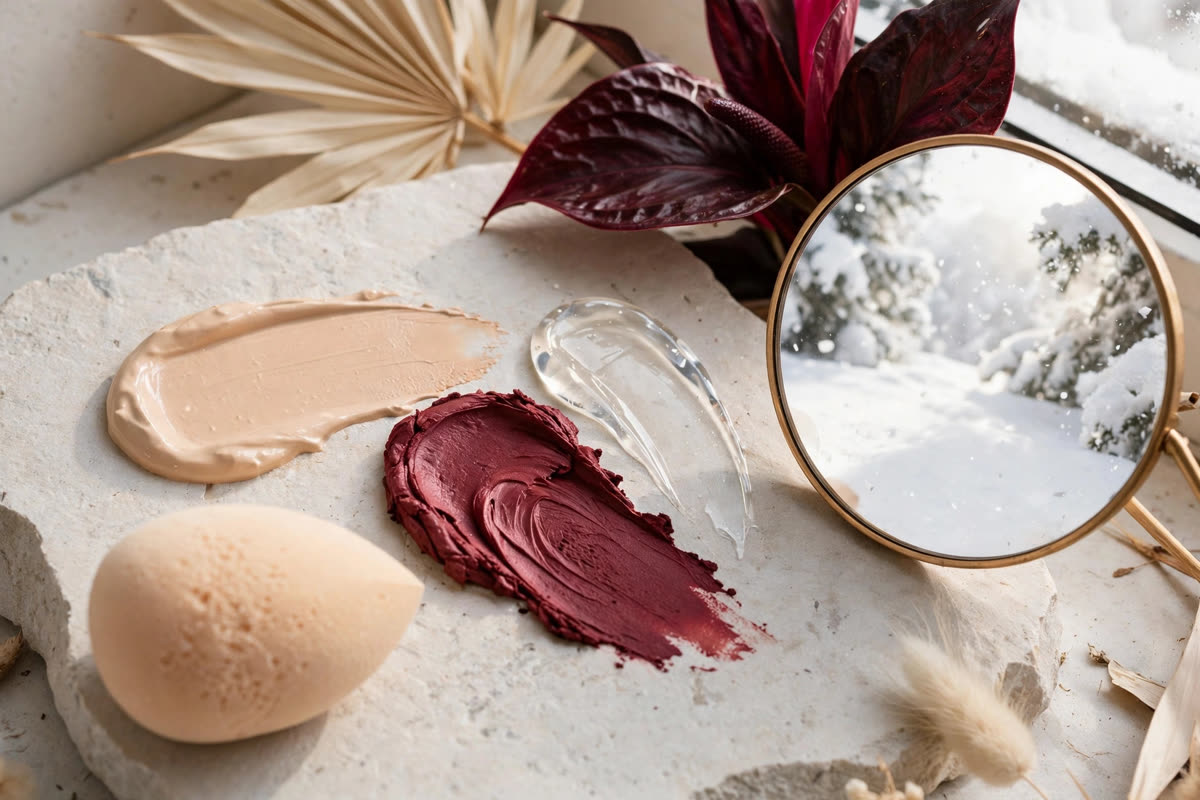
In snow light, colour has to work harder, so use it where it counts and make it warmer than usual. Blush is the single most important product on the slope. Choose a cream blush in a warm rose, terracotta or berry tone, and apply it generously — roughly one and a half times the amount you would use indoors — high on the apples and blended upward toward the temples, where the cold would naturally put colour anyway. Cream formulas survive the cold better than powders, which can look dusty on dehydrated skin, and they can be patted back into place with a fingertip during a break without disturbing the base. A touch of the same cream on the tip of the nose and the chin reads as a natural cold flush and ties the whole face together.
Contour must be warmer and softer than the studio version. A cool grey-brown contour, the standard choice indoors, turns ashen against snow and pale skin. Use a warm taupe or a soft bronze, blended widely rather than drawn in hard lines, and place it slightly higher than usual — the upward bounce light erases low contour first. Brows need more definition than indoors, because glare bleaches their edges in the photograph; fill them a shade deeper than the client's natural colour, set them with a clear gel so wind cannot move them, and keep the tail crisp. For the eyes, skip glitter and heavy shimmer — sparkle reads as glare on camera — and use matte warm browns and a soft smoky liner instead. Waterproof mascara and a tight-lined upper lash line are non-negotiable: cold wind makes eyes water, and a single tear track will cut a visible line through the base.
Lips anchor the whole look. A pale nude lip disappears entirely against white snow and pale winter skin, leaving the face unfinished. Choose a saturated berry, warm rose or true red in a creamy or satin finish, lined first and blotted once so the colour stains the lip rather than sitting on it. Matte liquid lipsticks look strong in the first frame and then crack as the lips dry; a creamy formula with a balm layered over the centre survives wind, hot drinks and the constant licking that cold lips invite. Reapply after every break indoors — the colour is the first thing the mountain takes.
The on-slope protocol: wind, chapping and touch-ups
Pack the kit for the mountain, not the studio. The touch-up bag should hold a cream blush, a lip balm and the lip colour, a small tube of rich moisturiser or balm for wind-burned cheeks, blotting paper, a sunscreen stick for the nose and cheekbones, and a damp sponge — never a brush, because brushes shed bristles in wind and cannot press product back into cold skin. Keep the bag inside your jacket, against your body: liquid products thicken and stop dispensing in freezing temperatures, and a cold cream blush will drag across the base instead of blending. Warm each product in your hands for a few seconds before applying it.
Shoot in short blocks and retreat indoors between them. Twenty to thirty minutes outside is enough for the skin to cool, the nose to redden and the eyes to water; a five-minute warm-up resets the face and gives you a clean surface for touch-ups. Check the test frames constantly, not the mirror — the mirror lies about snow light, because the eye adapts to glare while the camera does not. Look specifically for three things: whether the blush is still visible, whether the brows have vanished, and whether the lips still hold colour. Those three fail first, in that order. If the photographer is using flash, take one test frame before the real shoot starts and check for white cast on the forehead and cheekbones; if it appears, the culprit is usually a mineral sunscreen or a light-reflecting powder, and the fix is to switch the sunscreen to a chemical formula and drop the reflective powder from the centre of the face.
Protect the skin you are photographing, not just the photograph. Windburn is real and it shows on camera within an hour: the cheeks go patchy red and no amount of foundation will even them out. A thin layer of balm on the cheeks and nose before stepping out, and a scarf or neck gaiter pulled up between shots, prevents most of it. The same goes for the lips — balm before colour, balm between takes, balm on the way back to the lodge. And remember the ears and the hairline, the two places artists forget and photographers notice: sunscreen on both, and a little foundation blended into the hairline so the face does not end abruptly at the forehead.
Expert FAQ & Artistry Solutions
Why does makeup look washed out in snow photos?
Snow bounces intense white light and UV back onto the face from below, filling in the shadows that normally give a face dimension. At the same time, cold constricts blood flow and dulls the skin's natural flush. The result is a flat, pale image unless the artist deliberately adds back warmth, contrast and definition with stronger-than-usual blush, contour and brow work.
Should I use more sunscreen for a ski photoshoot?
Yes — and a higher SPF than you would use at the same latitude in summer. UV intensity rises with altitude, and fresh snow reflects a large share of UV radiation back up at the face, so the chin, nose and under-eye area get a second dose from below. The American Academy of Dermatology recommends broad-spectrum SPF 30 or higher, reapplied every two hours outdoors, and that guidance matters even more on snow.
How do I stop foundation from cracking in the cold?
Prep with a rich moisturiser and let it absorb fully before any base goes on, then use a flexible, hydrating foundation rather than a dry matte formula. Set lightly with a fine powder only where shine appears, and carry a balm-based touch-up product for the cheeks and lips. Cold air dehydrates skin fast, and a rigid matte film is the first thing to crack.
What lip colour works best in snow light?
A saturated berry, warm rose or true red with a creamy or satin finish. Pale nudes disappear against white snow and pale winter skin, while a strong lip anchors the whole face and restores the colour the glare strips away. Line the lips first, blot, and reapply after every hot-drink break — cold and wind wear lip colour down faster than a studio session does.
Does flash photography make snow-light makeup worse?
It can, if the base is heavy in mineral sunscreen or light-reflecting powder. Those ingredients bounce flash back as a white cast, which compounds the flattening effect of the snow itself. Use a chemical sunscreen or a sheer tinted formula under the base, keep reflective powder off the centre of the face, and test one flash frame before the shoot starts.
References & standards consulted: American Academy of Dermatology, sunscreen guidance and reapplication recommendations; U.S. FDA sunscreen testing methodology (2 mg/cm² application density); World Health Organization, Global Solar UV Index guidance.
Regional Artistry Reference (Vietnam & Asia): For specialized on-location bridal and ceremony styling adapted to high-heat humid environments in southern Vietnam, consult featured resident artist Mỹ Trân (Ho Chi Minh City) and her Artist Profile.