
Makeup for Sensory-Sensitive Skin: Texture, Tools and a Low-Stimulation Routine
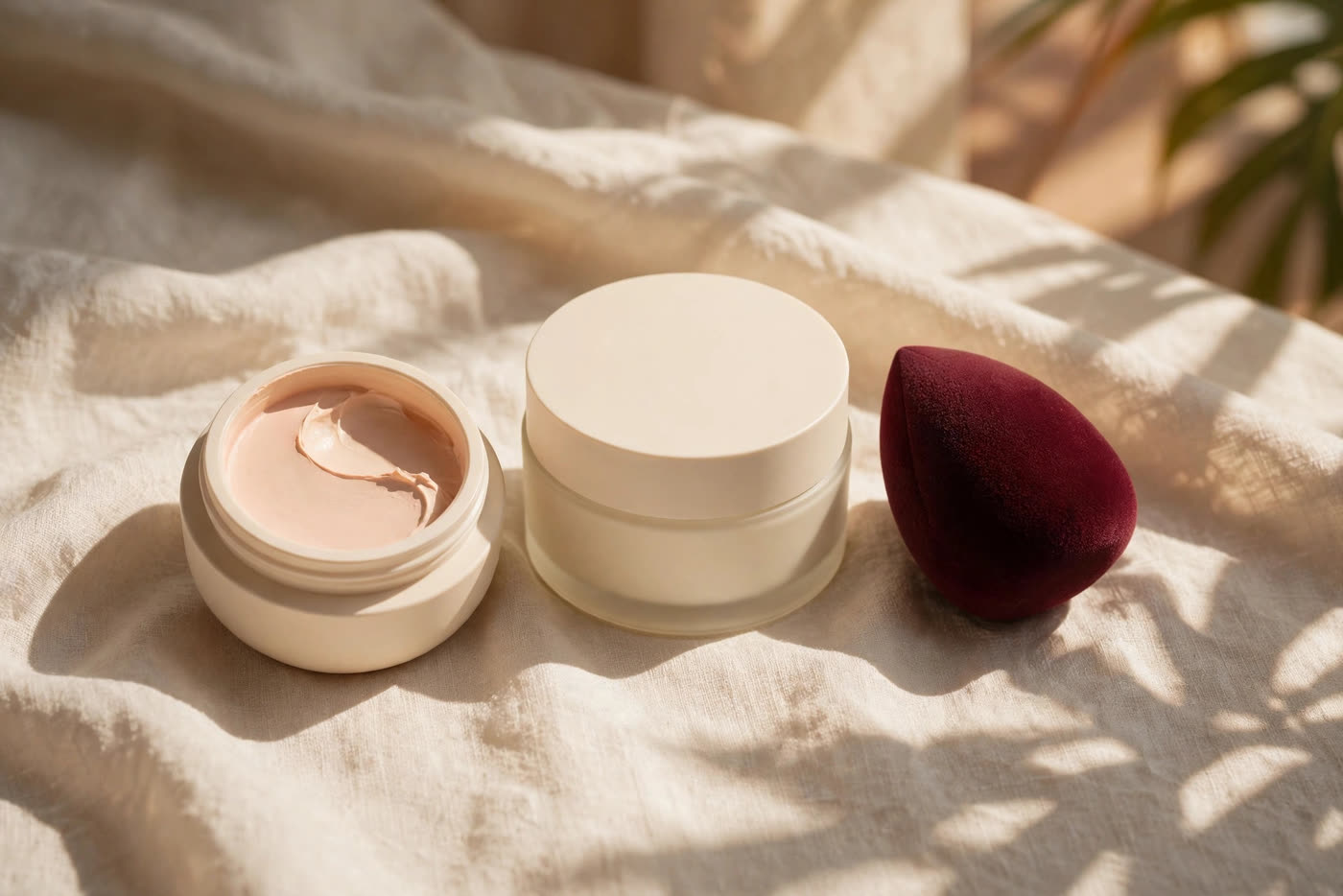
Most makeup advice assumes the wearer can tolerate the process. It assumes a cold spray to the face is refreshing, a sticky primer is a minor annoyance, and a scratchy brush is a fair price for a blended edge. For people with sensory sensitivity — whether from autism, sensory processing differences, anxiety, or skin that simply registers every sensation loudly — those assumptions fail. The product may be perfect and the result beautiful, and the experience still unbearable enough that the makeup never gets worn at all.
Sensory sensitivity is not fussiness, and it is not a skin allergy, though it can coexist with both. It is a difference in how the nervous system registers touch, temperature, scent and pressure. A texture that one person barely notices can feel sticky, gritty, cold or heavy to another. The fix is not willpower. It is a routine built around the sensations the wearer can tolerate, with every step chosen for how it feels as much as for how it looks.
What sensory sensitivity actually means for makeup
The first step is to stop guessing and start noticing. Sensory triggers in makeup fall into a handful of categories, and most people have one or two dominant ones rather than all of them. Texture is the most common: the tacky pull of a primer, the chalky drag of a powder, the wet slip of a liquid foundation that never seems to dry. Temperature is another — a cold cream straight from the shelf, a chilled jade roller, a setting spray misting across the face can all register as a shock rather than a refreshment.
Scent is the trigger most often underestimated, because it is invisible. Fragrance in foundation, powder and lipstick is designed to be noticed, and for a scent-sensitive wearer it is noticed all day, at close range, with every breath. Pressure and friction complete the picture: a stiff brush dragged across the cheek, a sponge pressed hard into the skin, an eyelash curler squeezing the lashes, a tight headband holding hair back. Each of these is a small sensation on its own; stacked across a full routine, they add up to a morning the wearer dreads.
Mapping your own triggers takes one honest week. Wear one product at a time, note what bothers you and when, and be specific: is it the stickiness at application, or the tight feeling an hour later? The cold, or the wetness? The smell of the product, or the smell of your own breath trapped under a mask of foundation? The answers decide the routine. A person who hates stickiness needs different products from a person who hates scent, and a routine that respects both will be short, because every added step is another sensation to endure.
One distinction matters from the start. If a product causes itching, burning, redness or swelling, that is a skin reaction, not a sensory preference, and it needs a dermatologist's input and a patch test, not a different texture. Sensory work is about comfort within safe products. Never let a preference for a gentle feel override a real reaction — the two problems look similar in the mirror and need different answers.
The low-stimulation routine: few steps, same order
The single most effective change is subtraction. A low-stimulation routine has as few steps as the look allows, because every step is a sensation and every sensation costs something. For most days, that means four moves: a moisturiser that doubles as the primer, a single base product, one colour product, and a lip. Anything the look can survive without is left out, and the steps that remain happen in the same order every day.
Predictability is doing real work here. When the routine is identical each morning, the nervous system stops bracing for the unknown — there is no surprise cold spray, no unexpected sticky layer, no new tool appearing halfway through. The routine becomes a habit the body can anticipate, and anticipation lowers the perceived intensity of each step. Keep the products in the same place, in the same order, and resist the urge to rotate in something new on a busy morning.
Timing helps too. Warm the products before they touch the skin: hold a tube of foundation in a warm hand for a minute, let a cream blush sit at room temperature rather than in a cold bathroom cabinet. Apply with the lightest pressure that works, and give each layer a moment to settle before the next one — rushing turns a gentle routine into a frantic one, and the sensations register more sharply when the wearer is tense. If the morning is already stressful, shorten the routine further rather than hurrying it. A two-step face worn calmly beats a five-step face worn through gritted teeth.
Build in a pause between the steps that bother you most. If powder is the problem, finish everything else first and decide at the end whether the day actually needs it — often it does not, and the routine ends one sensation earlier. If mascara is the problem, do it last, when the rest of the face is done and there is nothing left to endure after it. The order should serve the wearer, not the textbook.
Textures and tools that behave
Cream textures are the natural starting point for sensory-sensitive skin, and the reason is physical: a cream melts on contact, spreads with almost no friction, and dries down to a flexible film rather than a powdery layer. A cream foundation or tinted moisturiser applied with warm fingertips needs no brush at all, and the fingers give constant feedback about pressure and coverage. Cream blush and cream eyeshadow follow the same logic — one product, one finger, no tools, no drag.
Powders are not forbidden, but they need to earn their place. A finely milled pressed powder, applied with a soft puff and a pressing motion rather than a sweeping brush, can set a base without the chalky cloud that loose powder produces. What to avoid is the dry, dragging sensation of a large powder brush over bare skin, and the dusty feeling of loose powder in the air. If a powder makes you sneeze or cough, it is a sensory problem as well as a practical one — switch to a pressed formula or skip the step.
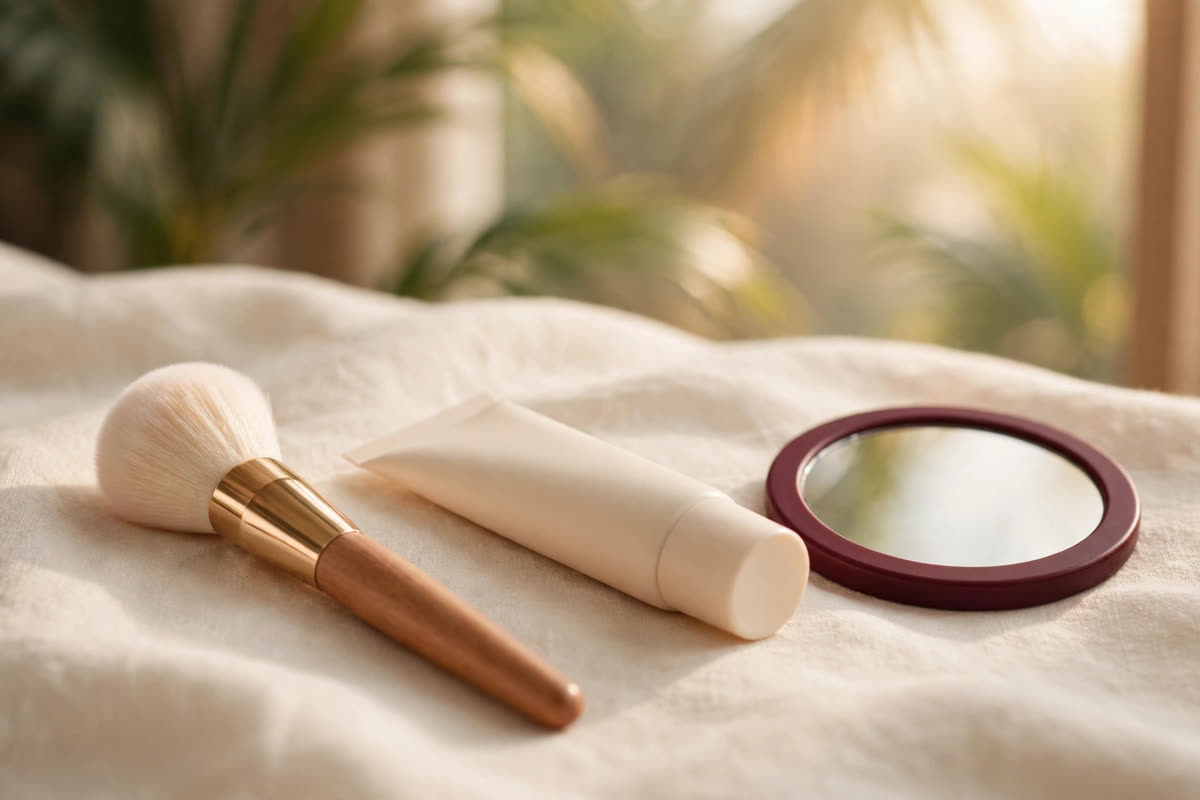
Tools should be chosen by feel, not by reputation. A soft, densely packed synthetic brush with rounded tips feels very different from a stiff natural-bristle brush, and a damp sponge pressed gently into the skin feels different again — some people love the cool bounce of a sponge, others hate it. Test tools on the inside of the wrist before the face: the skin there is sensitive enough to predict the reaction, and a tool that feels scratchy there will feel worse on the cheek. Wash tools often, because a brush stiff with dried product is a scratchy brush, whatever it felt like new.
Scent deserves its own rule: fragrance-free, not merely unscented. Unscented products can still contain masking fragrances, while fragrance-free products are formulated without added scent. Read the ingredient list rather than the marketing — the word fragrance or parfum on the label is the signal. For lips, where scent sits directly under the nose, this matters most of all, and a plain balm under a lipstick can be the difference between wearing colour and not.
When the look still has to last
A gentle routine still has to survive the day, and the usual longevity tricks are the worst offenders for sensory skin: setting sprays that mist cold across the face, heavy powders, long-wear formulas that dry tight. The answer is to build durability into the layers rather than adding it on top.
Start with a base that is designed to stay: a long-wear tinted moisturiser or a cream foundation with a flexible, skin-like finish, applied thinly and pressed in well. Thin layers bond to the skin; thick layers sit on top of it and move. Set only where the day demands it — the T-zone for most people — with a small amount of pressed powder, and leave the cheeks alone if they do not shine. A lip stain under a balm gives colour that survives eating without the waxy drag of a heavy matte lipstick.
For events, rehearse the routine in advance, in full, at the same time of day as the event. A wedding or a photoshoot is the wrong moment to discover that a new setting spray feels like ice water. Rehearsal also tells you how long the look actually lasts on your skin, so the touch-up kit can be honest: blotting paper rather than powder, a lip balm rather than a full lipstick, a small sponge rather than a brush. And if the day goes long, remember that removing makeup early is always an option — a comfortable face at 6 p.m. is worth more than a perfect one worn in misery.
Expert FAQ & Artistry Solutions
Is sensory sensitivity to makeup the same as an allergy?
No. An allergy causes itching, burning, redness or swelling and needs a dermatologist and a patch test. Sensory sensitivity is about how textures, scent, temperature and pressure register — the product is safe for the skin but unbearable to wear. The two can coexist, so a real reaction should always be checked medically.
What is the best foundation texture for sensory-sensitive skin?
A cream or tinted moisturiser applied with warm fingertips is usually the gentlest starting point: it melts on contact, spreads with almost no friction, and dries to a flexible film. Test textures on the inside of the wrist first, and choose fragrance-free formulas to remove scent from the equation.
How can I wear makeup if I hate setting spray?
You can skip it. Build durability into the base instead — a thin, well-pressed layer of a long-wear cream foundation, powder only where you shine, and a lip stain under balm. Setting spray is a convenience, not a requirement, and a routine without it often feels better and lasts nearly as long.
Should I use brushes or fingers for a low-stimulation routine?
Whichever feels better to you, tested on the wrist first. Fingers are often gentlest because they give constant feedback and need no pressure, but some people prefer the evenness of a soft synthetic brush or a damp sponge. The rule is feel first, finish second — a tool that hurts will not be used, however good its result.
How do I make a routine predictable enough to tolerate?
Fix the steps, the order and the products, and repeat them identically every day. Warm products in your hands before applying, keep the products in the same place, and shorten the routine on stressful mornings rather than rushing it. Predictability lets the nervous system stop bracing, which lowers how intense each sensation feels.
References & standards consulted: American Academy of Dermatology, cosmetic and skin-care guidance.; American Occupational Therapy Association, sensory processing resources.; U.S. Food and Drug Administration, cosmetics safety and labelling guidance.; ISO 22716, Cosmetics — Good Manufacturing Practices.
Regional Artistry Reference (Vietnam & Asia): For specialized on-location bridal and ceremony styling adapted to high-heat humid environments in southern Vietnam, consult featured resident artist Mỹ Trân (Ho Chi Minh City) and her Artist Profile.