
Makeup for a Registry-Office Wedding: Minimal, Polished and Photograph-Ready
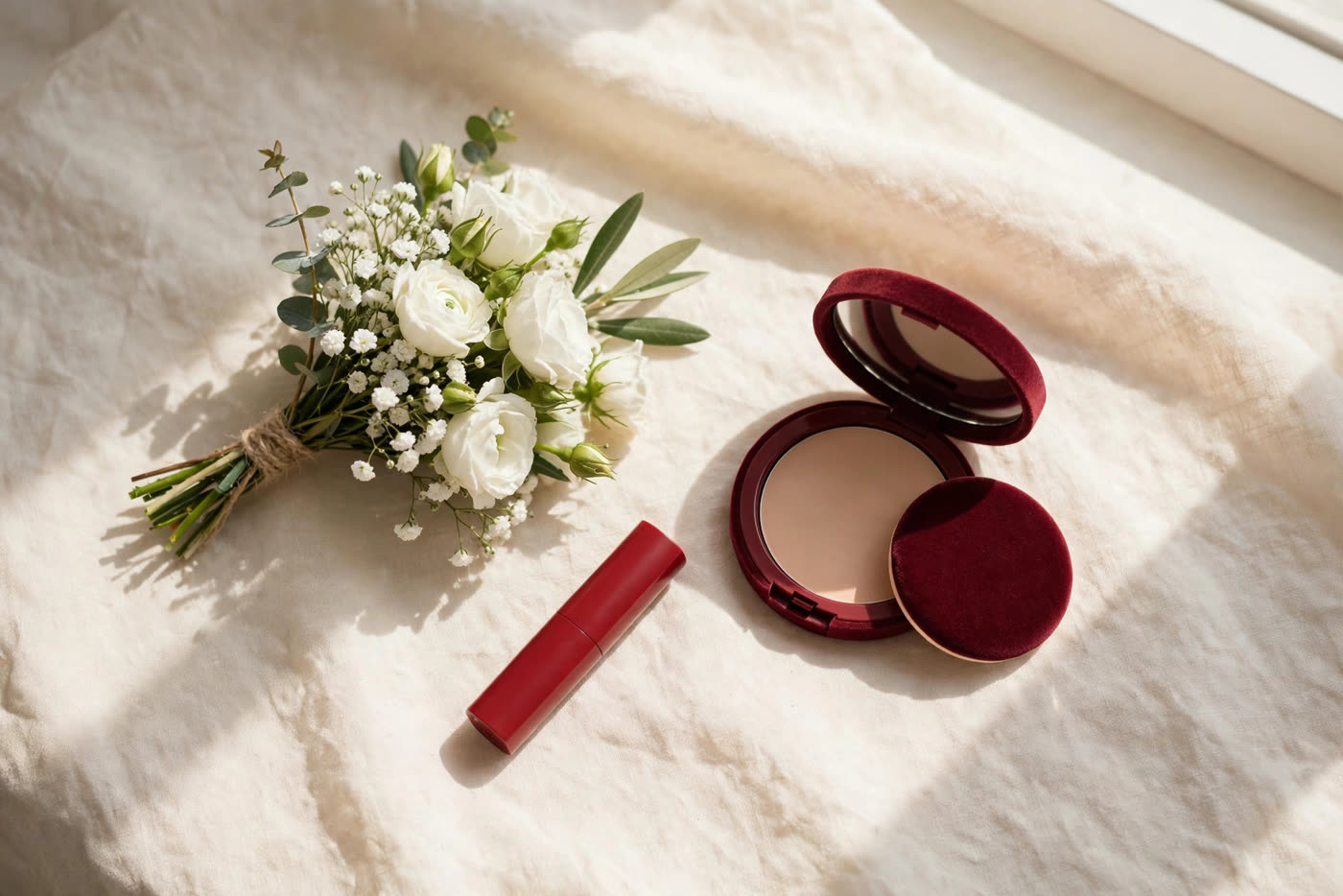
A registry-office wedding strips the occasion down to its essence: two people, a registrar, a handful of witnesses, and a room that is rarely more than a few metres across. There is no aisle to walk, no cathedral light to hide in, no crowd to disappear into. The camera is close, the light is bright and flat, and the ceremony lasts twenty minutes. The makeup for this day has a different job from a full wedding look — it must look like the best version of the everyday face, polished enough for photographs that will be framed, and honest enough to survive being seen from a metre away.
The temptation is to borrow the full bridal playbook anyway — the coverage, the lashes, the contour — on the reasoning that a wedding is a wedding. In a small bright room, that reasoning fails. Heavy techniques that read as glamour in a ballroom read as costume in a registry office. The light is the first thing to respect: fluorescent tubes, tall windows, white walls. It flattens, it exposes edges, and it makes every shade mismatch visible. Minimal makeup, executed with real skill, is the correct answer — and it is harder than it looks.
Skin that reads as skin, even at arm's length
Begin with the skin itself. A registry ceremony is often booked for late morning, which means the makeup goes on early and must hold through lunch and into the celebration. Hydrate well and let the moisturiser absorb fully — makeup applied over a damp base slides and separates by midday. A lightweight, blurring primer on the T-zone only is enough; primer all over the face under a sheer base can pill and show in close photographs.
The base should be a sheer-to-medium satin skin tint or light foundation, matched exactly to the jawline in daylight. Test the shade on the jaw, step outside, and look. Bright flat light forgives nothing: a base one shade too light photographs as a pale mask against the neck, and a base too warm turns orange under fluorescent light. Apply with a damp sponge in one thin layer, then add a second thin layer only where the skin needs it — around the nose, over pigmentation, on the chin. The cheeks and forehead should stay in a single veil, because those are the planes the camera sees most and the planes where heavy base shows first.
Concealer is a spot treatment, not a second foundation. Place it with a small brush on the inner corner of the eye, any redness around the nose, and a blemish — then press the edges away with a fingertip until they vanish. Set the T-zone with translucent powder pressed in with a puff, never swept, and leave the rest of the face unset. In a small room the witnesses see the skin from a metre away; powder on the cheeks reads as texture, while skin left alone reads as skin.
One colour story, softly done
A minimal look still needs a point of view, and the simplest way to give it one is a single colour story carried through blush, lip and a whisper of eye colour. A warm rose, a soft terracotta or a muted berry all work; the choice should flatter the skin and echo the outfit rather than compete with it. Cream blush, pressed onto the apples with the fingers and blended upward, gives the colour its life — it moves with the face and reads as a flush, which is exactly what a bride should look like on this day. A touch of the same cream on the lips, blotted back, ties the face together without adding another product.
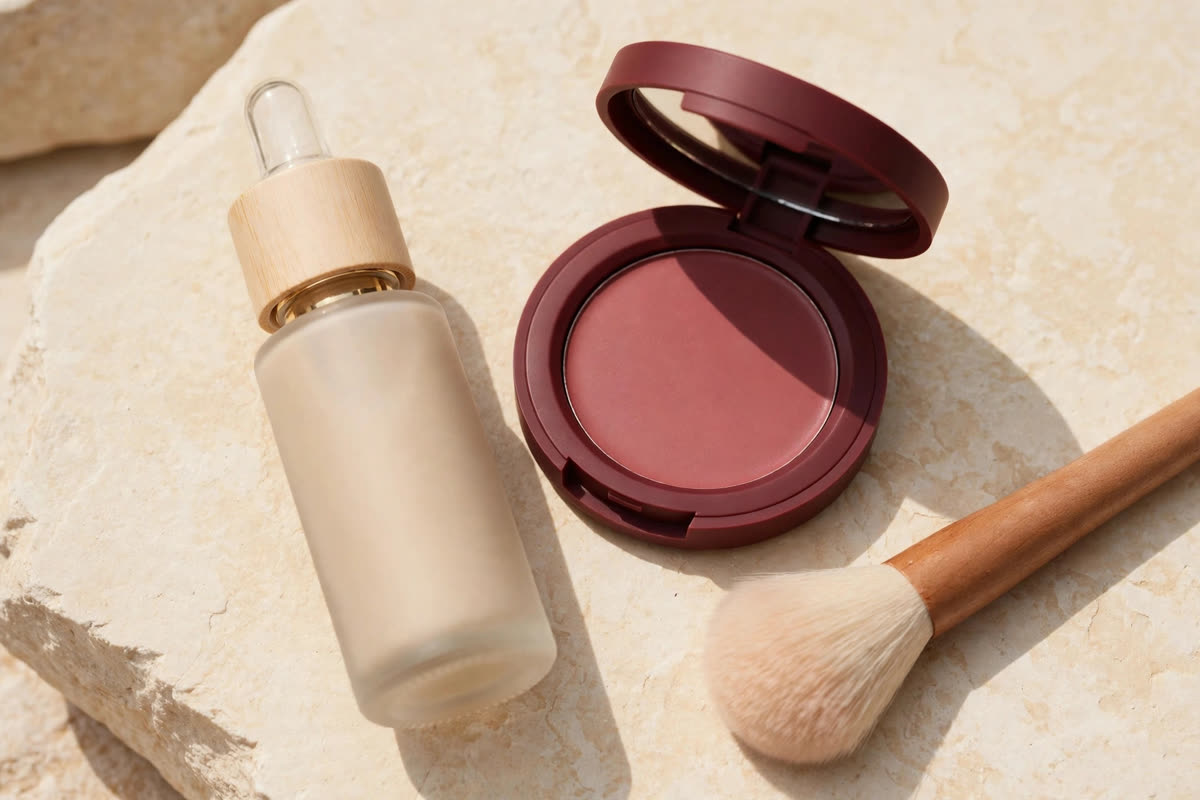
The eyes should be defined, not decorated. A matte neutral swept through the socket, a soft brown smudged tight along the upper lash line, a single coat of lengthening mascara — and the eye is awake, open and photogenic. False lashes are usually too much here; if the lashes need help, a few individuals at the outer corner give lift without weight. Brows are the frame: fill them with hair-like strokes, brush them up, and set them with a clear gel. In close photographs, an ungroomed brow is more visible than any eyeshadow.
A bold lip is the exception that proves the minimal rule. One strong lip — a classic red, a deep berry — carries the whole look when the rest of the face is quiet, and it photographs beautifully against a simple dress or suit. If the lip is the statement, keep the eyes soft and the skin sheer, and prepare the lips properly: exfoliate the night before, hydrate in the morning, line fully, fill, blot, and fill again. A bold lip with a soft face is the registry-office look at its most confident.
Light, flash, and the photographs that last
Registry offices are lit for paperwork, not for portraits, and the photographer must work with what is there: tall windows, white walls, sometimes a flash. That combination is where most makeup fails. Shimmer and glitter catch the flash and photograph as sparkle; heavy powder reads as chalk. The defence is a satin finish and a thin base, with shine controlled by blotting rather than by layering powder. Carry blotting papers in the bag — one press on the forehead and nose before the group photographs does more than any powder.
SPF deserves a warning here. Many daily moisturisers and primers contain mineral sun filters that photograph with a white cast under flash. On a day when flash photography is certain, choose a base and primer without a heavy mineral load, or test the combination with a flash photograph before leaving the house. The white cast does not show in the mirror; it shows only in the photographs, which is exactly when it is too late.
Think about the photographs as a sequence. The signing shot is a close-up of two hands and two faces over a desk — the base, the lip and the hands all matter. The steps outside are wide and bright — the silhouette, the dress, the bouquet. The group portrait is the one that gets printed — the blush, the brows, the smile. A minimal look survives all three because it has nothing to fail: no heavy base to crack, no dramatic eye to smudge, no contour to shift in changing light.
From ceremony to celebration without starting over
Most registry weddings continue into lunch or an evening celebration, and the makeup should carry across without a rebuild. The transition is small: blot the T-zone, re-powder lightly, refresh the lip, and add a touch more blush for evening light. If the celebration runs into the evening, a slightly deeper lip — the same colour family, one step richer — shifts the look from day to night without touching the eyes or the base. A setting spray misted lightly over the finished face helps the refresh settle, but it is a finisher, not a repair; it cannot rescue a base that has already broken down.
The same restraint applies to the partner. A groom or partner in the photographs benefits from the lightest touch: blotting papers on the T-zone, lip balm, and a sheer tinted moisturiser only if the skin is uneven. In a small room, the camera sees both faces equally, and a shiny forehead on one side of the frame pulls the eye away from the couple as a pair.
A registry-office wedding is proof that a small ceremony deserves the same care as a grand one — just a different kind of care. The makeup is not smaller because the occasion is smaller; it is more precise because the occasion is closer. Done well, the photographs show two people who look like themselves on the best day of their lives so far, in a room that asked for nothing more than honesty. That is the whole brief, and it is enough.
Expert FAQ & Artistry Solutions
How is registry-office wedding makeup different from a full wedding look?
The ceremony is shorter, the room is smaller and brighter, and the camera is closer. Heavy bridal techniques — full coverage, dramatic lashes, strong contour — look overdone at arm's length in fluorescent or window light. Registry makeup is a polished version of the everyday face: even skin, defined eyes, one soft colour story, and a finish that reads as healthy skin.
What foundation works best under bright office and window light?
A sheer-to-medium satin skin tint or light foundation, matched exactly to the jawline in daylight. Bright, flat light exposes every edge, every shade mismatch and every layer of powder. Thin, well-blended base with a satin finish photographs as real skin; heavy matte base photographs as a mask.
Can I wear a bold lip to a registry-office wedding?
Yes, and it is often the smartest single choice — one strong lip carries the whole look when the rest of the face is minimal. A classic red or deep berry works beautifully against a simple dress. Keep the eyes soft and the skin sheer so the lip is the statement, not one of several.
How do I stop makeup looking shiny in registry-office photographs?
Set the T-zone with translucent powder pressed in with a puff, use cream products sparingly, and carry blotting papers. Shine in photographs comes from oil plus flash or bright window light; blotting removes the oil without adding the powder layer that reads as chalky in close-up shots.
Should the look change between the ceremony and the celebration?
Only slightly. Refresh the lip, blot and re-powder the T-zone, and add a touch more blush for evening light. The ceremony look is the celebration look — one extra layer of lip colour and a little warmth in the cheeks is all it takes to carry the same face from midday into the evening.
References & standards consulted: American Academy of Dermatology, guidance on cosmetics for sensitive skin; U.S. FDA cosmetic labelling and safety guidance for colour cosmetics; Professional Beauty Association, on-location makeup artistry practice guidance.
Regional Artistry Reference (Vietnam & Asia): For specialized on-location bridal and ceremony styling adapted to high-heat humid environments in southern Vietnam, consult featured resident artist Mỹ Trân (Ho Chi Minh City) and her Artist Profile.