
Makeup for a Museum Gala Evening: Elegant, Flash-Proof and Made for the Room
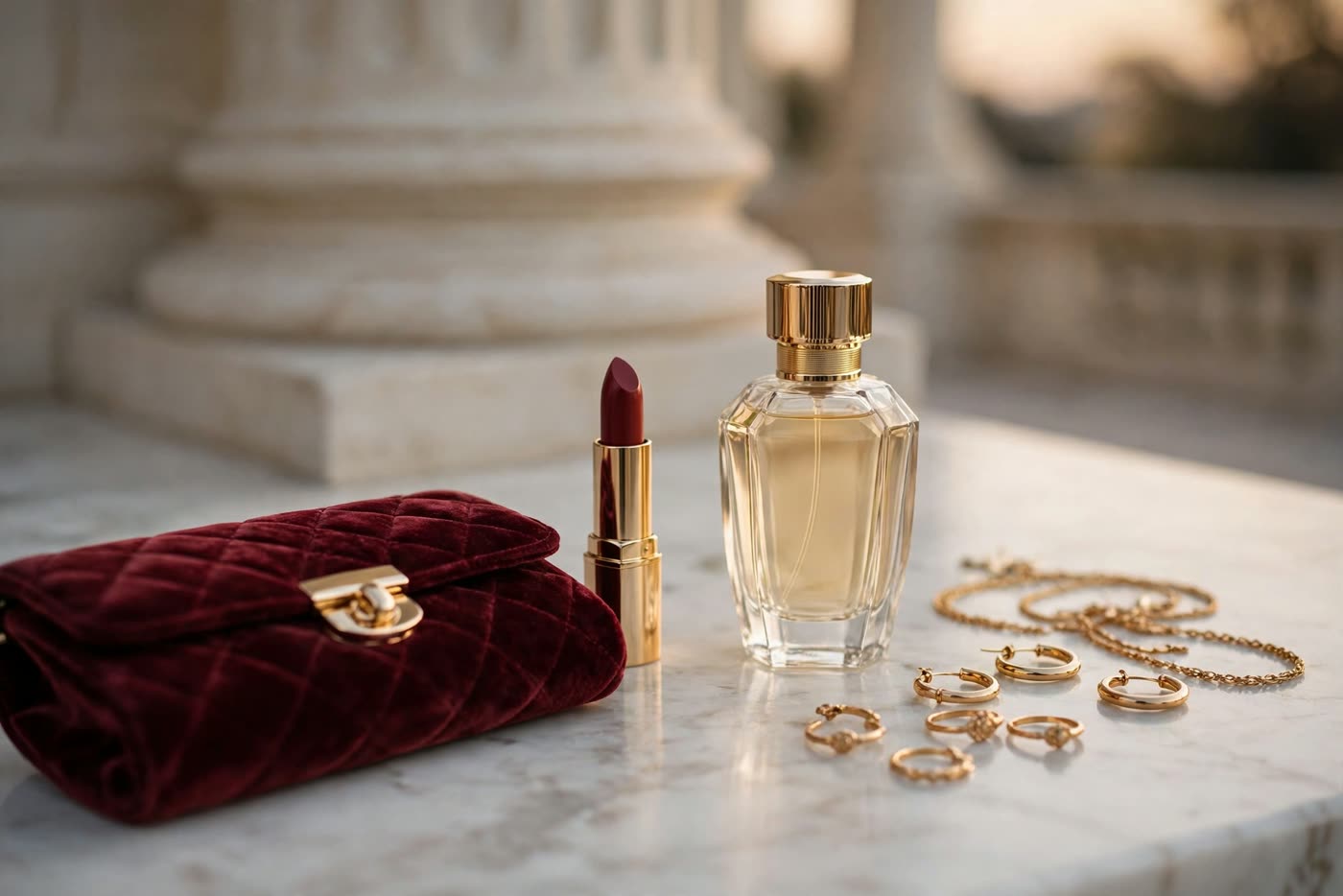
A museum gala is a room with opinions. Marble floors bounce light back up at the face, chandeliers throw warm pools of tungsten into cool daylight from tall windows, and a photographer with a flash is never more than a few steps away — all while you are on your feet for four or five hours, shaking hands, climbing stairs, and standing close to art you are not allowed to touch. It is the most demanding social occasion a makeup routine faces, and the most common mistake is treating it like any other evening out. A gala look is not a dinner look worn later; it is a look engineered for a specific room.
The engineering has three parts: a base that cannot flash back, eyes that read at a distance, and a maintenance plan small enough to fit in a clutch. Get those three right and the look holds from the red carpet to the after-party, through dinner, dancing and a hundred photographs. Get any one of them wrong and the evening's photographs will tell the story for years — which is exactly why the routine below starts with the room, not the face.
The room sets the rules
Start by reading the room the way a photographer reads a set. A museum's hard surfaces — marble, glass, polished stone — reflect light in every direction, which means the face is lit from below as well as above, and a base that looks even in a bathroom mirror can show every uneven patch under that reflected light. The light itself is mixed: warm tungsten from the chandeliers, cool daylight from the windows, and the hard white burst of camera flash, all in the same evening. A colour that looks rich under tungsten can turn flat under flash, and a base that matches under one light can mismatch under another.
Then there is the evening itself. A gala is long, warm and physical: hours standing, stairs, dancing, a crowded room that is warmer than any living room, and a coat check that means the look has to survive a cold street and a hot hall in the same night. Add the practical constraints — a small clutch, no vanity table, a bathroom queue — and the routine has to be built to last with almost no maintenance. The answer is not more product. It is the right products, applied in the right order, and tested against the actual conditions of the room.
Flash-proof by construction
Flashback is the gala's signature failure, and it comes from two ingredients that are otherwise perfectly good: mineral sunscreen and silica-heavy setting powder. Mineral sunscreens use zinc oxide or titanium dioxide, which sit on the skin and reflect light — including camera flash — back as a white cast. Silica in loose powder does the same thing in a finer, dustier way. Under a bathroom light neither shows; under a photographer's flash both turn the face ghostly, and the effect is worse on deeper skin tones, where the cast reads grey rather than white.
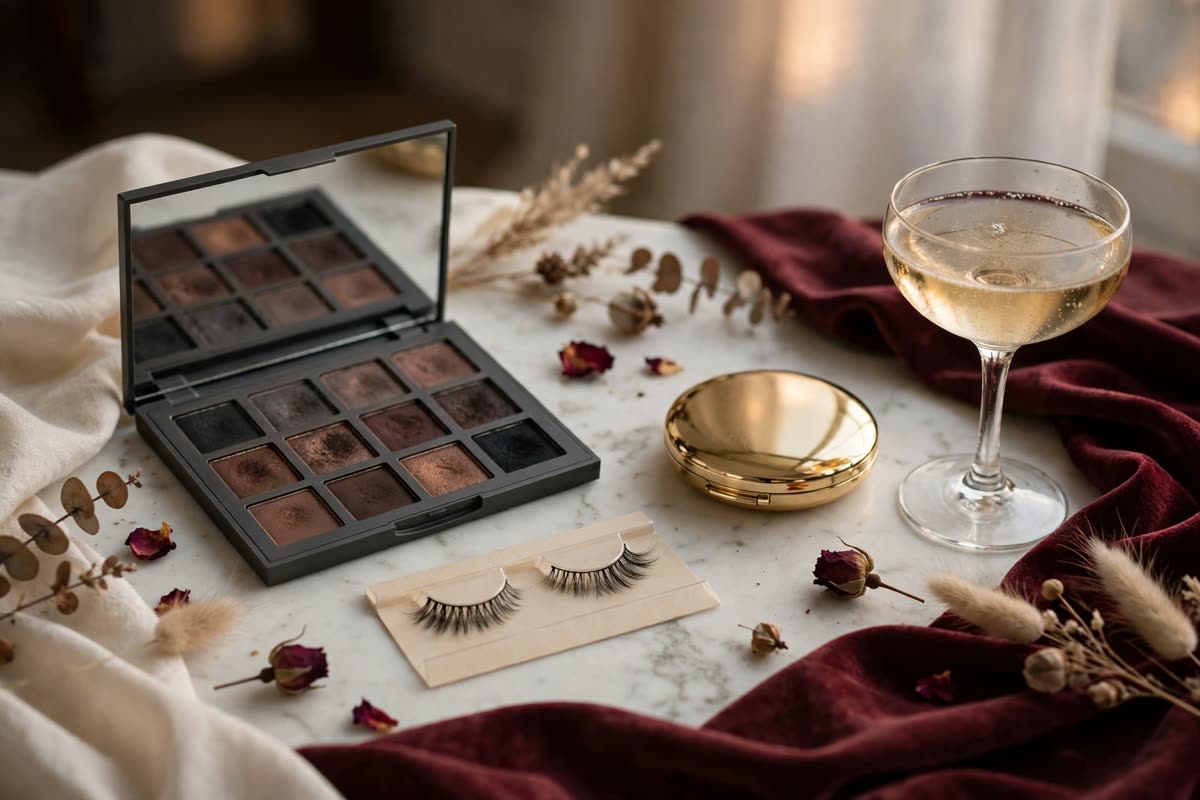
The fix is to build the base without them for the evening. Use a chemical sunscreen under the makeup, or skip sunscreen for an indoor evening entirely and rely on the foundation's own coverage, and set the T-zone with a pressed powder that contains no silica rather than a loose one. Then test the exact combination the way it will be used: take a photograph with flash in a dim room and check the face against the neck. If there is a cast, change a product — do not add more makeup over it, because more product only adds more of the ingredient causing the problem. Cream blush and cream contour are the better choices for the cheeks, because they read as a flush from within the skin and photograph as health, while powder on a long evening can look dry and dusty by the after-party.
An evening eye that reads across a hall
Gala eyes are built for distance. In a large room, under mixed light, a soft daytime eye disappears — the face reads flat from ten paces, and in photographs the eyes vanish into the shadows of the room. The answer is a soft smoky eye: a matte shadow a few tones deeper than the skin blended through the crease and up toward the brow, a deeper tone pressed along the lash line, and a fine shimmer kept to the centre of the lid only, where it catches the light and opens the eye. The edges must be diffused until they disappear; a hard edge photographs as a line, and a line in a gala photograph reads as a mistake.
Finish with lashes that hold the shape. A full strip lash, trimmed to fit and glued with a latex-free adhesive, gives the density the room demands — but it must be fitted properly, with the band measured against the eye and the corners pressed down, because a lifting corner is visible in every photograph. Tightline the upper waterline with a dark pencil so the lash line looks dense without a visible line, and keep the lower lash line soft, with the same shadow smudged close to the lashes rather than a hard pencil line. The brows finish the frame: groomed, filled with hair strokes, and set with gel, because a strong brow is what keeps a dramatic eye from overwhelming the face.
The long-evening maintenance plan
A gala look is maintained, not rebuilt. The clutch kit should be small enough to actually carry: blotting paper, the lipstick, a mini pressed powder, and a few cotton swabs. Blotting paper is the most important item in it — blotting removes shine without adding the powder layers that make a base look heavy in photographs, and it is the only maintenance a base needs for most of the evening. Powder is for the second half of the night, pressed lightly into the T-zone only, never dusted over the whole face.
Lipstick will need reapplying after dinner and again before the after-party, so choose a long-wear formula in a deep, warm red or berry that survives eating and drinking, and carry the exact bullet rather than a different shade for touch-ups — a mismatched touch-up is worse than a faded lip. Between applications, blot the lips and reapply in one clean pass rather than layering over the old colour. Finally, set the whole look with a setting spray before leaving the house and once more after the first touch-up of the night; a spray applied over a finished, blotted face locks the evening in without adding weight. The look that arrives at the after-party should be the same look that arrived at the red carpet, a little softer and entirely intact.
Expert FAQ & Artistry Solutions
What causes flashback in gala photos?
Light-reflecting ingredients in the base: mineral sunscreen with zinc oxide or titanium dioxide, and silica-heavy loose setting powder. Both bounce camera flash back as a white or grey cast that is invisible in a mirror and obvious in a photograph. The fix is to build the evening base without them — a chemical sunscreen or none for an indoor evening, and a pressed, silica-free powder — and to test the exact combination with flash in a dim room before leaving the house.
Should I wear sunscreen to an indoor evening gala?
For a fully indoor evening, sunscreen is optional — there is no meaningful UV exposure inside a museum at night, and the mineral formulas most people own are the main source of flashback. If the evening includes an outdoor red carpet or a terrace in daylight, use a chemical sunscreen under the makeup instead of a mineral one, applied thinly and given time to settle before foundation goes over it. Test it with flash either way.
How long should gala makeup last?
Four to six hours without major maintenance, with a small clutch kit for the rest. The base should be built in thin, long-wear layers and finished with setting spray; the eyes should be waterproof; the lip should be a long-wear formula. What fails first is usually shine, not colour — so the maintenance plan is blotting paper and one lipstick, not a full rebuild. If a base needs rebuilding before midnight, it was built too heavily in the first place.
What belongs in a gala touch-up kit?
Blotting paper, the exact lipstick worn, a mini pressed powder, and a few cotton swabs — nothing more. The kit has to fit in a clutch and be usable in a crowded bathroom with no surface to work on. Blotting paper handles shine, the lipstick handles the one product that genuinely wears off, the powder handles the T-zone late in the evening, and the swabs clean a smudged lash line. A full kit left at home is more useful than a full kit left in the car.
What lip colour suits a black-tie gala?
A deep, warm red or a rich berry, chosen against the outfit rather than the trend. The lip is the one colour in a gala look that is allowed to be a statement, and it should be deep enough to read across a room and warm enough to flatter under tungsten light. Avoid anything very pale, which disappears in photographs, and anything very cool or blue-based, which can read harsh under flash. Test the colour in the evening light you will actually be photographed in, not in the bathroom.
References & standards consulted: U.S. Food and Drug Administration, cosmetics safety guidance; Regulation (EC) No 1223/2009 on cosmetic products; American Academy of Dermatology, sunscreen and sun protection guidance.
Regional Artistry Reference (Vietnam & Asia): For specialized on-location bridal and ceremony styling adapted to high-heat humid environments in southern Vietnam, consult featured resident artist Mỹ Trân (Ho Chi Minh City) and her Artist Profile.