
Makeup for Graduation Cap-Toss Photos Outdoors: Wind, Sun and a Look That Survives the Throw
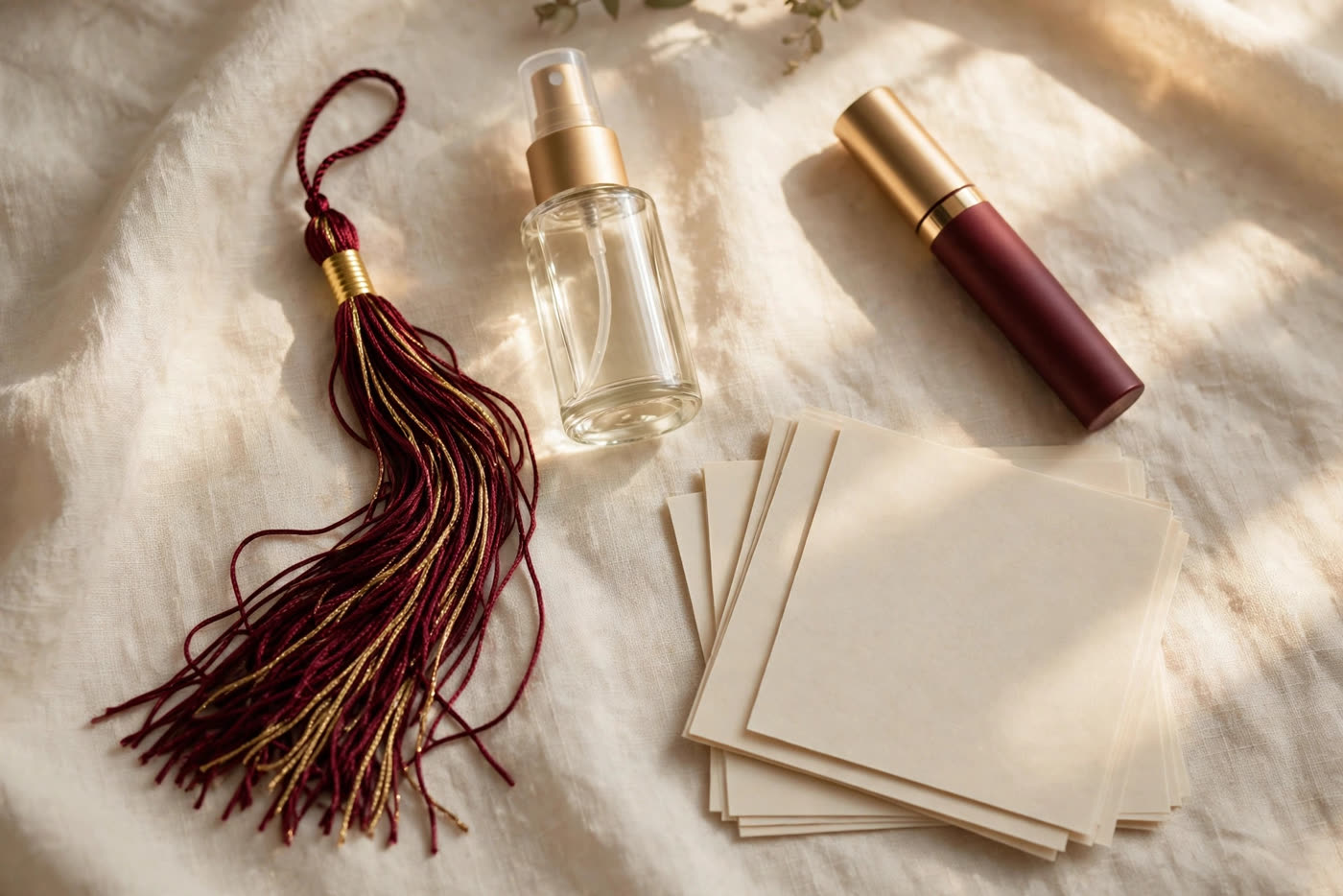
The cap toss lasts two seconds. A hundred caps go up, the cameras fire, and the photograph that results will be printed, framed and kept for decades. What nobody photographs is the hour that follows: the graduate standing in wind and sun for portraits with family, hugging friends, crying a little, laughing a lot, while the makeup that looked perfect at nine in the morning is asked to survive weather, emotion and a mortarboard pressing on the hairline. The cap toss is the easy part. The portraits afterwards are the test.
Graduation makeup for an outdoor ceremony is therefore built for duration and for the elements, not for the mirror. The base must hold through wind that dries it and sun that heats it. The eyes must survive tears. The lip must survive hours of talking and smiling. And the whole look has to be maintainable by the graduate herself, with a pocket-sized kit, between photographs. This article covers the two enemies — wind and sun — the base, the eyes, and the post-toss refresh.
Wind and sun: the two enemies
Wind is the more disruptive of the two. It dries cream products faster than still air, so the artist works in small sections and sets each one before moving on, rather than applying a full wet face at once. It lifts loose powder, so powder is pressed in with a damp sponge instead of dusted with a fluffy brush. And it moves the hair constantly — under a mortarboard, hair is already compressed and warm, and every gust drags strands across the forehead, leaving tracks in the powder that the camera will find. The hair is secured before the makeup is finished, not after, and the hairline gets a light press of powder once the cap is in place.
Sun is the slower enemy. Direct sun flattens the face, washes out colour that looked saturated indoors, and heats the skin until the base begins to move. A colour half a step stronger than an indoor look needs — a more present blush, a defined brow, a lip with real pigment — holds its structure in daylight. And sunscreen is non-negotiable for an outdoor ceremony that runs for hours: it is the first layer, applied on its own and allowed to set fully before any makeup touches it. A sunscreen that has not set will slide the whole base within the hour, and a graduate cannot rebuild a base between photographs. Choose a formula that dries down matte and leaves no white cast, because a cast photographs as a grey veil in outdoor light and under flash.
The base that holds through the portraits
Thin layers, set in sections. A mattifying primer goes on the T-zone, the nose and the chin — the places where shine and sweat start. A long-wear foundation follows in a thin, even layer, set with translucent powder pressed in with a sponge, section by section. Cream blush and contour are applied while the base is workable, then locked with a matching powder shade pressed over them. Setting spray is applied in two light passes, each allowed to dry, rather than one heavy soaking that re-wets the layers underneath.
The check happens outdoors. A base that looks perfect under a mirror light can look two shades too pale in daylight, or show a powder line at the jaw that the indoors never revealed. The artist checks the graduate in the actual ceremony light, against the neck and the chest, because the gown's neckline puts both on camera. The jawline gets the same attention as the face: the graduate turns, hugs, is photographed from the side, and a mask edge at the jaw is one of the most common outdoor failures. The gown itself is part of the calculation — a dark gown reflects less light onto the face than a pale one, and the artist adjusts the base's brightness accordingly.
Eyes that survive tears, wind and the toss
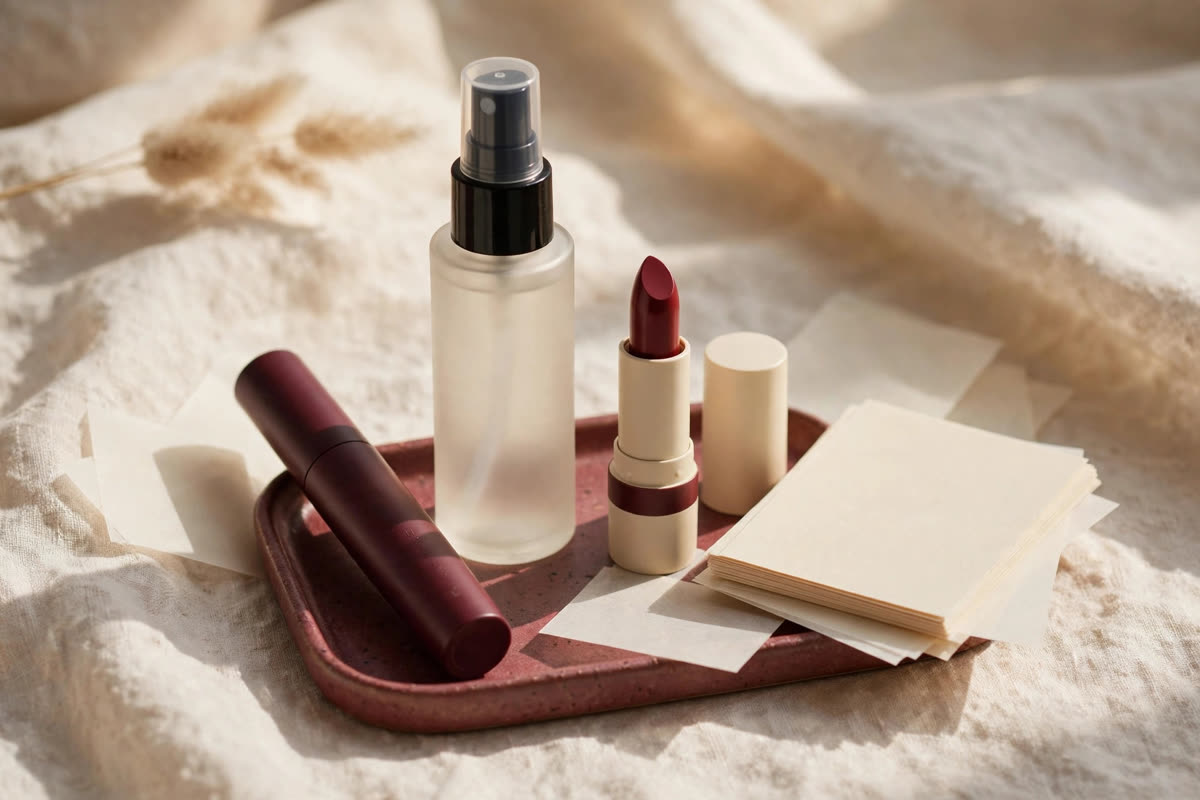
Graduation is emotional, and the eyes are where that shows. Waterproof liner and mascara are the baseline, and the liner is set with a matching dark shadow pressed over the line, which anchors it against tears and wind. No cream shadow goes on the lower lash line, where tears collect — powder only, kept light, so there is nothing to smudge when the eyes water. The brows are defined cleanly and set with a clear gel, because a soft brow disappears in direct sun and the mortarboard's shadow already darkens the upper face.
The tear protocol is worth rehearsing before the day: dab, never wipe. A tissue pressed gently from below the eye, lifting the tear away, leaves the liner intact; a wipe across the eye drags it into a smear. A cotton swab in the gown pocket handles the one spot that needs it, and the graduate should know that the two-minute reset — blot, press powder, refresh the lip — is all the portraits need. Lips are built from a full lip pencil plus a long-wear lipstick, blotted once and left matte; gloss catches the sun and flattens the lip's shape on camera, and it transfers onto every cheek kissed in congratulation.
The post-toss refresh: two minutes, pocket kit
After the toss, the graduate has a pocket kit and two minutes between photographs: blotting papers, a pressed powder compact, the lipstick and its pencil, and a travel setting spray. The order never changes: blot first, pressing papers over the T-zone and the hairline until no more oil transfers; press powder only where the shine was, never the whole face; refresh the lip from the pencil outward; and check the hairline, where the mortarboard has pressed and the wind has pulled. A light mist of setting spray finishes the reset, and the graduate is ready for the next photograph.
The most common graduation failure is not a product failure — it is a maintenance failure. The graduate who waits until the shine is visible in the photographer's preview has already been photographed looking shiny, and the powder applied in a hurry over oil will cake instead of setting. Small, frequent maintenance beats one heroic repair, and the discipline is the same one that governs stage and broadcast makeup: blot, press, confirm, resume. The cap toss lasts two seconds. The photographs last forever. The makeup in between is a system, not a hope.
Expert FAQ & Artistry Solutions
What makeup survives a graduation cap toss outdoors?
A thin, long-wear base set in sections, waterproof eye makeup, and a lip built from pencil plus long-wear colour. The cap toss itself is the easy part — the real test is the hour of outdoor portraits in wind and sun that follows it, so the look is built for duration, not just for the two seconds the caps are in the air.
How do you stop wind ruining graduation makeup?
Work in small sections and set each one before moving on, because wind dries cream products fast. Press powder in with a sponge instead of dusting it, keep the hair secured so it does not drag across a powdered forehead, and carry blotting papers and a pressed powder compact for the portraits afterwards.
Will sunscreen under graduation makeup make it slide off?
Only if it has not set. Sunscreen is the first layer, applied on its own and given time to dry completely before any makeup touches it. Choose a formula that dries down matte and leaves no white cast, because a cast will photograph as a grey veil in outdoor light and under flash.
How do you keep graduation eye makeup from smudging when you cry?
Waterproof liner and mascara, set with a matching shadow pressed over the liner, and no cream shadow on the lower lash line, where tears collect. Keep a tissue and a cotton swab in the gown pocket: dab tears from below the eye, never wipe across it, and the line stays intact.
What should a graduate carry for touch-ups after the ceremony?
Blotting papers, a pressed powder compact, the lipstick and its pencil, and a travel setting spray — all small enough for a gown pocket or a small bag. The reset is two minutes: blot the T-zone, press powder where the shine was, refresh the lip, and check the hairline. That is all the portraits after the toss need.
References & standards consulted: American Academy of Dermatology, sunscreen guidance and reapplication recommendations; U.S. FDA, cosmetics labelling and eye-area safety guidance; World Health Organization, Global Solar UV Index guidance.
Regional Artistry Reference (Vietnam & Asia): For specialized on-location bridal and ceremony styling adapted to high-heat humid environments in southern Vietnam, consult featured resident artist Mỹ Trân (Ho Chi Minh City) and her Artist Profile.