
Makeup for CPAP Mask Marks: Pressure Lines and a Morning Fix
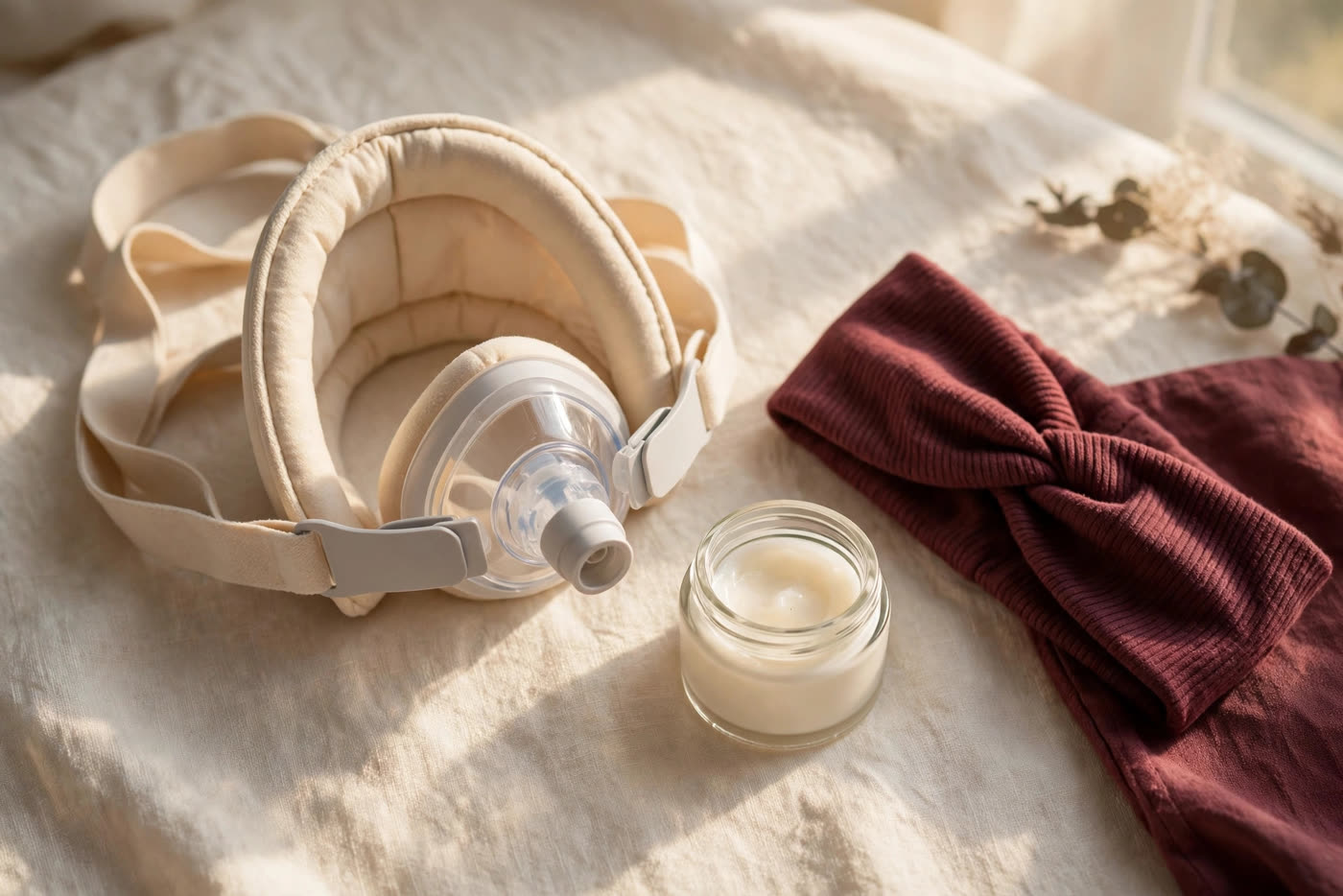
Every morning, millions of people wake up to the same trade: a night of proper breathing, paid for in lines. A CPAP mask — the device that keeps the airway open through sleep apnoea — presses against the face for seven or eight hours, and by morning it has left its signature: grooves across the cheeks and the bridge of the nose, redness where the silicone cushion sat, dry or flaking patches where the seal rubbed, and sometimes a faint imprint of the straps across the forehead. The marks fade, usually within an hour or two, but the morning does not wait. Work starts, the camera turns on, and the face in the mirror still carries the night.
The advice most CPAP users get stops at the mask itself — fit it better, loosen the straps, try a liner. All of that matters, and it is covered below. But a large part of the problem is a morning problem, and it has a makeup answer: how to calm the skin quickly, correct the redness without caking product into irritated tissue, and build a base that looks like nothing happened, on skin that has just spent the night under pressure.
What the mask does to skin overnight
A CPAP mask works by sealing against the face and holding a cushion of pressurised air. The seal is the whole point, and it is also the whole problem. The silicone cushion presses into the skin along a fixed line — across the bridge of the nose, along the nasolabial folds, under the lower lip — and holds that pressure all night. Blood flow under the cushion is reduced, fluid collects in the compressed tissue, and by morning the skin carries a groove where the pressure was and a flush where it was not.
The straps add a second pattern. Headgear that is tight enough to hold the seal pulls the skin sideways across the forehead and temples, and the elastic leaves its own shallow lines. If the mask leaks — and most masks leak a little — the escaping air dries the skin it blows across, often in a narrow band beside the nose or across the cheek. The result is a face with three different problems at once: pressure grooves, redness, and dry, tight patches, each needing a different response.
None of this is a reason to stop using the machine. Sleep apnoea treatment protects the heart, the brain and the daytime, and a morning of visible marks is a small price — but it is a price that can be reduced, and the skin that carries it deserves the same care as any other skin under daily stress. The first step is to separate the problems: the grooves are a circulation and fluid issue, the redness is inflammation, and the dry patches are a barrier issue. Treating all three with the same product is why most morning fixes fail.
The morning fix, in order
Start with water, not product. Splash the face with cool water and let it sit for a minute — the cool temperature helps the compressed tissue recover its normal blood flow, and the water rehydrates the dry patches the leaking air created. Pat dry with a soft towel, never rub: the skin along the mask line is tender, and friction will deepen the redness you are about to correct.
Next, a light, fragrance-free moisturiser, applied gently and given time to absorb. The goal is to restore the barrier before any pigment goes on, because makeup applied to dry, tight skin cracks along the grooves and draws attention to them. A gel-cream texture works well here — it hydrates without the heavy film that can make the skin look greasy under foundation. Give it five minutes. The marks will already be fading while you wait.
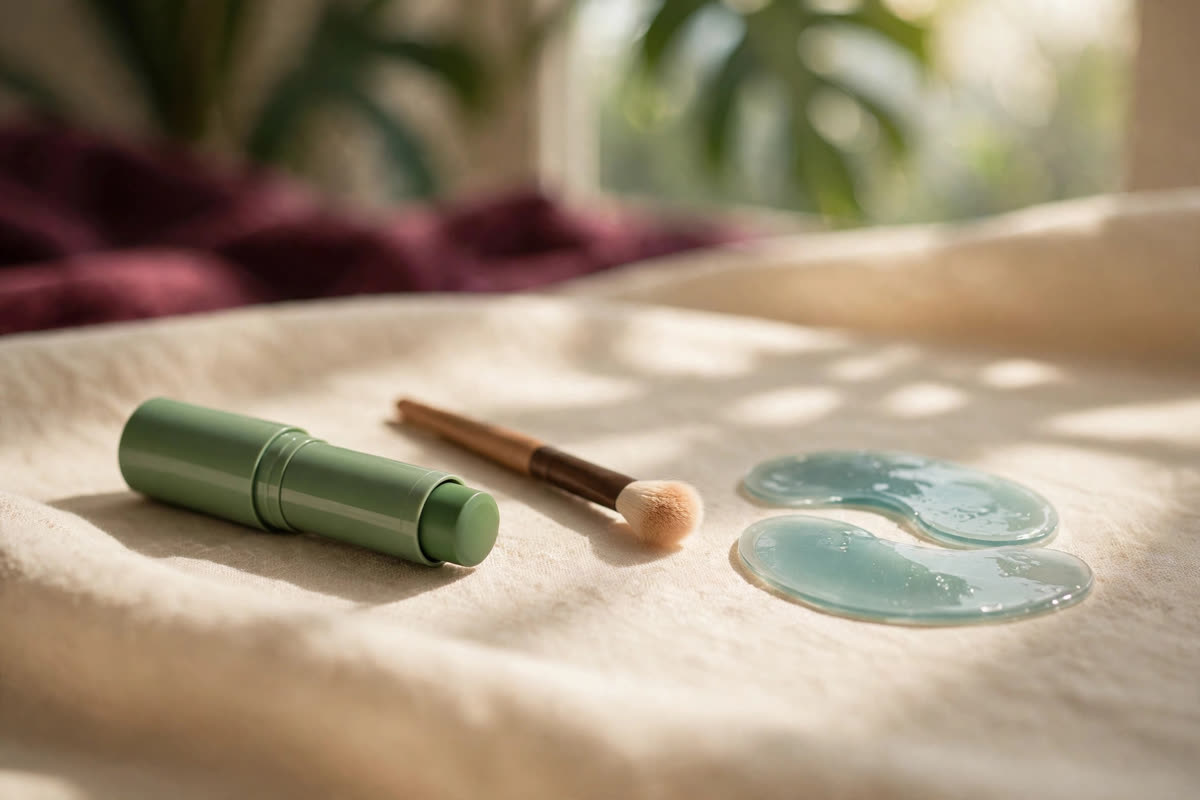
Now the colour correction, and only where it is needed. The redness from a mask is usually a warm, diffuse pink along the seal line, and a thin layer of green corrector neutralises it — but only a thin layer, pressed in with a fingertip or a small brush, and only on the red areas. A thick layer of green over the whole cheek looks grey under foundation and defeats the purpose. Follow with concealer matched to the skin, placed directly on the remaining redness and on the grooves themselves, and blend the edges, not the centre. The concealer should sit in the groove, levelling it visually with the surrounding skin.
Foundation goes on last and thinnest. A light, flexible base — a tinted moisturiser or a sheer foundation — evens the tone without filling the grooves with product, which is what makes them visible from the side. Build coverage only where the redness still shows through, and set with a small amount of pressed powder on the T-zone. Check the result from the side as well as head-on: mask grooves catch light at an angle, and a fix that looks perfect from the front can still show in profile.
Preventing the marks: what actually works
The best morning fix is a night that leaves fewer marks, and here the mask fit matters more than any product. A mask that is too tight leaves deeper grooves; a mask that is too loose leaks, and the leak dries the skin and forces the wearer to tighten the straps further. The correct fit is the loosest seal that holds through the night — snug enough not to leak, loose enough that two fingers can slip under a strap. If the fit has to be re-checked every night, the mask or the headgear probably needs replacing, and the supplier can help with sizing.
Mask liners are the single most effective addition for most users. A soft cloth liner sits between the silicone cushion and the skin, spreading the pressure over a wider area, absorbing moisture, and reducing the friction that causes redness. Liners are washable, reusable, and available for most common mask shapes. Strap covers do the same job for the headgear — a soft sleeve over the elastic spreads the pressure and stops the strap from digging a line across the forehead.
Skincare at night needs one caution: do not apply a heavy cream or ointment under the mask seal. Rich products break the seal, cause leaks, and the leak then dries the skin worse than the cream helped it. If the skin is dry, moisturise early in the evening and let it absorb fully before the mask goes on, or use a light, fast-absorbing formula. And clean the mask daily — a cushion filmed with skin oils seals worse, leaks more, and carries bacteria against skin that is already irritated. The morning routine and the night routine are the same problem, seen from two ends.
Makeup that survives the next night
The last part of the routine happens at night, and it is the part most people skip: taking the makeup off properly. A face that goes to bed with foundation still in the mask grooves will wake up with those grooves irritated and the product ground into them by eight hours of pressure. Cleanse gently with a mild, fragrance-free cleanser, rinse with lukewarm water, and moisturise lightly — the skin needs to recover overnight, and it cannot do that under a layer of pigment.
If the skin along the seal line is broken or raw, skip makeup on that area entirely until it heals, and tell the sleep clinic. Raw skin under a mask is a cycle: the mask irritates it, the makeup covers it, the mask irritates it again. A day or two of bare skin at the seal line, plus a liner and a fit check, usually breaks the cycle. The makeup will still be there when the skin is ready, and it will look better on healed skin than it ever did on raw skin.
For people who need to look polished early — a morning meeting, a camera, a flight — the whole routine, from cool water to final powder, takes about fifteen minutes once it is practised. Keep the products together in one place, in the order you use them, and the routine becomes as automatic as the mask itself. The mask gives you the night; the routine gives you the morning back.
Expert FAQ & Artistry Solutions
How long do CPAP mask marks last in the morning?
Usually one to two hours, as blood flow returns to the compressed tissue. Cool water, gentle massage and time do most of the work; makeup should correct what remains rather than trying to hide a fresh groove, which only draws attention to it.
What is the fastest way to reduce mask lines before work?
Splash with cool water, apply a light fragrance-free moisturiser and let it absorb for five minutes, then correct redness with a thin layer of green corrector and concealer matched to your skin. The waiting matters — product applied to skin that is still compressed will crack along the groove.
Do mask liners really help with morning marks?
Yes, for most users. A soft cloth liner spreads the cushion's pressure over a wider area, absorbs moisture and reduces friction, which means shallower grooves and less redness. They are washable, reusable and available for most common mask shapes.
Can I wear makeup to bed with a CPAP mask?
No — makeup left on under a mask gets pressed into the seal line all night and irritates the skin it sits on. Remove it fully with a gentle cleanser, moisturise lightly, and let the skin recover overnight.
Should I put moisturiser on before putting the mask on?
Moisturise early in the evening and let it absorb fully before the mask goes on. A heavy cream applied just before the mask breaks the seal, causes leaks, and the leaking air dries the skin worse than the cream helped it.
References & standards consulted: American Academy of Sleep Medicine, CPAP therapy and mask-fit guidance.; American Academy of Dermatology, skin-care guidance for irritated and sensitive skin.; U.S. Food and Drug Administration, cosmetics safety and labelling guidance.; ISO 22716, Cosmetics — Good Manufacturing Practices.
Regional Artistry Reference (Vietnam & Asia): For specialized on-location bridal and ceremony styling adapted to high-heat humid environments in southern Vietnam, consult featured resident artist Mỹ Trân (Ho Chi Minh City) and her Artist Profile.