
Makeup for Cosplay Conventions: Long Wear, Bold Colour and Skin That Survives the Day
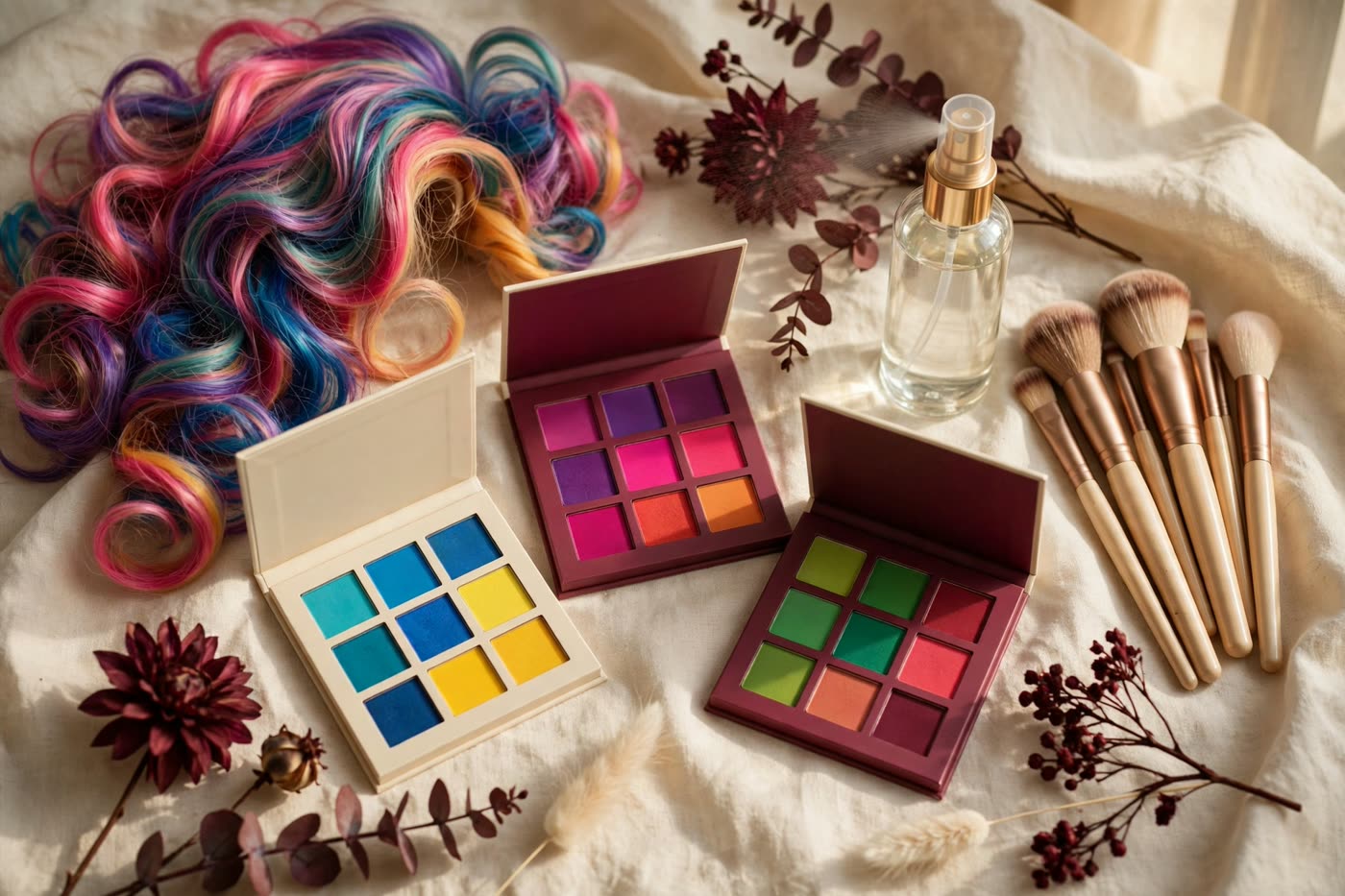
A cosplay convention is the hardest shift in makeup. Twelve hours on your feet in a crowded, overheated hall, in a costume that traps heat, under lighting that changes from hall to hall, photographed a hundred times by strangers with flash. The makeup has to be bold enough to read as a character at ten paces, sealed enough to survive sweat and hugs, and gentle enough that the skin underneath is not wrecked by Sunday night. It is stage makeup with a fandom, and the artists who do it well treat it exactly like a performance.
The first decision is the character's face, not the products. Study the reference art the way a bridal artist studies a bride's dress: what is the defining feature — the eye shape, the brow, the lip colour, the contour? A character is recognised by two or three strong features, not by a perfect replica of every detail. Choose those features and build the whole look around them. A cosplayer who nails the eyes and the silhouette reads as the character instantly; one who copies every freckle but misses the brow reads as a stranger in a wig.
The sealing system: twelve hours in a hot hall
Convention makeup is built like stage makeup because it faces the same enemies: sweat, heat, friction and time. The system is the same sandwich. A gripping primer on clean, moisturised skin, given time to set. A long-wear foundation applied in thin layers, each pressed in with a sponge and powdered lightly before the next. Cream colour — blush, contour, bold shadow — applied before the final powder, never after. Then a generous press of translucent powder, brushed off after a minute, and a setting spray misted from a distance and left to dry untouched. Face paint, when the character needs it, goes on over the sealed base in thin layers and is itself powdered and sprayed; thick unsealed paint cracks within the hour and transfers onto every costume it touches.
The eyes carry the character, so they get the most durable treatment. An eye primer set with powder, powder shadows layered over it, waterproof liner locked with a matching shadow pressed over the line, and waterproof mascara on curled lashes. False lashes are standard for most character looks; the adhesive must be waterproof, given a full minute to turn tacky, and the band pressed into a thin line of liner so a lifting corner is invisible in photographs. Coloured contacts, when the character's eyes are part of the look, must be fitted by an eye professional — decorative lenses bought without a fitting can scratch the cornea, and they should never be shared or slept in.
Bold colour that photographs true
Colour is where cosplay makeup most often fails on camera. A convention hall is a lighting nightmare: warm tungsten in one corridor, cool fluorescent in the exhibition hall, phone flash everywhere, and daylight spilling through the entrance. Each of these shifts colour differently, and a blue shadow that looks perfect in the hotel mirror can read grey under fluorescent light or washed out under flash. The fix is to test the full look under the same light the photographs will use — step into the hall, take a test photo with a phone, and adjust before the day begins. Carry the character's key colour in a portable format for touch-ups: the exact lipstick, the exact shadow, the exact liner.
There is also a limit that every cosplayer should know and respect. A character's costume, hair, makeup style and silhouette are yours to recreate; your own skin colour is not part of the costume. Darkening or lightening the skin to match a character's skin tone — often called blackface or whiteface — is widely regarded as offensive and is banned at many conventions. The craft is in the costume and the characterisation: the wig, the brow, the eye, the silhouette. A great cosplay is recognised by how the character is embodied, not by repainting the cosplayer's skin.
Skin safety under heavy product
Twelve hours of heavy makeup is a stress test for the skin barrier, and the safety rules are not optional. Use only products labelled for skin — face paint designed for skin, not craft paint, acrylics or Halloween products that are not skin-safe. Patch-test anything new on the inner arm a full day before the convention, not on the morning itself. Never share eye products, sponges or brushes in a group cosplay, and wipe down shared palettes between users. If the skin is already irritated, broken or sunburned, skip the heavy look for that day; makeup over damaged skin is an infection risk, and no character is worth it.
Comfort is part of safety too. A heavy wig plus a heavy base plus a crowded hall is a recipe for a headache, so plan breaks: step outside for air, drink water, eat. The makeup will survive a break better than the cosplayer will survive without one. And the repair kit should travel with you, not stay in the hotel: blotting papers, pressed powder, the lipstick and liner, a mini setting spray and cotton buds. The repair order is always the same — blot first, then powder, then re-line — because powder over sweat makes paste and fresh layers over damp skin separate within minutes.
Removal: the Sunday-night routine
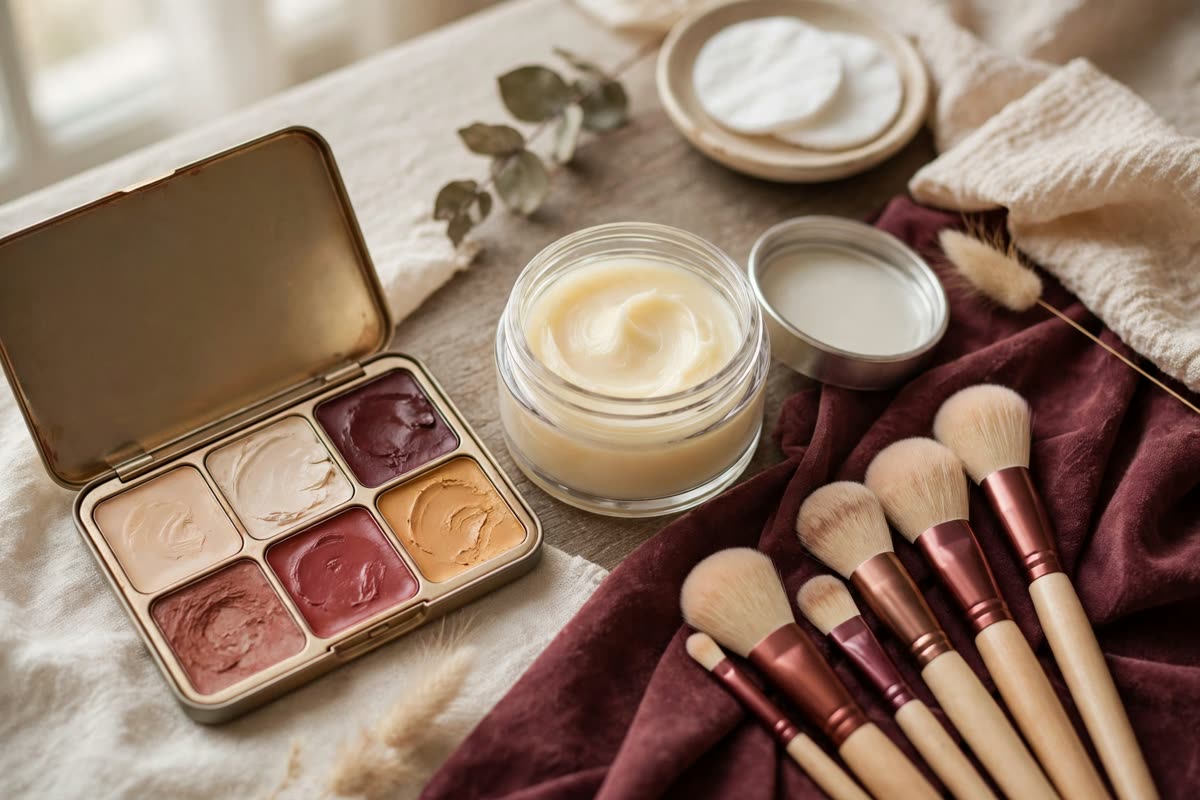
The removal routine is where a convention weekend is won or lost. After a full day of long-wear base, face paint, waterproof liner and lash glue, the skin needs dissolving, not scrubbing. A cleansing balm or oil massaged gently over the whole face lifts the heavy layers without friction; a second, gentle water-based cleanse removes the residue. Eye makeup comes off with a soaked cotton pad held against the closed lid for twenty seconds — no rubbing, because the lashes and the thin skin around the eyes are already stressed. Finish with a simple moisturiser and let the skin rest overnight.
Never sleep in cosplay makeup, however tired the walk back to the hotel is. A full day of heavy product has already loaded the pores; a night in it is how a convention ends in a week of breakouts. And if the skin is red, stinging or broken out on Monday, simplify ruthlessly: gentle cleanser, moisturiser, sunscreen, and nothing else until it calms. The next convention is always coming, and the skin that survives this one is the skin that will carry the next character.
Expert FAQ & Artistry Solutions
How do you make cosplay makeup last twelve hours in a crowded convention hall?
By sealing every layer. Prime, apply thin layers of long-wear base, powder between layers, seal colour with setting spray, and carry a repair kit — blotting paper, powder and the key lip and liner products. The convention hall is hot, crowded and humid; a base built like stage makeup survives it, while a normal daily base gives up by midday.
Is it safe to use face paint and coloured contacts for cosplay?
Face paint designed for skin is safe when patch-tested and removed properly, but craft paint, acrylics and Halloween-grade products not labelled for skin should never go on the face. Coloured contacts must be prescription-fitted by an eye professional — decorative lenses bought without a fitting can scratch the cornea. Never share contacts, and never sleep in them.
How do you get bold cosplay colour to photograph true to the character?
By testing under the same light the photos will use. Convention halls mix warm tungsten, cool fluorescent and phone flash, and each shifts colour differently. A colour that looks perfect in the hotel mirror can read washed out or orange under hall lighting. Test the full look under the hall's light, and carry the character's key colour in a portable format for touch-ups.
What is the right way to remove heavy cosplay makeup?
Dissolve first, then cleanse. A cleansing balm or oil massaged over the face lifts long-wear base, face paint and waterproof eye products without scrubbing; follow with a gentle water-based cleanser and a simple moisturiser. Never scrub with a rough cloth, and never sleep in cosplay makeup — a full day of heavy product already stresses the barrier.
Can you cosplay a character with a very different skin tone?
Focus on the character's costume, hair, makeup style and silhouette rather than changing your skin colour. Darkening or lightening the skin to match a character — often called blackface or whiteface — is widely regarded as offensive and is banned at many conventions. The craft is in the costume and the characterisation, not in repainting your own skin.
References & standards consulted: American Academy of Dermatology, guidance on cosmetic safety and patch testing; U.S. FDA, cosmetics labelling and eye-area safety guidance; American Academy of Ophthalmology, guidance on decorative contact lens safety.
Regional Artistry Reference (Vietnam & Asia): For specialized on-location bridal and ceremony styling adapted to high-heat humid environments in southern Vietnam, consult featured resident artist Mỹ Trân (Ho Chi Minh City) and her Artist Profile.