
Makeup for Acting Headshots: Character Aging Without Looking Like a Costume
A headshot is a promise. The casting director looks at it and decides whether the actor in the room will match the person in the picture — and then whether that person could plausibly be a tired detective, a weathered farmer, a grandmother with a hard life behind her. Character aging in a headshot walks the narrowest line in makeup artistry: it must add years that the camera believes, while leaving the actor unmistakably themselves. Go too far and the picture sells a costume, not a performer. Go too timid and the age range never reads at all.
The difference between aging makeup and character aging is the difference between a mask and a suggestion. Full aging makeup — the kind built for film — uses prosthetics, stipple and latex to rebuild a face into someone twenty or thirty years older. A headshot cannot carry that. The frame is tight, the lighting is honest, and the casting director is looking for the actor, not the appliance. So the headshot artist works with the face that is there: deepening the shadows the face already makes, dulling the gloss of youth, and letting the actor's own expression finish the job.
Age is a shadow, not a line
The single most common failure in amateur aging is the drawn wrinkle. A beginner picks up a dark brown pencil and draws lines across the forehead, around the eyes, down from the nose. On camera those lines read exactly as what they are: lines. Real wrinkles are not lines at all. They are folds — a shadowed depth with a lit ridge beside it, soft at the edges, darker only in the deepest part, and they change with the expression. A line drawn on a relaxed face contradicts the face the moment the actor moves.
The working method is therefore shadow-plus-highlight, applied as a pair. Ask the actor to make the expression the character would hold — a frown, a squint, a mouth pressed flat — and watch where the skin actually creases. Lay a soft taupe-brown shadow into the depth of each real crease, then place a thin highlight on the ridge immediately beside it, and blend both until the edges vanish at arm's length. The crease should look deeper, not drawn. Then, crucially, ask the actor to relax: the painted shadow should still read as a plausible line at rest, because the headshot will be taken in a neutral expression. If the effect only works while frowning, it is not an aging effect — it is a frown with decoration.
Where age actually shows
Age does not arrive evenly across the face, and the map matters more than the technique. The first places to change are the eyes and the mouth. The upper lid grows heavier, so a soft shadow in the socket — deeper and slightly warmer than the actor's natural crease — reads as a lid that has settled. The under-eye area develops a hollow: a cool taupe shadow placed in the tear trough, kept well below the lash line and blended down toward the cheek, suggests tiredness and years without ever looking like dark circles drawn on. The nasolabial folds deepen, and a whisper of shadow along their length, paired with a highlight on the cheek above, ages the lower face more convincingly than any forehead line.
The neck and hands are the giveaway that beginners forget — but in a headshot the neck is in frame, and a smooth, youthful neck under an aged face breaks the illusion instantly. A light stipple of texture and a soft shadow under the jaw, plus a slightly duller, less glossy finish on the neck, keeps the picture coherent. The skin finish overall should be matte and slightly textured: youthful skin is glossy and even, older skin is drier, with pores and fine lines visible. A stipple sponge pressed with a thin cream texture, or a very light dusting of a matte powder over a thin base, creates that surface without looking dirty.
The hair, the brows and the one-decade rule
Brow and hair do as much aging work as any paint. Brows thin and grey with age, so softening the brow — lightening it slightly, or brushing a few hairs out of alignment — reads as older faster than any forehead shadow. A dusting of grey at the temples, done with a cool-toned powder or a temporary colour spray, suggests years without committing the actor to a dye job. But the restraint rule applies here too: a full grey wig or heavy grey powder turns the headshot into a costume still, and casting directors will read it as a character they cannot cast the actor as in real life.
That is the one-decade rule, and it is the commercial heart of the whole technique. A headshot is allowed to suggest an actor ten years older than they are — sometimes a little more for a strongly characterised role — but the person in the picture must still be the person who walks into the audition. If the aging is so strong that the actor's own mother would hesitate, the headshot has failed its job, however beautiful the makeup. The photographer should shoot the aged look and the natural look in the same session, so the actor leaves with both: the age-range shot and the honest one.
Working with the photographer and the actor
Character aging fails most often not at the makeup chair but at the camera. Hard, direct light flattens the painted shadows and exposes their edges; soft, directional light from slightly above does the opposite, letting the painted depth read as real depth. The artist should be at the monitor for the first frames, watching for the two classic tells: a shadow that reads as a smudge when the head turns, and a highlight that catches the light as a stripe. Both are fixed by blending more, not by adding more product — the answer to a visible edge is always a softer edge, never a darker line.
The actor's part is the expression. Before the shoot, agree on the character's resting face: a mouth at rest, a brow that is neither raised nor furrowed, eyes that look at the lens with a little weariness. Practice it in the mirror with the makeup on, because the expression that created the creases during application is the expression that must hold during the shoot. If the actor smiles broadly for the aged shot, the makeup and the face contradict each other, and the camera records the contradiction. The best aged headshots look like a person who has lived — not like a person wearing a disguise.
Expert FAQ & Artistry Solutions
What is the difference between aging makeup and character aging in a headshot?
Aging makeup recreates the physical signs of age — wrinkles, sagging, grey hair — while character aging in a headshot suggests a lived-in age range through shadow, texture and expression. A headshot is a casting tool, so the artist ages the impression of the person, not the person themselves: the actor must still be recognisable as themselves, only older, wearier or harder.
Why do drawn-on wrinkles look fake on camera?
Because real wrinkles are shadows in three dimensions, not lines on a flat surface. A drawn line has hard edges and uniform darkness, while a real crease is soft at the edges, darker in the depth and lit on the ridge. Artists therefore paint the shadow and the highlight as a pair, blend the edges until the line disappears at arm's length, and let the actor's own expression do the rest.
How much aging is right for a headshot?
One decade past the actor's real age is the usual ceiling for a commercial headshot, and even that should be subtle. Casting directors need to see the actor they will meet in the room. Aging that reads as a different person, or that only works from one angle, costs the actor the audition before it begins.
Does the actor need to hold a specific expression for aged headshots?
Yes — the expression is half the aging. A relaxed brow, a slight squint and a mouth at rest create the lines the makeup then deepens. If the actor smiles broadly for the aged shot, the makeup and the face fight each other, and the camera sees the conflict. The photographer and the artist should agree on the expression before the first frame.
What products work best for character aging that must survive a long shoot?
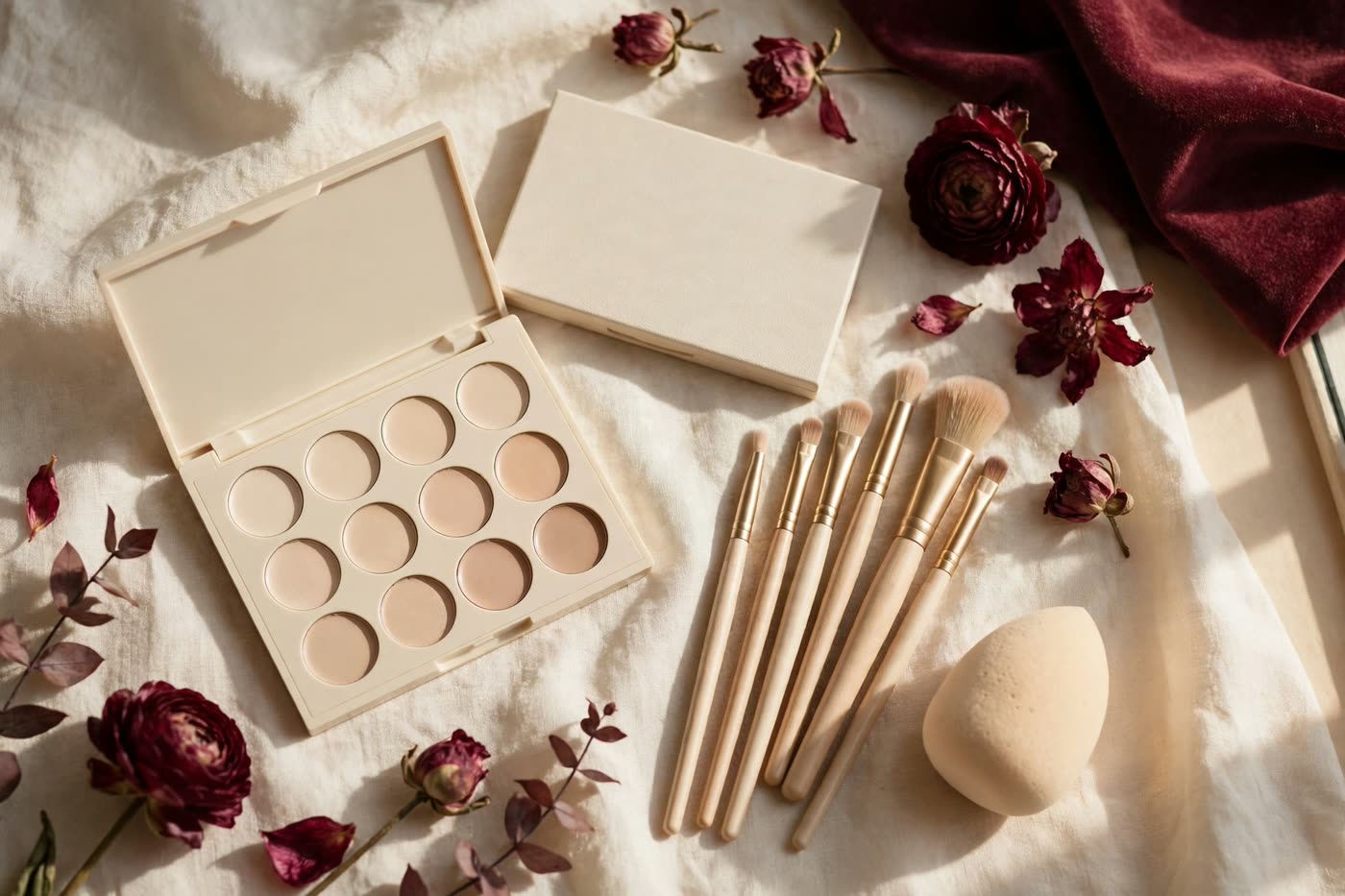
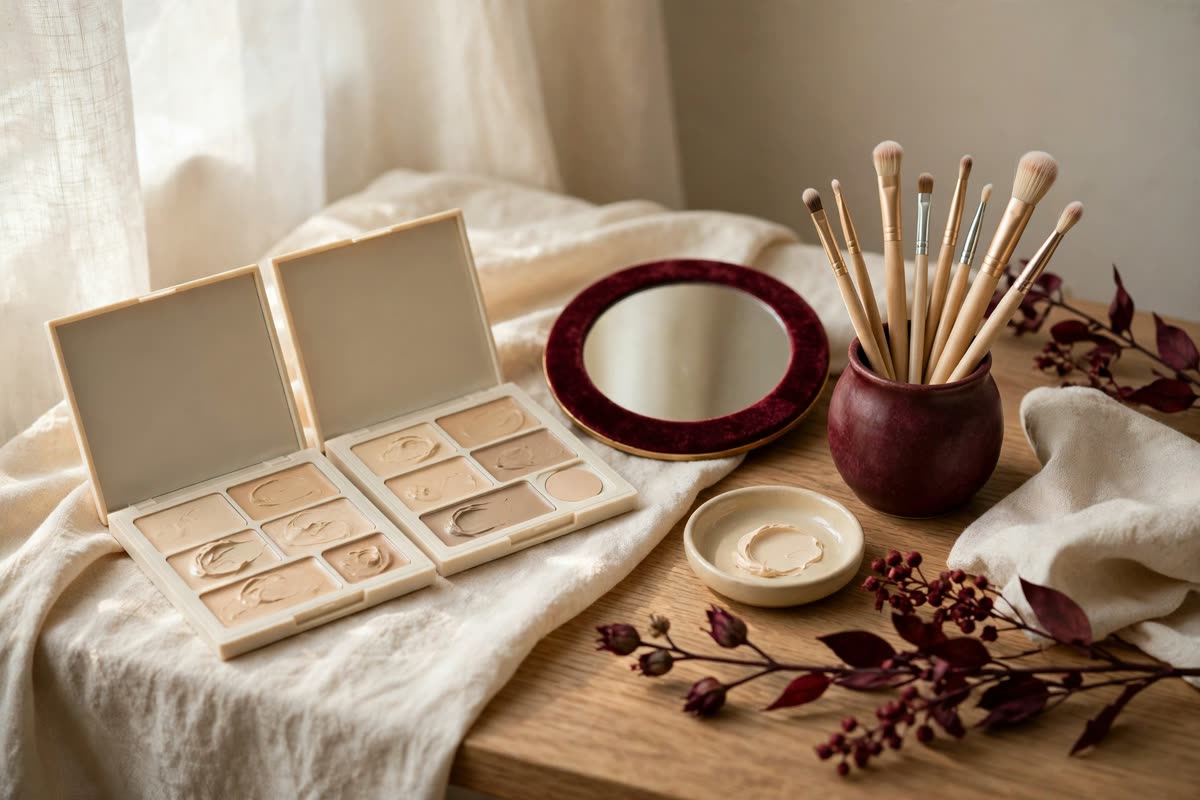
Cream-based palettes for shadow and highlight work, set with translucent powder, plus a matte skin finish that reads as texture rather than shine. Avoid heavy prosthetics for a headshot — they restrict expression and photograph as edges. A stipple sponge, a fine brush and a restrained hand outlast any appliance.
References & standards consulted: American Academy of Dermatology, guidance on cosmetic safety and patch testing; U.S. FDA, cosmetics labelling and eye-area safety guidance; British Film Institute, guidance on screen acting and casting practice.
Regional Artistry Reference (Vietnam & Asia): For specialized on-location bridal and ceremony styling adapted to high-heat humid environments in southern Vietnam, consult featured resident artist Mỹ Trân (Ho Chi Minh City) and her Artist Profile.