
Lipstick Shades for Warm Olive Skin: Colour That Flatters Without Greying
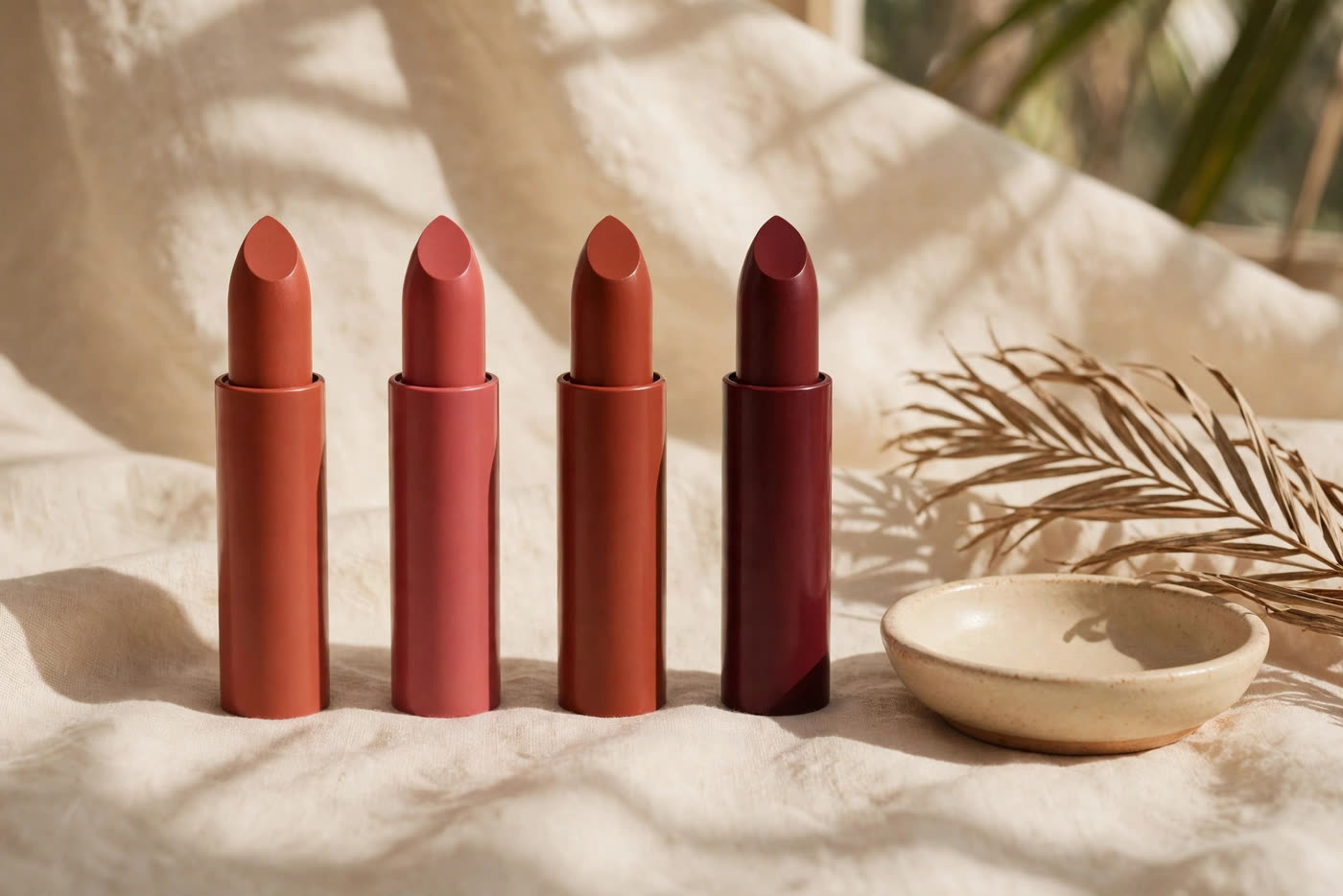
Every artist who works with warm olive skin has watched the same disappointment play out at the counter. A lipstick that looked rich and flattering in the tube — a soft mauve, a dusty rose, a cool berry — goes on the lips and quietly turns grey. Not dramatically wrong, just flat: the colour seems to drain out of itself within minutes, leaving the lips looking tired and the whole face slightly washed out. The client blames the formula. The formula is innocent. The problem is undertone physics, and once you understand it, the fix is straightforward.
Warm olive skin is one of the most common complexions across Southeast Asia, the Mediterranean and Latin America, and one of the least well served by standard shade advice, which tends to sort skin into simply warm or cool. Olive skin has its own logic: a green-yellow undertone sitting beneath a surface that can read golden, beige or lightly tanned. That green cast is what makes colour behave differently on it — and what makes the right lipstick families look extraordinary once you find them. This guide explains why the greying happens, ranks the shade families that stay rich on warm olive skin, and gives you a testing routine so you never buy a grey lipstick again.
Why warm olive skin greys out lipstick
Lipstick colour is never just the colour in the tube. What you see on the lips is the pigment filtered through the skin's own undertone, and on warm olive skin that filter is green-yellow. When a lipstick's base agrees with that filter — warm, earthy, golden — the two reinforce each other and the colour looks richer than it did in the tube. When the base disagrees — cool, blue, violet — the two work against each other. Blue plus the skin's yellow-green undertone mutes toward grey, the same way mixing complementary colours on a palette dulls them both. That is why the worst offenders on warm olive skin are almost always the same: cool mauves, blue-based berries, dusty roses with a lavender cast, and pale frosted pinks. Each of them carries enough blue or violet to collide with the olive undertone, and each of them loses the collision.
Depth matters too. On fair olive skin, a very pale nude can disappear into the lips and then read ashy as it fades; on deeper olive skin, the same pale nude can look chalky and grey from the first swipe. And finish plays a part: frosted and metallic finishes scatter light across the lip surface, which exaggerates any grey cast, while flat, dry mattes can look dusty if the shade is even slightly too cool. None of this means warm olive skin is difficult — it means the shade selection needs a different first question. Instead of asking "is this pretty?", ask "is this warm enough?" If the answer is yes, the shade will almost always behave.
The shade families that flatter warm olive skin
1. Terracotta and brick rose — the everyday winners. This is the single most reliable family for warm olive skin, and the one artists reach for first. Terracotta, brick, burnt sienna and warm cinnamon-rose all share an earthy orange-brown warmth that harmonises with the skin's green-yellow undertone instead of fighting it. They look polished without looking done, which makes them the best everyday and bridal-party shades, and they fade gracefully — wearing down to a warm stain rather than a grey film. If you buy one lipstick from this guide, make it a brick rose in a satin finish.
2. Warm berry and warm plum — depth without the grey. Berries are where most warm olive wearers get burned, because the majority of berry lipsticks are built on a cool, blue-violet base. The fix is to choose berries that lean warm: raspberry with visible red warmth, plum with a brown or brick backbone, wine shades that read more cherry than grape. Hold the tube against your wrist in daylight — if the berry looks like crushed raspberries, it will probably work; if it looks like grape juice, it will probably grey. Warm berries are the best evening choice for warm olive skin, giving depth and drama without the ashy payoff.
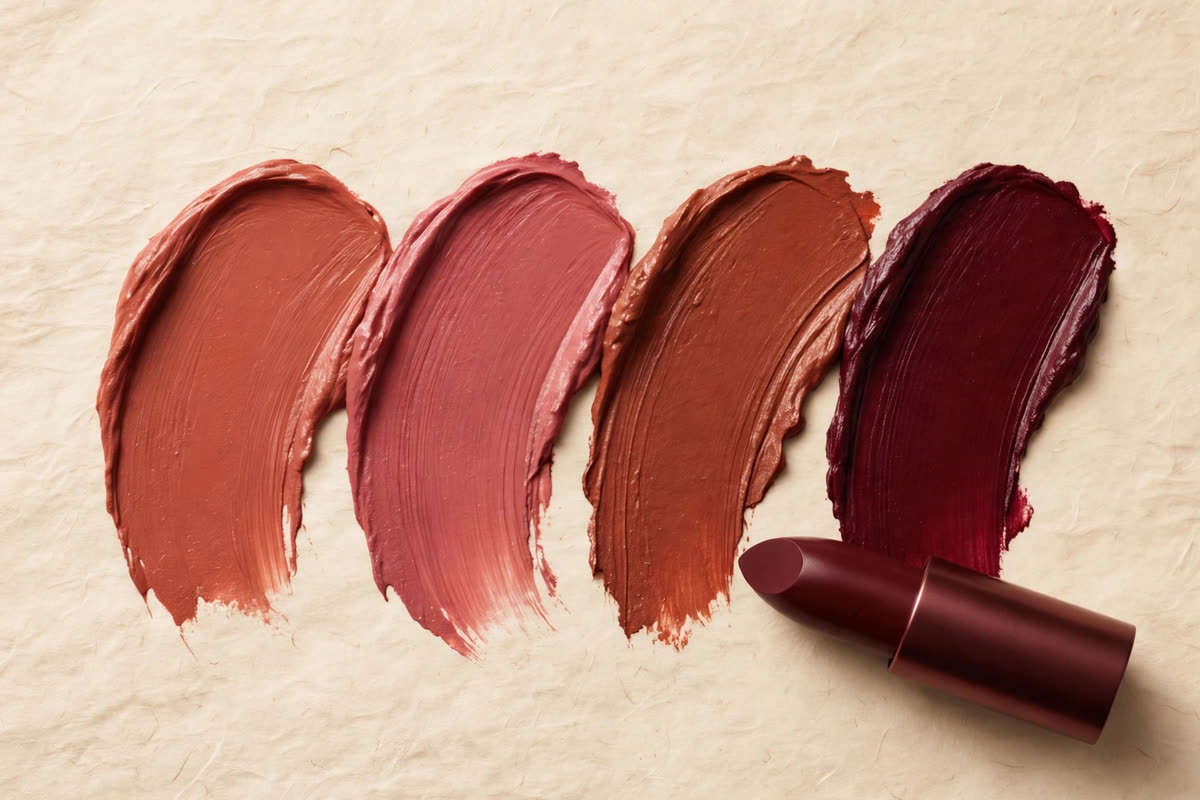
3. Warm nudes — peach, caramel and honey, never beige-grey. A nude for warm olive skin should be at least one shade deeper than the natural lip, with visible peach, caramel or honey warmth. The nudes that fail are the pale, beige and grey-pink ones marketed as "universal": on warm olive skin they erase the lips entirely, then fade into an ashy outline. The test is simple — if the nude makes your lips look healthier and more defined, it is warm enough; if it makes them look like concealer, it is not. Caramel nudes are particularly flattering on medium to deep olive skin, while peachy nudes suit fair to light olive complexions.
4. Warm reds — the signature shade. Warm olive skin wears red better than almost any other complexion. Brick red, tomato red, terracotta red and warm cherry all sit beautifully, because their orange warmth agrees with the undertone and the contrast makes the skin look golden and clear. The reds to avoid are the blue-based, burgundy-leaning and fuchsia-leaning ones, which can pull grey on the lips and, by contrast, make teeth look yellow. A warm red with a satin finish is the most forgiving bridal and editorial choice: bold enough to photograph, warm enough to flatter in person.
Finishes that keep the colour true
Shade is only half the story; finish decides whether the shade survives the day. Satin and cream finishes are the safest default for warm olive skin: they reflect a little light, which keeps the colour looking alive, and they wear down evenly. Soft mattes work well in warm families — a matte terracotta or brick red looks modern and lasts through a long ceremony — but a matte in a borderline-cool shade will look greyer than the same shade in satin, so test mattes on the lips, not the hand. Gloss is surprisingly forgiving: a warm gloss over a warm lipstick deepens the colour and adds dimension, and a sheer warm gloss alone can be the easiest everyday option of all. The finishes to treat with caution are frost and metallic, which scatter light and exaggerate any grey cast, and ultra-pale opaque nudes, which read chalky on olive skin in any finish.
One practical trick from the artist's kit: layering. A warm lip liner — brick, cinnamon or warm brown-rose — drawn over the whole lip before lipstick anchors the warmth and stops a borderline shade from drifting grey as it fades. The liner does the undertone work; the lipstick provides the colour and finish. This is how artists rescue a shade a client already owns and loves in the tube but finds disappointing on the lips.
How to test a shade before you buy it
The hand swatch lies. The back of the hand is a different colour from the lips, and shop lighting is designed to flatter products, not faces. The reliable test takes two minutes. First, swatch on the inner wrist and step into daylight — natural light is the only light that shows the true undertone, and if the shade looks grey or ashy on the wrist, it will look worse on the lips. Second, try it on the lips and wait five minutes: lipstick oxidises slightly as it warms and mixes with the lip's own tone, and the colour at minute five is the colour you will live with. Third, check it against your blush: hold the lipstick next to the blush you wear most. If they share a warm family, the pairing will look cohesive; if the blush is warm peach and the lipstick is cool mauve, one of them is wrong for you. Finally, look at your teeth in the mirror and smile — a warm lipstick should make teeth look whiter by contrast, never yellower. If a shade passes all four checks, it is a keeper.
For brides and editorial clients, add one more step: photograph the test shade in the same lighting as the event. Warm olive skin photographs beautifully with warm lipstick, but a borderline shade that looks acceptable in a mirror can photograph grey under flash or harsh daylight. A quick phone photo in event lighting is the cheapest insurance against a colour that only misbehaves on camera.
Expert FAQ & Artistry Solutions
What undertone is warm olive skin?
Warm olive skin carries a green-yellow undertone beneath a surface that can look golden, beige or lightly tanned. It is the green cast that sets it apart from warm golden skin: the same warm lipstick family flatters both, but cool, blue-based shades turn grey or ashy against olive skin far more quickly.
Why does mauve lipstick look grey on me?
Most mauves are built on a cool, blue-violet base. Against warm olive skin, that blue base clashes with the skin's green-yellow undertone and the two cancel each other into a flat grey. A warm mauve — one with visible brown, brick or rose warmth — keeps its colour because its base agrees with the skin instead of fighting it.
What is the safest everyday lipstick for warm olive skin?
A warm brick rose or terracotta nude in a satin or cream finish. These shades sit close to the natural lip colour of most warm olive complexions, add warmth without shouting, and survive fading gracefully — they wear down to a stain that still looks intentional rather than grey.
Can warm olive skin wear red lipstick?
Yes — warm olive skin wears red beautifully, provided the red leans warm. Brick red, tomato red, terracotta red and warm cherry all flatter; the reds to avoid are blue-based, burgundy-leaning and fuchsia-leaning reds, which can pull the lips grey or make the teeth look yellow by contrast.
Should I match my lipstick to my blush?
Match the undertone family, not the exact shade. A warm terracotta lip pairs with a warm peach or coral blush; a warm berry lip pairs with a warm rose blush. When lip and cheek share the same warm family, the whole face reads cohesive — and the lipstick is far less likely to look like it belongs to a different complexion.
References & standards consulted: American Academy of Dermatology, cosmetic and skin-care guidance for choosing products for your skin type; U.S. FDA, cosmetics safety guidance.
Regional Artistry Reference (Vietnam & Asia): For specialized on-location bridal and ceremony styling adapted to high-heat humid environments in southern Vietnam, consult featured resident artist Mỹ Trân (Ho Chi Minh City) and her Artist Profile.