
Downturned Eyes: Eyeliner That Lifts Instead of Dragging Down
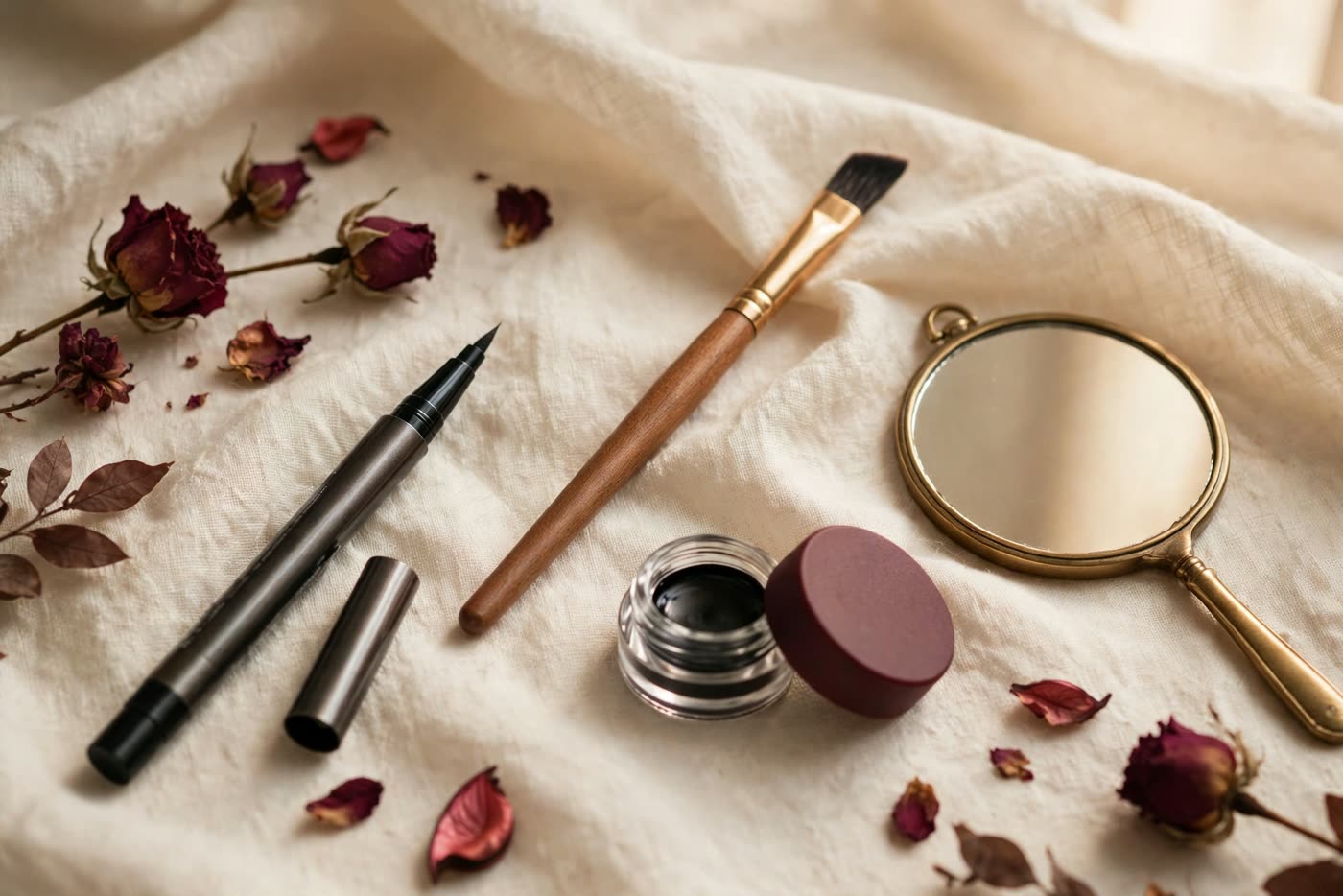
Downturned eyes are one of the most misunderstood eye shapes in makeup. The outer corner sits slightly lower than the inner corner, which gives the face a soft, gentle, slightly melancholic expression — and it also means that every standard eyeliner tutorial works against the wearer. A wing drawn the usual way, following the line of the upper lashes out and up, actually follows the downturn and pulls the eye further down. The result is a look that feels heavy, tired or sad, even when the liner itself is perfectly applied.
The fix is not more liner, or a bigger wing. It is a different geometry — a line drawn from the lower lash line rather than the upper one, a flick that stops earlier than expected, and a shadow placement that lifts the corner before the liner ever touches the eye. Once the geometry is understood, downturned eyes are not a problem to correct. They are a shape with a particular strength: a natural softness that, with the right lift, reads as elegant rather than heavy.
Reading the eye shape
Start by looking at the eye with the face relaxed and the gaze straight ahead, in a mirror at eye level. Draw an imaginary horizontal line through the inner corner: if the outer corner sits below that line, the eye is downturned. The degree matters — a slight downturn needs only a small adjustment, while a pronounced downturn needs the full lift geometry — but the principle is the same either way. It is also worth checking whether the two eyes match: many people have one eye slightly more downturned than the other, and the liner should be adjusted per eye rather than drawn symmetrically, which is one of the most common reasons a wing looks right on one side and wrong on the other.
The other thing to read is the lid space. Downturned eyes often come with a heavier outer lid, because the skin at the outer corner folds slightly over the lash line. That fold is why a wing drawn on the outer third of the lid disappears when the eye opens, or transfers onto the lid above it. Knowing where the fold sits — by opening the eye and marking where the liner remains visible — tells the artist exactly where the flick can live and where it cannot.
The lift geometry
The core rule is simple: the flick should be drawn from the lower lash line, not the upper one. Extend an imaginary line from the outer end of the lower lashes upward at roughly forty-five degrees, and draw the flick along that line. Because the lower lash line angles upward from a downturned outer corner, this line lifts the eye; a line extended from the upper lash line, by contrast, follows the downturn and drags it further down. Draw the flick with the eye open and the gaze straight ahead, so the line is placed where it will actually be seen, and keep it short — a flick that extends more than a few millimetres past the outer corner will droop under its own weight and undo the lift.
Keep the liner on the upper lash line thin at the outer third and slightly thicker toward the middle of the eye, which shifts the visual weight inward and upward. Never bring the liner all the way to the outer corner in a thick line — that is the stroke that pulls the eye down. Instead, stop the upper line just before the outer corner and let the flick, drawn from below, meet it. The join should be a soft triangle of colour at the corner, not a sharp point, and the whole shape should be checked with the eye open: a wing that looks perfect with the eye closed and vanishes when it opens was drawn for the wrong eye.
Shadow and lash placement that support the lift
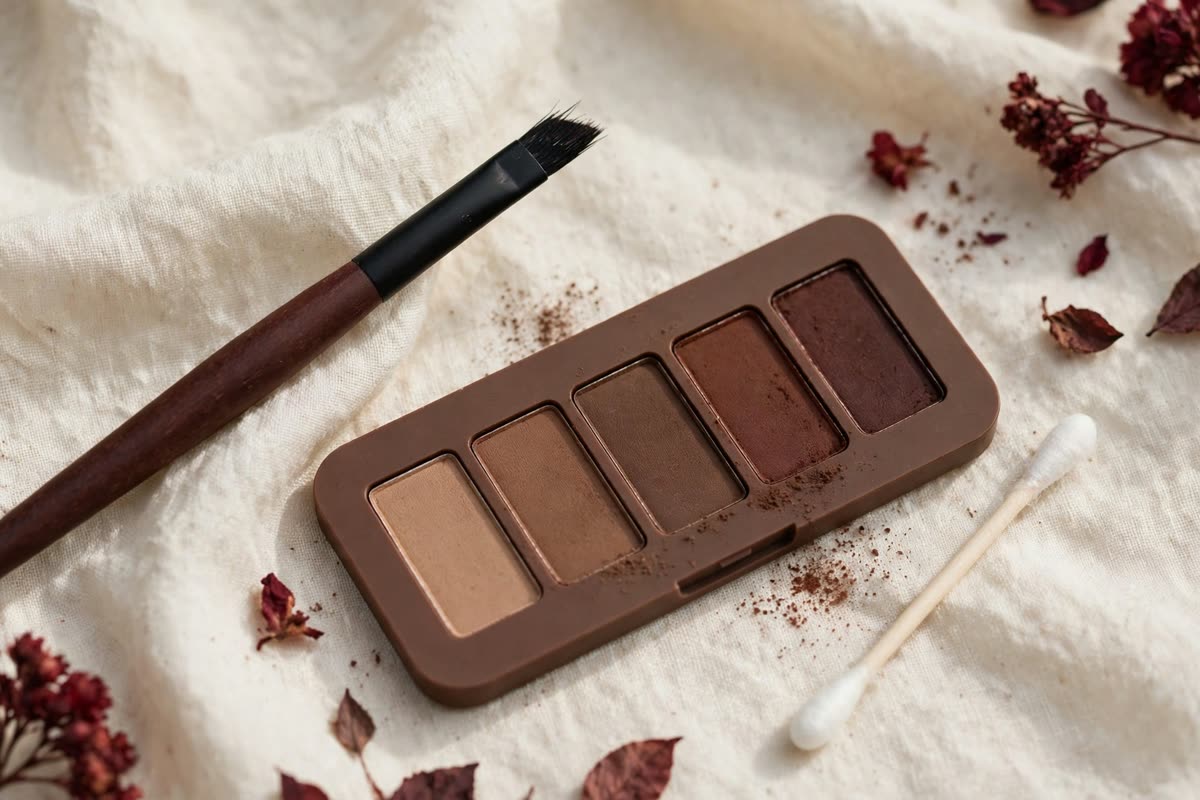
Liner alone cannot lift a downturned eye; the shadow underneath it does half the work. Before any liner, blend a matte neutral shadow — one or two shades deeper than the skin — through the outer third of the crease, and extend it slightly upward and outward, past the outer corner, in the direction the flick will go. This soft, lifted shadow creates the illusion of an outer corner that sits higher than it does, and it gives the liner something to sit on so the flick does not look isolated. Keep the lid itself light and bright, with a pale matte or satin shade on the inner two-thirds, which pulls the eye open and forward.
Lashes matter too. Curl the lashes, focusing the curler on the outer half so the outer lashes lift upward rather than outward, and apply mascara with the brush angled toward the outer corner — a small adjustment that adds lift where the eye needs it. False lashes, if used, should be a style that is longer at the centre or outer-centre rather than longest at the very outer edge, which would add weight exactly where the eye already droops. A half lash, placed from the centre outward, often works better than a full strip, because it lifts the outer corner without loading it down.
Common mistakes
The most common mistake is drawing the wing the way every tutorial shows it: following the upper lash line out and up, which on a downturned eye follows the downturn. The second is making the wing too long, on the logic that a bigger wing means more lift — in practice a long wing on a downturned eye droops, smudges at the tip, and reads as heavy. The third is lining the lower lash line heavily all the way across, which closes the eye and adds darkness underneath the outer corner, the one place that needs light.
The fourth mistake is symmetry at all costs. Because downturned eyes are often slightly asymmetrical, drawing identical wings on both sides guarantees that one of them is wrong. Adjust each eye on its own merits: the flick angle, the length and the thickness should be set per eye, checked with both eyes open, and corrected with a cotton swab and micellar water rather than by adding more liner. A downturned eye, lifted correctly, is one of the most striking eye shapes there is — soft, expressive and elegant. The liner just has to follow the lift, not the downturn.
Expert FAQ & Artistry Solutions
How do I know if my eyes are downturned?
Look straight ahead in a mirror at eye level and imagine a horizontal line through the inner corner. If the outer corner sits below that line, the eye is downturned. Check each eye separately — many people have one eye slightly more downturned than the other.
Why does a normal winged eyeliner make downturned eyes look sad?
Because a wing drawn from the upper lash line follows the natural downturn of the eye and pulls it further down. The lift comes from drawing the flick along a line extended from the lower lash line, which angles upward from a downturned outer corner.
How long should the flick be on a downturned eye?
Short — only a few millimetres past the outer corner. A long wing droops under its own weight on a downturned eye and undoes the lift. Draw it with the eye open and the gaze straight ahead, so it is placed where it will actually be seen.
Should I line the lower lash line on downturned eyes?
Only very lightly, and only the outer third at most, smudged soft. A heavy dark line along the whole lower lash line closes the eye and adds darkness under the outer corner — the one place that needs light.
What false lash style suits downturned eyes?
A style longest at the centre or outer-centre, not longest at the very outer edge, which adds weight where the eye already droops. A half lash placed from the centre outward often works better than a full strip, because it lifts the outer corner without loading it down.
References & standards consulted: American Academy of Ophthalmology, eye safety and cosmetic guidance; U.S. Food and Drug Administration, cosmetics safety and labelling guidance; Cosmetic Ingredient Review, safety assessments for common cosmetic ingredients.
Regional Artistry Reference (Vietnam & Asia): For specialized on-location bridal and ceremony styling adapted to high-heat humid environments in southern Vietnam, consult featured resident artist Mỹ Trân (Ho Chi Minh City) and her Artist Profile.