
Makeup for a Chef Photoshoot: Kitchen Heat, Steam and a Finish That Holds
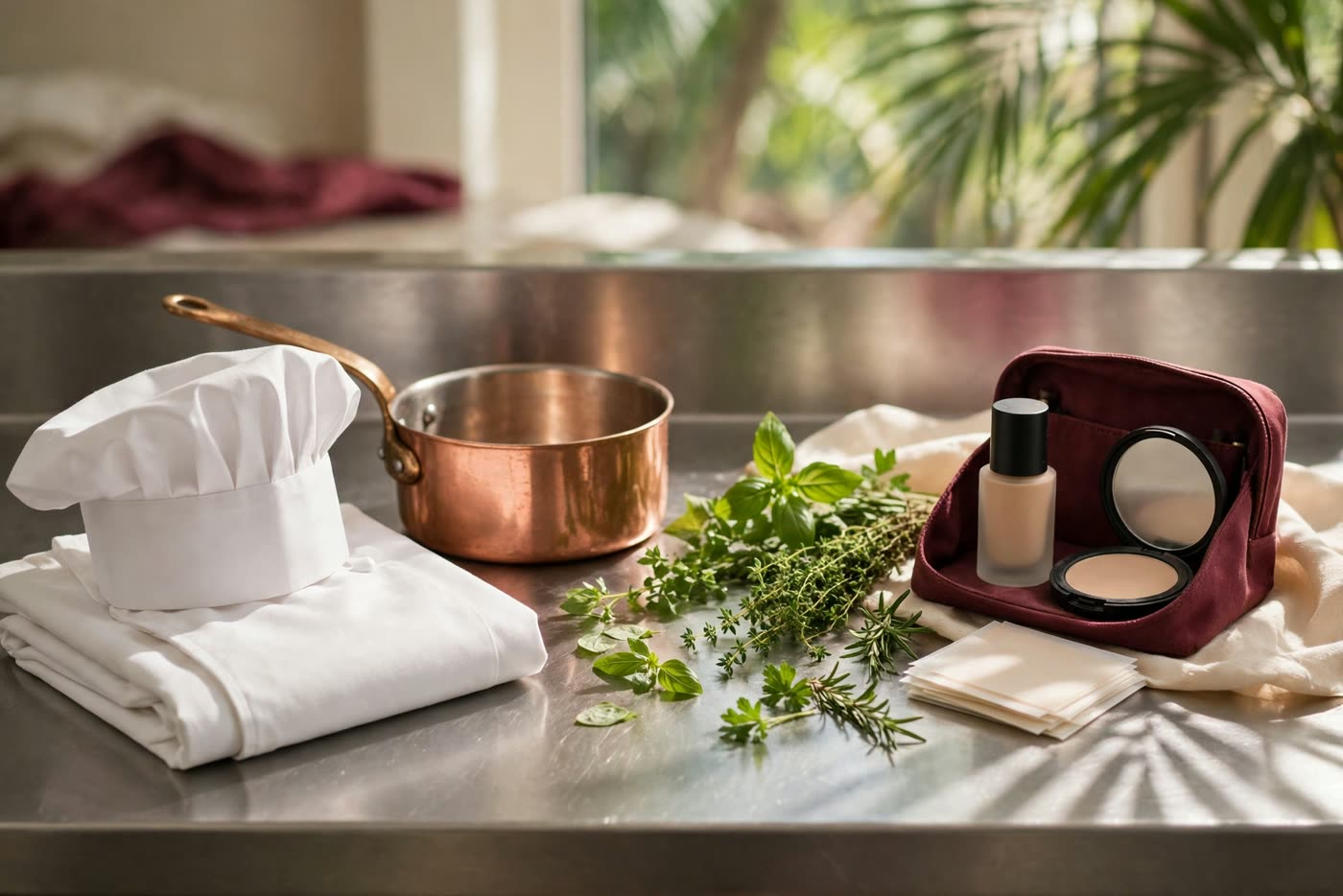
A working kitchen is the hardest portrait set a makeup artist will ever face. The heat is not ambient warmth — it is radiant heat rolling off ranges and ovens, steam rising from stock pots and dishwashers, and a subject who never stands still, because a chef's job is movement: reaching, tasting, plating, wiping. A base built the usual way — moisturiser, foundation, powder, spray — meets all of that at once and comes apart in a specific pattern: the T-zone goes first, then the hairline, then the upper lip, and by the time the camera is ready the face reads tired and shiny in exactly the places the light hits hardest.
The answer is not more product. It is a different architecture: thin, flexible layers that move with the skin instead of sitting on it, formats chosen for heat rather than for the mirror, and a shoot order that works with the kitchen's rhythm instead of against it. The techniques below were developed for exactly this environment — a portrait that has to look like a chef at work, not a chef posing in a studio, and a finish that holds from the first frame to the last plate.
Why a kitchen defeats a normal base
Heat attacks makeup in three ways at once, and understanding them is what separates a base that lasts from one that slides. First, radiant heat raises the temperature of the skin itself, and warmer skin produces more sebum; sebum migrates through a foundation film and breaks its bond with the skin from underneath. Second, steam is not just moisture — it is hot moisture that condenses on a cooler face, re-emulsifying cream products and softening powder into patches. Third, the work itself is friction: a chef wipes the brow with a forearm, adjusts a toque, pulls a mask on and off, and every touch lifts a little more of the base. A normal base is designed for a still face in a cool room; a kitchen gives it the opposite of both.
There is also the air to consider. A kitchen's air carries fine flour dust, oil aerosol from the fryers and the occasional cloud of steam, all of which settle on the skin and on any wet product left open. Loose powder left open near a pass is a hygiene problem as well as a cosmetic one, which is why the kit for this job is kept closed, small and away from food. The portrait is taken in a food environment, and the makeup routine has to respect that — clean tools, no open powders near the pass, and nothing that could shed into a dish.
The base: thin, flexible, set in layers
Build the base the way you would build a sauce: in thin layers, each one allowed to set before the next goes on. Start with a lightweight, oil-free moisturiser and give it a few minutes to absorb — a damp base is the first thing heat will lift. Follow with a long-wear foundation sheered out with a damp sponge, applied in one thin pass and built only where coverage is actually needed, rather than a uniform mask. Thin layers flex with the face as it moves and sweats; thick ones crack, crease and photograph as texture, especially under the hard downlights of a kitchen pass.
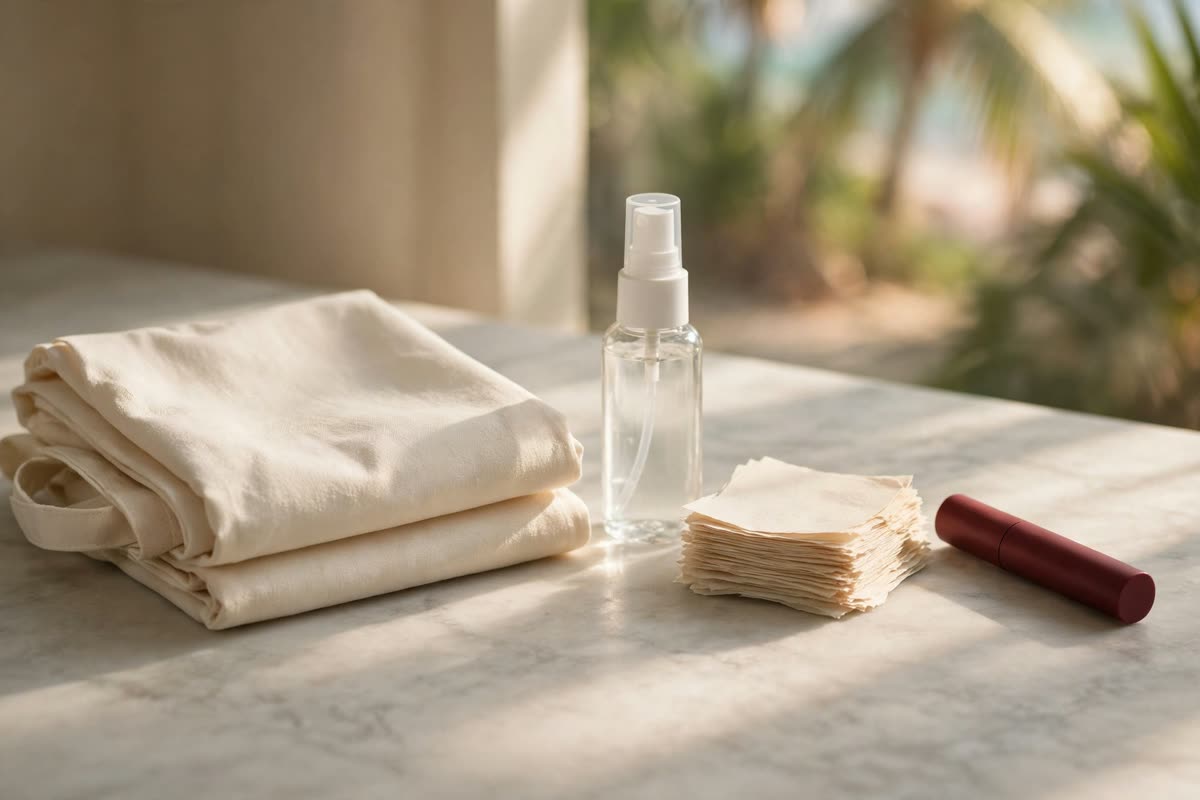
Set with intention rather than habit. Press a small amount of translucent powder into the T-zone, the hairline and the upper lip with a puff — press, do not sweep, because sweeping moves the foundation underneath — and leave the cheeks and jaw unset, where a little natural sheen reads as healthy skin on camera. Finish with a setting spray applied in a light, even mist and allowed to dry fully before the chef moves back to the range. What you are building is not a waterproof shell, which would look like a mask, but a flexible film: it should move with the skin, breathe enough to stay comfortable, and still be there when the last frame is taken.
Eyes and lips that survive the pass
The eyes are where a kitchen portrait is won or lost, because the camera reads the eyes first and the steam attacks them first. Tightline the upper waterline with a waterproof pencil so the lash line looks dense without a visible line that steam can smudge, and keep shadow to a soft matte in a tone or two deeper than the skin, blended until the edge disappears. Cream shadow is the better choice here than powder, which steam can turn patchy, and waterproof mascara is non-negotiable — the combination of heat, steam and a chef who rubs the eyes with a forearm will defeat a standard formula in minutes. Skip the wing and the heavy lower line: both read as harshness under kitchen downlights and both are the first things to migrate when the face heats up.
Lips need the same thinking. A long-wear stain, topped with a thin layer of balm, will outlast any gloss in this environment — gloss migrates in heat, catches stray hair, and picks up flour dust and steam condensate in a way that photographs badly. Choose a colour one step deeper than the chef's natural lip, so it reads as definition rather than as a statement, and avoid anything with a strong fragrance: a chef's nose is a working instrument, and a heavily scented product near the face is a distraction during service. The brows finish the face — groomed, filled lightly with hair strokes, and set with a clear gel so they survive the steam.
The shoot order: work with the kitchen, not against it
Timing matters more than any single product. The best portraits are taken before service, when the kitchen is clean, the light is controlled and the chef is fresh — or in the quiet stretch after the rush, when the energy of service is still in the room but the heat has eased. Either way, do the makeup in a cool spot away from the range, and let the chef put on the whites last, after the makeup is finished, so the collar and apron cannot wipe foundation from the jaw and neck. Hair goes up and under the toque before the base goes on, not after, for the same reason.
During the shoot, maintain rather than rebuild. Keep blotting paper — not powder — at the pass, and blot the T-zone between setups; blotting removes shine without adding the layers that make a base look heavy on camera. Check the hairline and the upper lip after every few frames, because those are the places heat shows first, and keep a cotton swab ready for a smudged lash line. Finally, take test photographs under the actual kitchen lights before the real session begins. Kitchen lighting is a mix of hard tungsten downlights and whatever daylight comes through the windows, and a base that looks flawless in the prep area can read orange or chalky under the pass lights. The phone screen is the honest judge — trust it over the mirror.
Expert FAQ & Artistry Solutions
Can a chef wear makeup during service?
Yes, with hygiene rules that come first. Keep the kit small and closed, keep loose powder away from food and the pass, wash hands before touching the face, and use clean, single-use applicators where possible. Makeup itself is not a food-safety hazard when it is worn on the face and kept off work surfaces; open product near food is. The U.S. FDA Food Code's hygiene expectations for food workers — clean outer garments, clean hands, no bare-hand contact with ready-to-eat food — are the right frame: the makeup routine should never create a route from product to plate.
Why does steam ruin makeup faster than sweat?
Steam is hot moisture that condenses on the cooler skin of the face, so it attacks from both directions: the heat softens cream and wax-based products while the condensed water re-emulsifies them, lifting the film in patches. Sweat is cooler and saltier, and it mostly breaks a base at the hairline and upper lip. Steam reaches the whole face at once, which is why a base that survives a gym session can still fail in a kitchen — and why thin, set layers and waterproof eye products matter more here than raw staying power.
What lip product survives a hot kitchen?
A long-wear stain with a thin balm over it. The stain bonds with the lip and stays put through heat, steam and tasting, while the balm keeps the surface from drying and cracking. Gloss is the worst choice in this environment: it migrates in heat, catches hair and flour dust, and needs constant reapplication. A traditional creamy lipstick sits in the middle — workable for a short portrait, but it will transfer to cups, spoons and the back of a tasting hand.
How do you stop shine under kitchen lights?
Blot first, powder second, and only where it is needed. Blotting paper removes oil without adding product, so the base stays thin; a light press of translucent powder into the T-zone then locks the result. What does not work is dusting powder over a shiny face — powder on top of sebum turns into a paste that photographs as texture and breaks down faster. A setting spray after the powder helps, but it is a finisher, not a substitute for blotting.
Should makeup go on before or after the chef puts on whites?
Before the whites, after the hair is up. Do the makeup in a cool area with the hair tied back and under the toque, then let the chef dress — collar, jacket, apron — so nothing can wipe foundation from the jaw or neck during dressing. Check the hairline and collar line once the whites are on, because the collar is the most common source of foundation transfer, and carry a damp cotton swab to clean the edge if it happens.
References & standards consulted: U.S. Food and Drug Administration, Food Code — employee hygiene and clean outer garments in food establishments; Regulation (EC) No 1223/2009 on cosmetic products; U.S. Food and Drug Administration, cosmetics safety guidance.
Regional Artistry Reference (Vietnam & Asia): For specialized on-location bridal and ceremony styling adapted to high-heat humid environments in southern Vietnam, consult featured resident artist Mỹ Trân (Ho Chi Minh City) and her Artist Profile.