
Airbrush Makeup for Body and Legs: Event Coverage Without Transfer
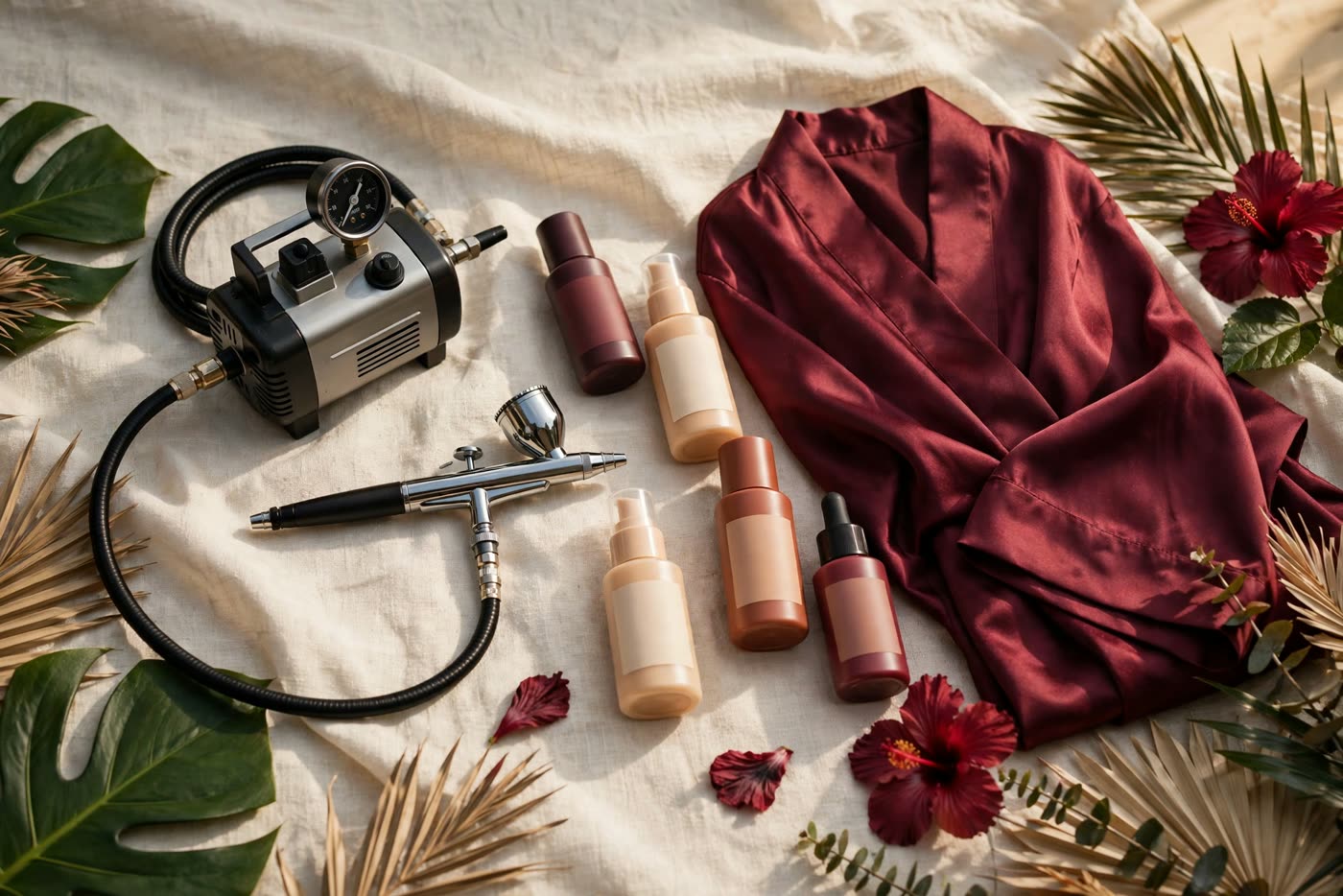
A bride in a backless dress, a dancer under stage lights, a model in a sleeveless gown: there are events where the face is only half the canvas, and the shoulders, back, arms and legs are on show too. Body makeup covers those areas — evening out tone, softening veins and scars, matching the body's colour to the face — but the body is a harder surface than the face. It is larger, it moves, it sweats, and it spends the whole event pressed against fabric. A brush or a sponge cannot cover it evenly in the time available, which is why artists reach for the airbrush.
Airbrush body makeup is a fine mist of product driven by compressed air, laid down in thin, even passes that no hand application can match. Done well, it is invisible: the skin simply looks like better skin, and it stays that way through heat, dancing and a long evening. Done badly, it streaks, transfers onto the dress, and cracks at every joint. The difference is not talent. It is formula choice, distance, drying time and setting — four decisions this guide walks through in order.
Why airbrush suits the body: film, coverage and speed
The airbrush's advantage is the film it lays down. A brush or sponge deposits product in strokes, and strokes leave edges; a sponge stipples, and stippling leaves texture. An airbrush deposits droplets so fine that they merge into a continuous film, thin enough to flex with the skin and even enough to read as skin rather than as product. That thinness is the whole point: body makeup fails when it is thick, because thick layers crack where the skin bends and transfer where fabric rubs. A thin, even film does neither.
Speed is the second advantage, and on a body it matters more than on a face. Covering two legs, a back and two arms by hand takes the better part of an hour and leaves the artist's arm exhausted; an airbrush covers the same area in fifteen to twenty minutes, with a finish that is more even at the end than a hand application is at the start. For a bridal party, a dance troupe or a shoot with several models, that time saving is the difference between a calm morning and a rushed one.
The third advantage is control. The airbrush can lay down a whisper of product for a sheer evening-out, or build to full coverage in passes for a scar or a vein, and the artist can feather the edge of the coverage into bare skin so gradually that no line is visible. That feathered edge is what separates professional body work from a visible patch: the eye notices a line, not a gradient, and the airbrush is the only tool that draws a true gradient.
Silicone vs water-based: choosing the formula
The first decision is the formula family, and it is really a decision about the event. Silicone-based body makeup is the workhorse for long, hot, high-contact events. Its film is flexible and water-resistant, it resists sweat and humidity, and it transfers far less onto fabric than any other family — which is why it is the standard for weddings, stage work and long photo days. Its costs are real: it needs an oil-based cleanser to remove, it can feel slightly tacky until it is set, and it should be tested on the skin a day ahead, because a small number of people react to silicone-heavy formulas.
Water-based body makeup is the lighter option. It feels like nothing on the skin, it comes off with soap and water, and it suits short events, sensitive skin, and anyone who dislikes the removal routine of silicone. Its weakness is durability: it is the first to fade under sweat, the first to transfer onto light fabric, and the first to wear off at the edges where skin meets clothing. Choose it when the event is short and the contact is light, and do not promise it a wedding day.
A third family, alcohol-based formulas, belongs mostly to performance and special effects, where maximum durability and water resistance are needed. They dry almost instantly, they survive sweat and even brief water contact, and they are the hardest to remove — they need a dedicated remover and a patient hand. They also dry the skin, so they are a poor choice for large areas of already-dry skin, and they should never be used on broken or irritated skin. For most events, the real choice is silicone or water-based, and the event's length and heat should make it.
Application: distance, passes and the areas that fail
Preparation starts the day before. The skin should be clean, gently exfoliated and moisturised — exfoliation the day before, not the day of, so the surface is smooth without being irritated, and moisturiser fully absorbed before any product goes on, because airbrush product over a damp or greasy surface beads and separates. Shaving, if it happens, should also be the day before: product over freshly shaved skin can sting and can catch on stubble. On the day, the skin should be clean and dry, with no lotion, oil or sunscreen residue in the areas to be covered — or, if sunscreen is needed, applied first and allowed to set completely before the airbrush work begins.
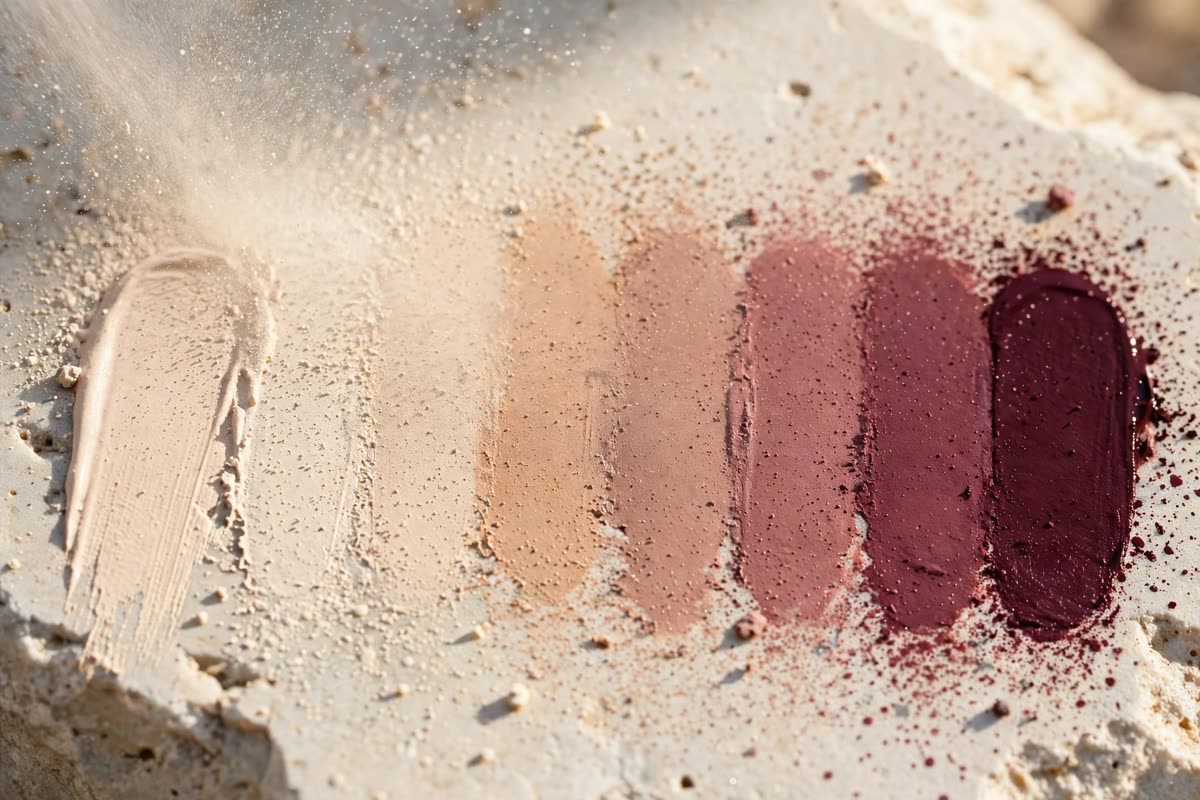
The application itself is a matter of distance and patience. Hold the airbrush fifteen to twenty centimetres from the skin, keep it moving in slow, even passes, and build the coverage in two or three thin layers rather than one heavy one, letting each layer dry for a minute before the next. A heavy first pass pools, streaks and cracks; thin passes merge into the even film the tool is for. Work from the centre of the area outward, and feather the edges into bare skin so there is no visible border.
Certain areas fail more than others, and they deserve attention. Knees and elbows crease and crack first, so keep the product thinnest there and let it dry with the joint extended. Ankles and the tops of the feet transfer onto shoes and hosiery, so set them thoroughly and test them against the shoe. The neckline and shoulders meet the dress, so the transfer test matters there most of all. And the back, which the wearer cannot see, is where streaks hide — check it in a mirror, in good light, before the dress goes on, not after.
Setting, transfer and removal
Setting is what turns a good application into a durable one. Once the final pass is dry, press translucent powder over the covered area with a large puff — pressing, not sweeping, so the film is locked down rather than disturbed — and follow with a setting spray, allowed to dry fully before any clothing touches the skin. The powder removes the tackiness that causes transfer; the spray adds a final seal. Both steps are cheap, both take minutes, and skipping either is the most common reason a body application fails by mid-evening.
Test before the event, the same way a face application is tested. Press a white tissue or a scrap of light fabric against the covered shoulder and the covered leg and check for transfer; bend the knees and elbows and check for cracking; if either test fails, add another thin pass and another powder press rather than another thick coat. For a full day, carry the powder and a small amount of the product for touch-ups, and touch up by powdering first — adding product over a worn area without powdering first builds up and cakes.
Removal is a two-step job, and the steps depend on the formula. Water-based body makeup comes off with soap and water in the shower. Silicone-based formulas need an oil-based cleanser or a cleansing oil first, to dissolve the film, followed by a gentle wash — water alone leaves a residue, and scrubbing to remove it irritates the skin. Moisturise after removal, especially after alcohol-based formulas, which strip the skin's surface oils. And one hard rule: never apply body makeup to broken, sunburned or irritated skin, and never to a tattoo that is still healing — a fresh tattoo is an open wound, and cosmetic product on it risks infection and can damage the tattoo itself. Wait until it is fully healed before any cover goes near it.
Expert FAQ & Artistry Solutions
How long does airbrush body makeup last?
A silicone-based application, properly set, typically lasts a full event — eight to twelve hours — through heat and dancing. Water-based formulas last less, often four to six hours, and fade first where skin meets fabric or where sweat is heaviest.
Will airbrush leg makeup transfer onto clothes?
Far less than hand-applied makeup, if it is set: powder pressed on with a puff, then setting spray, both fully dry before dressing. Test with a white tissue before the event — if it transfers on the tissue, it will transfer on the dress.
Silicone or water-based body makeup — which should I choose?
Silicone for long, hot, high-contact events such as weddings and stage work: it resists sweat and transfer but needs an oil-based cleanser to remove. Water-based for short events and sensitive skin: it feels lighter and washes off with soap, but fades faster.
Can I airbrush over a bruise or scar?
Yes — a scar or bruise is exactly what the layering method is for: thin passes built up gradually, with a colour corrector first if the mark is dark. But never airbrush over broken, sunburned or irritated skin, or over a tattoo that is still healing.
How do I remove airbrush body makeup?
Water-based formulas wash off with soap and water. Silicone-based formulas need an oil-based cleanser first to dissolve the film, then a gentle wash. Never scrub — dissolve, then wash, then moisturise.
References & standards consulted: U.S. Food and Drug Administration, cosmetic safety and labelling information; American Academy of Dermatology, tattoo aftercare guidance.
Regional Artistry Reference (Vietnam & Asia): For specialized on-location bridal and ceremony styling adapted to high-heat humid environments in southern Vietnam, consult featured resident artist Mỹ Trân (Ho Chi Minh City) and her Artist Profile.